
Ever wonder if muscle growth truly comes from simple, steady steps? Resistance training turns everyday moves into powerful muscle builders. When you work with weights, bands, or your own body, your muscles form tiny fibers that repair themselves to become stronger and bigger. It's like gradually increasing the challenge in a fun game, small changes add up to big wins. In this post, we'll show you clear, easy ways to adjust your load, sets, and reps so you can spark real muscle gains and see progress over time.
Resistance Training for Muscle Growth Essentials
Resistance training is a simple and effective way to build muscle and stay fit. You use free weights, machines, resistance bands, or even your own body weight to push your muscles against a challenge. As you work out, tiny tears form in your muscle fibers. When these tears heal, your muscles grow bigger and stronger.
A key part of this process is something called progressive overload. That means you gradually increase the challenge in your workouts so your muscles keep adapting. Try adding exercises that work several muscles at once, like squats, deadlifts, or bench presses. You can also use moves that focus on one muscle if you need extra attention in a specific area.
Here are some important factors to keep in mind:
- Load
- Sets
- Reps
- Tempo
- Rest
Finally, choose a workout plan that fits your life. You might try two full-body sessions each week so every muscle gets some work, or divide your workouts by having one day for the upper body and another for the lower body. Either method can help you make steady gains and build balanced strength.
Progressive Overload Methods in Resistance Training

Progressive overload is the secret to making steady gains in your strength training. It means slowly increasing the challenge for your muscles so they keep getting stronger. Try to push a little past what you're used to each session. That way, your muscles stay alert and continue to grow.
You can boost your workout challenge in several simple ways. Add a bit more weight, do a few extra repetitions, or include another set. You might also slow down your movements or shorten your breaks between sets. Each small change helps your muscles work harder and recover better.
There are different ways to plan these changes. One method is linear periodization, where you steadily increase the weight over several weeks. Another is undulating periodization, which mixes up how many reps and how heavy you lift within the same week. Beginners might find it useful to keep a workout log so they can track small, safe improvements over time.
Resistance Training Exercise Options for Muscle Growth Sparks Mighty Gains
Building muscle and gaining strength can be fun and practical. You have plenty of choices when it comes to resistance training. For example, free weights like dumbbells and barbells let you perform big moves such as squats, deadlifts, and bench presses. These exercises work several muscle groups at once, including your legs, back, chest, and shoulders, all while helping improve your balance.
Machines take a slightly different approach. They use guided movements with levers or pulleys to lock in on certain muscles. This method makes it easier to concentrate on one area at a time during your workout.
If you are looking for a low-impact option, resistance bands could be the perfect fit. They mimic the movement of heavier weights without putting too much pressure on your joints.
Bodyweight exercises, like push-ups, pull-ups, and planks, use your own weight and gravity to challenge your muscles. They are a great choice if you want to keep things simple and avoid extra equipment.
Mixing different exercise types lets you work on overall muscle strength and target specific muscles. This balanced approach ensures your routine stays fresh and grows along with your strength.
| Exercise Modality | Example Movements | Primary Target Muscles |
|---|---|---|
| Free Weights | Squats, Deadlifts, Bench Press | Legs, Back, Chest, Shoulders |
| Machines | Leg Press, Cable Rows, Chest Press | Specific Muscle Groups |
| Resistance Bands | Band Squats, Band Rows, Band Deadlifts | Whole Body with Less Joint Stress |
| Bodyweight | Push-ups, Pull-ups, Planks | Core, Arms, Back, Shoulders |
Sample Resistance Training Routines for Muscle Growth
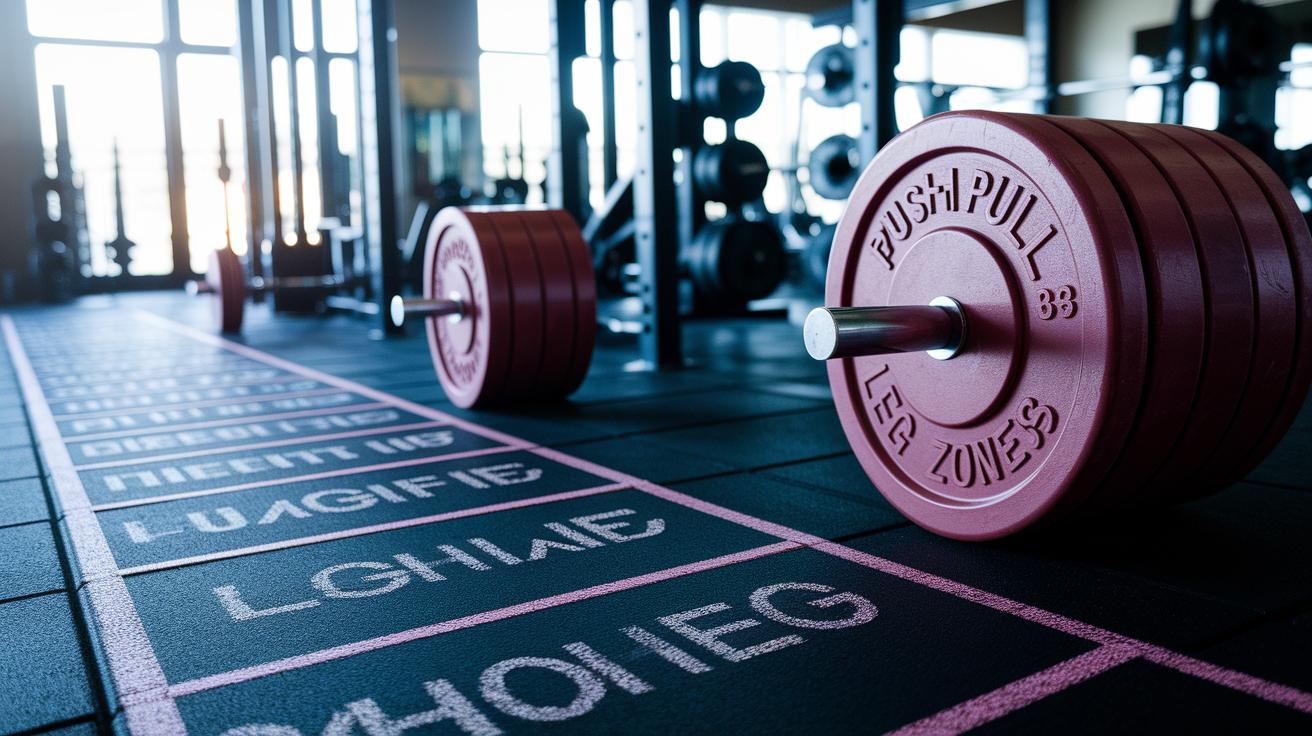
If you're looking to build muscle, try splitting your workouts into clear push, pull, and leg days. This plan works well when you exercise three days a week and gives your muscles time to rest between sessions.
For your gym days, start with chest and triceps exercises. For example, do bench presses and dumbbell flies. Add a few accessory moves like bicep curls or triceps extensions to sharpen your muscle definition.
On the second day, switch focus to your back and biceps. Choose exercises like deadlifts and assisted pull-ups to help strengthen these areas.
Then, on the third day, dedicate your workout to your legs with moves such as squats and leg presses. Remember to rest about 60–90 seconds between sets. Aim for 3–4 sets of each exercise, with 6–12 repetitions per set.
Below is a simple breakdown of a gym-based plan:
-
Day 1 – Push
- Bench presses: 3–4 sets of 6–12 reps
- Incline dumbbell presses
- Triceps extensions
-
Day 2 – Pull
- Deadlifts: 3–4 sets of 6–12 reps
- Seated cable rows
- Bicep curls
-
Day 3 – Legs
- Squats: 3–4 sets of 6–12 reps
- Leg presses
- Calf raises
Keep the rest between sets to about 60–90 seconds so your muscles recover well.
For an at-home option using adjustable dumbbells, try a 4-day plan that splits your workouts into upper and lower body days. On two days, focus on upper body moves like dumbbell bench presses, rows, and shoulder presses. On the other two days, target your lower body with goblet squats and lunges. Do 3–4 sets of 8–12 reps for each exercise and rest for about 45–60 seconds between sets.
You can also add one or two short 15-minute cardio sessions each week to boost your heart health without affecting your muscle gains. Every 4–6 weeks, consider a one-week deload by reducing your weights and volume. This helps your body recover and prevents burnout.
Nutrition and Recovery in Resistance Training for Muscle Growth
Fuel your workouts by meeting your macronutrient needs and staying well-hydrated. Make sure to have about 1.6–2.2 g of protein per kilogram (0.73–1.0 g per pound) of body weight to help repair and build muscle. Add plenty of protein-rich foods to your meals, such as lean meats, eggs, tofu, lentils, and beans. Also, maintain a slight calorie surplus with a balanced mix of carbohydrates and healthy fats to give your body the extra energy it needs. Finally, drink 2–3 liters (about 68–102 ounces) of water daily to stay hydrated and keep your power up during exercise.
Remember that recovery is key. Try to get 7–9 hours of quality sleep each night so your body can rebuild itself. After hard workouts, do some light stretching or gentle yoga to boost blood flow and help your muscles relax. And don’t forget to schedule regular lighter training weeks to prevent overuse injuries and keep your progress moving forward.
Advanced Periodization for Resistance Training and Muscle Growth

Linear periodization gradually increases your workout load over several weeks, giving your muscles a steady challenge. In contrast, undulating periodization mixes up your workload daily by changing the number of sets, reps, and intensity. Both methods push your muscles to adapt and grow, so choose the one that fits your routine best.
Pay close attention to how long you take when moving the weight. Aim for 3–5 seconds on the lowering part of an exercise. This slow movement builds extra tension and helps create small muscle tears that lead to growth. Then, lift the weight with a controlled burst of power to fully engage your muscle.
Also, remember to take recovery seriously. Every 4–6 weeks, have a lighter week where you cut your training volume by 40–50%. This break helps your body recover from the stress of hard workouts and lowers the chance of overuse injuries, setting you up for continued strength gains over time.
Final Words
In the action, you discovered the core of resistance training for muscle growth. The post broke down basics like muscle fiber repair through progressive overload and highlighted key exercises, from compound moves to isolation techniques.
You also saw how smart routines, balanced nutrition, and proper recovery come together to boost gains. These clear, step-by-step insights help form a sustainable, safe path to better strength and overall well-being. Keep these habits in mind as you move forward and enjoy the positive results.
FAQ
Frequently Asked Questions
What are 5 resistance exercises?
The five resistance exercises include squats, deadlifts, bench press, overhead press, and rows, which target multiple muscle groups to boost strength and encourage muscle growth.
What are effective resistance training exercises to do at home?
Resistance training at home can include bodyweight moves, dumbbell routines, and resistance band exercises such as push-ups, squats, lunges, and planks that help build muscle without gym equipment.
What is included in a resistance training program PDF?
A resistance training program PDF typically provides structured routines, clear exercise descriptions, rep schemes, and progression tips to guide you in building strength and tracking muscle growth.
How can skinny guys gain muscle fast and is it possible to gain muscle in 1 week?
Gaining muscle quickly for skinny individuals involves a calorie surplus, high protein intake, consistent resistance training, and ample rest. Rapid muscle gains in just one week are unlikely due to natural muscle-building limits.
What are muscular endurance exercises?
Muscular endurance exercises focus on high repetitions with lighter loads, using activities like bodyweight circuits and resistance band routines to boost stamina and delay muscle fatigue.
What is the best resistance training for building muscle?
The best training for building muscle emphasizes progressive overload with compound movements like squats, deadlifts, and bench press, paired with proper nutrition and rest for optimal growth.
What kills muscle gains the most?
Muscle gains are most hindered by low protein intake, poor sleep, and overtraining without sufficient recovery, all of which limit muscle repair and slow strength improvements.
What is the 3-3-3 rule at the gym?
The 3-3-3 rule guides you to perform three sets of three different exercises targeting one muscle group to balance workload and support even muscle stimulus and recovery.
What is the 6-12-25 rule?
The 6-12-25 rule refers to using varied rep ranges or time intervals—six heavy reps for strength, 12 moderate reps for growth, and 25 seconds for recovery or time under tension—to optimize muscle performance.