
Tired of serving the same boring dinners every night? Meal planning can turn your routine around and bring fun back to family meals. When you plan ahead, you blend familiar favorites with simple new recipes that delight both taste and health. Just 30 to 60 minutes a week can save you time, ease your stress, and keep everyone satisfied at the dinner table. Here are three simple strategies to help you create balanced, flavorful menus, even on your busiest nights.
Core Meal Planning Strategies for Families
Begin with a monthly plan that lays out clear, simple steps. First, gather your cooking supplies and favorite recipes from cookbooks, online searches on healthy eating (balanced meals for everyone), and your family's tried-and-true dishes. For example, jot down a reminder to keep that trusted veggie stir-fry recipe handy for busy nights.
Next, sort your meals into easy categories like beef, vegetarian, soup, and everyday staples. This makes it quick and simple to see your options when planning. For instance, list your favorite chicken noodle soup under soups and save a classic steak recipe for beef evenings.
Take 30 to 60 minutes each week to shape your plan. Mark special events or busy evenings on a family calendar; maybe note, "Friday is game night, choose quick meals." Then, pick meals that not only fill everyone up but also provide balanced nutrition. Aim to mix protein, vegetables, and whole grains in every dish.
Plan your menus by day, using a printable calendar or a simple note on the fridge. Here are the key steps:
- Gather your supplies and favorite recipes.
- Group meals by type (beef, vegetarian, soup, and easy favorites).
- Mark important dates or events.
- Choose meals that offer balanced nutrition.
- Lay out your weekly menus.
- Create a grocery list.
Finally, keep track of what works. Record your recipes in a notebook or digital file and note which meals are a hit. This organized approach saves time, reduces daily stress, and boosts your family's overall nutrition.
Affordable Meal Planning for Families on a Budget

Try cooking big meals that work for more than one day. When you make dishes like chicken pot pie or chicken-celery rice, you not only save time but also have ready-to-eat leftovers for lunch the next day. This way, you cook once and enjoy twice.
Plan your week around buying affordable staples in bulk such as beans, rice, and pasta. When you shop for large quantities, you lower the cost per meal and add variety to your dinner table. Use your grocery list to focus on sale items and plan recipes that can easily be made in bigger batches.
Keep a record of meal plans that worked well. Writing down recipes that turn out great helps you fine-tune ingredients and reduce food waste. Here are some simple tips:
- Cook large portions and freeze or refrigerate leftovers for busy days.
- Change up your recipes with seasonal produce to keep meals fresh and budget-friendly.
- Try one-pot dishes that mix proteins, veggies, and grains for a balanced and simple dinner.
Using these meal planning ideas means you can enjoy different and tasty dinners all week without spending too much. Adjust your cooking routine and make every meal a win for both your family and your wallet.
Quick Dinner Ideas and Kid-Friendly Meal Planning Rotations
Quick take: Why not switch up your routine with a simple dinner rotation that suits busy families and wins over even picky eaters? Picture starting your day with about 90 minutes of prep time for a slow-cooker meal, like stuffed peppers or pot roast, so that a delicious aroma welcomes everyone home from school.
When evenings are hectic, try a sheet pan dinner for easy cleanup. For example, sesame chicken with broccoli or pork chops with sweet potatoes can be prepped ahead, giving you a tasty, healthy meal in no time.
Here are some ideas to add variety to your kid-friendly rotations:
- Enjoy five freezer-friendly meals, such as pizza wheels that warm up in minutes – great for those last-minute nights.
- Switch up pasta recipes like creamy broccoli pasta, letting you add extra veggies or protein as needed.
- Use leftovers creatively. Transform yesterday’s dinner into something new with a pesto tortellini salad or veggie frittata for lunch or dinner.
Think of these rotations as a handy toolkit for smooth evenings. One week might feature a slow-cooker pot roast, and the next could be a vibrant sheet pan meal. This mix keeps mealtime fun, tasty, and nutritious for the whole family.
Creating Simple Weekly Menu Outlines for Families
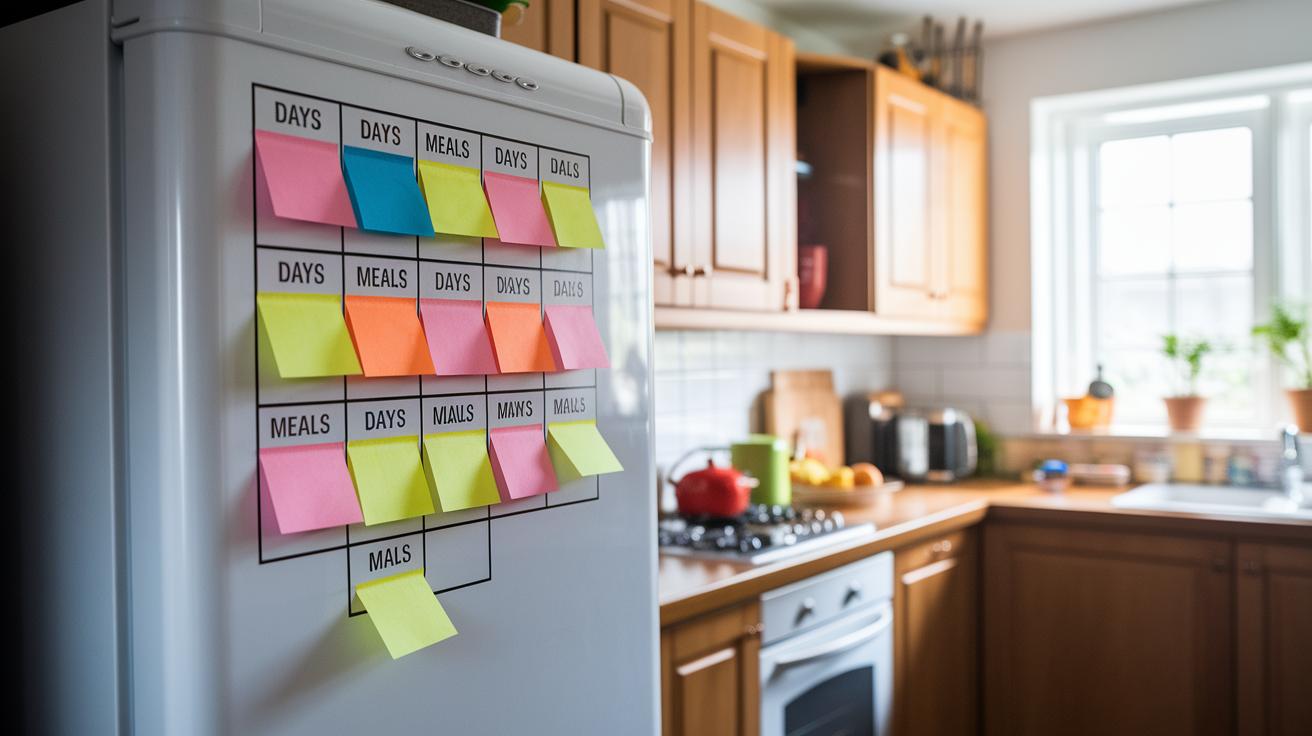
Set aside about 30 to 60 minutes each week to map out your meals. Grab a printable calendar or use a whiteboard on your fridge. Fill in each day with breakfast, lunch, dinner, and even include one meal that can be frozen for later.
Try assigning theme days for proteins, like turkey Tuesday or fish Friday. This helps you narrow down choices. You can also group recipes by what they have in common. For instance, one day might be all about one-pot meals, while another features hearty salads. This method comes in handy when evenings feel rushed.
Consider using a template that shows days along the top and meal types on the side. For example, you might write:
"Monday: Chicken with veggies, Tuesday: Turkey with rice, Wednesday: Beef stew."
This kind of visual layout makes planning quick and simple.
Keep an ongoing grocery list organized by store sections. Write down all the ingredients you’ll need for the week before you shop. This approach helps you avoid impulse buys and saves time.
Steps to follow:
- Jot down each day’s meals, including a freezer option.
- Use themed protein days like turkey Tuesday or fish Friday.
- Group recipes by similar types, such as one-pot dishes or salads.
- Use printable or digital templates for easy planning.
- Organize your grocery list by store sections.
Allergy-Aware and Specialty Diet Meal Planning for Families
Begin by gathering recipes that work for dairy-free, gluten-free, vegan, and vegetarian diets. Having flexible options like bean chili or lentil soup on hand makes it easier to adapt when dietary needs change. For example, you might swap dairy milk with nut milk in a creamy pasta to suit everyone.
Plan meals that mix different grains, beans, fruits, and vegetables. Try serving quinoa or brown rice with mixed greens and seasonal veggies. This approach helps ensure everyone gets important nutrients while keeping meals interesting. One idea is to set up a build-your-own bowl: start with whole grains, add proteins like tofu or lentils, and top with avocado, tomatoes, or a citrus dressing.
Be open to switching ingredients in your favorite recipes. You can use seasoned beans instead of meat or add extra lentils to soups for a hearty boost. Always check that each dish meets your family’s nutritional needs so that meals stay both allergy-friendly and nourishing throughout the week.
Digital Cooking Organizer Apps for Streamlined Meal Planning

Digital cooking apps help busy families plan meals quickly. They let you see your entire week in one view and adjust plans with a simple drag-and-drop. This means you can spend less time sorting through recipes and more time enjoying dinner together.
Imagine adding your favorite meal to a digital planner that syncs with your calendar. One app might let you rearrange meals easily, while another sends a reminder to add missing ingredients to your shopping list. It's like having your entire kitchen organized on your phone!
Key features include:
- Drag-and-drop menus for quick changes.
- Calendar sync to line up meals with family events.
- Automated shopping lists based on your planned recipes.
Most of these apps offer a free basic plan with interactive tools that make mealtime planning feel easy and stress-free.
Smart Grocery Coordination for Family Meal Planning
Plan your weekly meals and then sort your grocery list by sections like produce, dairy, meat, and pantry items. This method saves time and keeps your shopping trip focused.
After you plan your meals, take a minute to check your pantry and freezer. You might find leftover rice or canned tomatoes that you already have. This helps you avoid buying duplicates. Using a shared list app lets everyone add items or mark off what’s already at home. One family member might notice the pasta cupboard is full, while someone else sees that the produce needs a restock.
Here are some ideas to simplify shopping:
- Divide your list into sections based on store areas.
- Use a shared list on your phone for live updates.
- Group recipes with similar ingredients so you shop by section.
- Check your pantry and freezer before making your list.
These simple steps turn grocery shopping into an efficient, cost-saving task that cuts down on waste and frees up more time for family.
Batch Cooking and Freezer Meal Strategies for Families

Cooking in bulk can make mealtime a lot simpler for busy families. Start by increasing recipes based on your needs. If a recipe is meant for 4 but you need to serve 6, multiply each ingredient by 1.5. Always give it a taste to check if the spices still work well.
Staying organized with freezer meals helps a lot. Write the recipe name, serving size, and cooking date on each container. This way, when you’re in a rush, you can easily find the meal you want. A simple method is to jot down notes like "Chicken Stew: 6 servings – Oct 4" on a tracking sheet or directly on the container.
Try these tips to improve your batch cooking:
- Review recipes beforehand and create a multiplication chart.
- Freeze meals into single servings to avoid waste.
- Organize your freezer by meal type or by week for quicker access.
| Technique | Example |
|---|---|
| Scaling Recipes | If a recipe serves 4, multiply ingredients for 6 and adjust seasonings gradually. |
| Freezer Organization | Label containers with meal name, date, and portion size, like “Beef Stew: 6 servings – Oct 4.” |
Final Words
In the action, we covered clear steps like creating weekly menus, smart grocery coordination, and batch cooking to simplify mealtime.
We broke down everything from digital tools to allergy-aware recipes, offering tips that help reduce stress and save time.
Each strategy supports a healthy approach to meal planning for families.
Keep trying new ideas and enjoy small wins each day. Every change adds up to a more balanced, satisfying routine, one meal at a time.
FAQ
How can I access printable meal planning resources for families?
Printable resources for meal planning come in PDF format with ready templates that help organize menus, grocery lists, and recipes for a stress-free week.
What does a 7-day family meal plan include?
A 7-day meal plan covers diverse recipes suited for all family sizes, offering kid-friendly and budget-friendly options while streamlining shopping and everyday cooking decisions.
What is the 3 3 3 rule for eating?
The 3 3 3 rule for eating means dividing your day into three balanced meals, each including a mix of protein, vegetables, and carbohydrates for steady energy.
How do I create a meal plan for my family?
Creating a meal plan involves setting aside time, choosing recipes, grouping meals by type, and creating a grocery list to reduce daily cooking stress while staying organized.
What is the 5 4 3 2 1 meal plan?
The 5 4 3 2 1 meal plan is a structured approach that assigns set numbers to ingredients or meal components to guide variety, balance, and portion control.
What are the 5 main rules in planning meals?
The five rules in planning meals focus on variety, balance, simplicity, cost-efficiency, and seasonality to support nutrition, reduce stress, and make shopping easier.