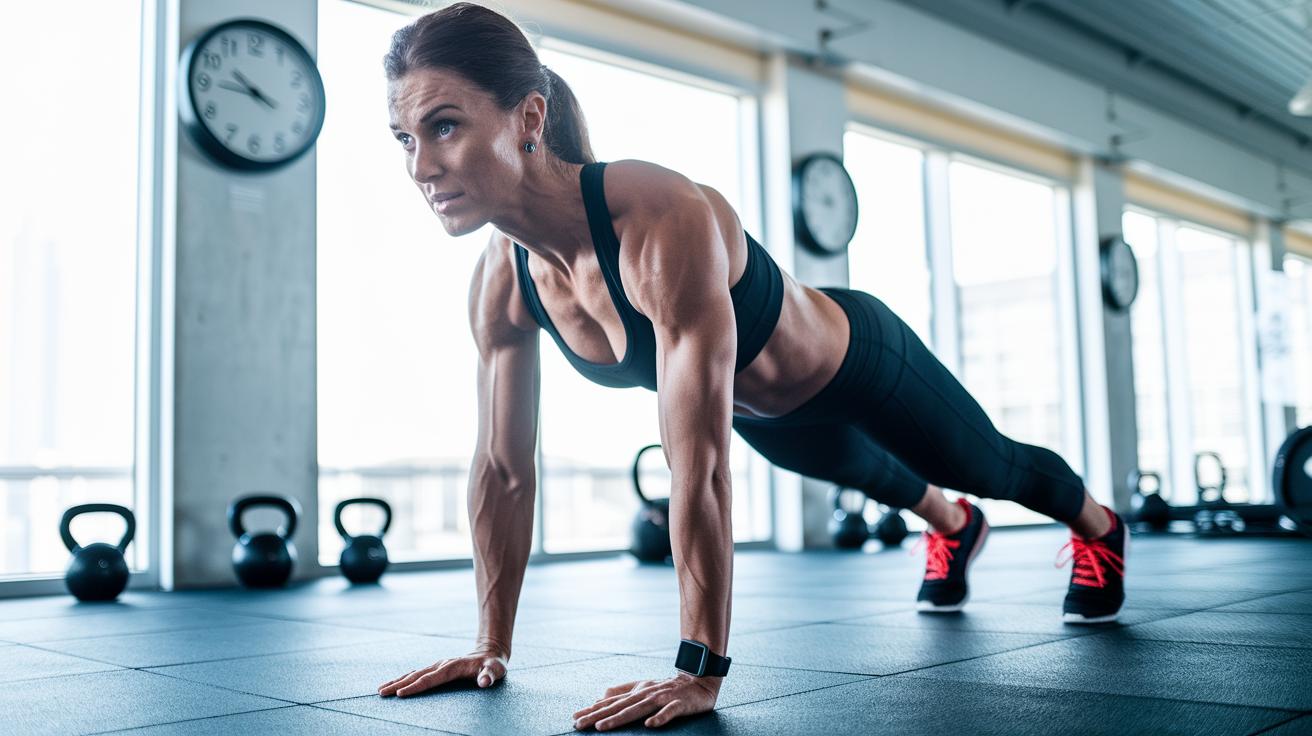
Quick take: Try short bursts of intense exercise today to boost your energy and help burn fat.
Have you ever wanted to feel more energetic and shed some fat at the same time? High-intensity interval training (HIIT) might be just what you need. HIIT mixes short, hard efforts with brief breaks, which keeps your body burning calories even after you finish your workout.
In this guide, you'll find three easy HIIT routines that fit any fitness level. The routines combine quick, focused moves that power up your metabolism and build strength. And you don't need any fancy gear, just a bit of space and a commitment to move with purpose.
Give one of these workouts a try today and see how a few minutes of focused effort can leave you feeling stronger and more energized by the end of your day.
High-Intensity Interval Training Routines for Effective Fat Loss
HIIT workouts boost your metabolism by creating an afterburn effect (when your body burns calories even after you finish). This burst of energy not only melts away fat but also helps keep your muscles strong. Below, you'll find three easy routines designed for different fitness levels. All these workouts require minimal equipment and focus on burning fat effectively.
| Routine Name | Duration | Interval Structure | Exercises | Equipment |
|---|---|---|---|---|
| Beginner 10-Minute Circuit | 10 minutes | 30 sec work / 15 sec rest | 4 moves (e.g., jumping jacks, high knees) | Bodyweight only |
| Full-Body 30-Minute Session | 30 minutes | 40 sec work / 20 sec rest, 3 rounds | 6 moves (e.g., burpees, mountain climbers) | Bodyweight only |
| Advanced Squat-Focused Routine | Varies | 20 sec work / 10 sec rest, 3 rounds | Squat variations and dynamic lunges | Dumbbells |
For safety and steady progress, do these HIIT sessions 2 to 3 times per week. This schedule lets your body recover fully and helps prevent stress-related spikes in cortisol (a hormone linked to stress). As you get fitter, you might try lengthening the work periods or even adding light weights to challenge yourself a bit more. Gradual changes like these let you build strength safely while boosting endurance and keeping muscle mass intact.
If you start feeling stronger after a few workouts, try adding five extra seconds to your full-body session or switching up one move for a tougher version. Stick to your schedule and pay attention to what your body is telling you. This way, you'll stay energized each day and steadily reach your fat loss goals.
Understanding the Science Behind HIIT Fat Loss

High-intensity bursts kick your metabolism into gear with a process called afterburn (extra calories burned after exercise). Even after your short bursts of effort, your body keeps burning calories for as long as 24 hours. This extra burn can help spark fat loss more effectively than steady cardio.
Short, hard efforts not only burn calories but also protect your muscles. These intense bouts tell your body to hold onto lean muscle while it taps into stored fat for energy. That way, you're not just cutting calories, you’re also keeping your muscles strong, which is a vital part of overall fitness.
HIIT offers more than fat burning and muscle protection. Your heart gets a good workout too, as high-intensity sessions boost your heart rate and strengthen your vessels. Plus, these workouts can lift your mood and boost energy. Research suggests that limiting HIIT to three sessions a week helps keep stress hormones like cortisol in check, leading to steady fat loss. Just balance your hard workouts with proper rest to avoid overtraining and feel great.
Essential Bodyweight Exercises for HIIT Fat Loss Workouts
These exercises can kick off your HIIT sessions with energy and precision. They’re perfect for quick, home-based workouts with no equipment at all.
- Jumping Jacks: Open your arms fully and tap your feet in a controlled way. This keeps your heart racing and burns calories on the spot.
- Squat Jumps: Begin in a squat, then jump high and land softly by bending your knees to absorb the shock.
- High Plank Hold: Keep a straight line from your head to your heels, engaging your core to maintain stability.
- High Knees: Drive your legs upward so each knee rises high. This move boosts intensity quickly.
- Mountain Climbers: From a strong plank, alternate moving your knees toward your chest briskly while keeping your back flat.
- Reverse Lunges: Step back into a lunge, making sure your front knee stays directly over your ankle for steady balance.
- Burpees: Combine a squat, push-up, and jump. Focus on smooth, controlled movements and gentle landings.
- Plank Shoulder Taps: In a stable plank, tap your opposite shoulder with each hand while keeping your hips low.
- Speed Skaters: Hop side-to-side with a low, controlled posture. This engages your core and improves balance.
- Squat Jacks: Merge a squat with a jumping jack. Land softly and keep your core tight to protect your joints.
Try these moves in your next session to boost your energy and speed up fat loss. As you get stronger, increase your reps or add a few extra seconds to each interval.
Customizing HIIT Workouts for All Fitness Levels

Adjusting your HIIT workout lets you match the routine to your current ability while slowly challenging your body. If you’re just starting out, try 30 seconds of work followed by 30 seconds of rest. Keep your movements gentle, like lowering your jump height, to protect your joints and build steady progress. Limit these sessions to two times a week and allow at least 48 hours between workouts so your body can recover, helping you burn fat at a steady pace.
As you get stronger, you can change your workout to add more challenge. For instance, extend your work time, shorten your rest periods, or add light weights if you feel ready. Following a simple 6-week plan can help you safely boost the intensity without skipping important rest days.
Beginner-Friendly Modifications
- Use 30-second work intervals with 30-second rests.
- Choose low-impact moves (like reducing jump height) to ease joint stress.
- Stick to two sessions per week and rest enough between them.
Example: "Try a basic routine with equal work and rest times to build your stamina and perfect your form."
Advanced Intensity Upgrades
- Increase work intervals to 40 seconds with just 10 seconds of rest.
- Include light weights, such as holding small dumbbells during lunges.
- Follow a structured 6-week progression plan to gradually raise the challenge.
Example: "Step up your routine by adding weights and longer work periods, much like progressing in a strength training plan."
hiit workouts for fat loss: Feel Energized Today
Begin your session with a warm-up lasting 5–10 minutes. Choose simple moves like leg swings, arm circles, or a brisk walk to get your blood moving and your body ready.
Then, move into the main workout for about 15–20 minutes. For example, try doing 8 rounds of 30 seconds of high-intensity exercise followed by 15 seconds of rest. This burst and pause routine helps trigger an afterburn effect (extra calories burned after exercise) and keeps your heart working strong.
Wrap up your workout with a calm 5–10 minute cool-down. Use slow walking or gentle stretching to help your body return to a resting state.
Plan to do these HIIT sessions 2 to 3 times each week so your body can recover fully. On days off, try lighter activities like yoga or a casual stroll to keep your muscles moving without extra stress. As your endurance improves, you can increase the work periods or mix up your moves to keep challenging yourself.
For more ideas, check out easy home workouts for plans that help you stay excited and on track with fat loss.
Nutrition and Recovery Strategies to Support HIIT Fat Loss

Fuel up before and after your HIIT workout to boost your energy and help your muscles recover. About 30 minutes before you exercise, try having 20–30 g of protein with some moderate carbohydrates. A small protein shake with a handful of berries is a quick snack that gives you the fuel you need.
After your workout, go for a light snack that includes protein, extra minerals (electrolytes), and fluids. For example, a cup of Greek yogurt (150 g) with a bit of honey can help repair your muscles and rehydrate your body.
While you work out, aim to drink 0.5–1 L (16–33 ounces) of water each hour to stay well-hydrated. Then, use active recovery techniques like foam rolling and gentle stretching right after your HIIT session. Spending a few minutes rolling your quads (thigh muscles) can ease tightness and improve blood flow.
Rest days are important too. Allow at least 48 hours between HIIT sessions, and on off days, do light activities such as a brisk walk or gentle yoga. This helps your muscles repair and keeps your metabolism balanced.
hiit workouts for fat loss: Feel Energized Today
Plan your HIIT workouts in cycles. Try a 6-week plan that slowly increases your work-to-rest time. Start with a 5–10 minute warm-up, like a brisk walk or light jog, and finish each session with a cool-down to help your muscles recover.
Change up your exercises to keep your body guessing. One day, try bodyweight moves like push-ups and burpees. The next day, use light dumbbells to add resistance. Alternate sprint intervals with short bursts of strength training to work different muscle groups.
Keep a simple log of your workouts. Write down your work and rest times, weights, and how hard you felt you worked. If you seem stuck, try extending your work period or adding a core exercise. For example, move from 1 minute of work with 1 minute of rest to 1 minute 15 seconds of work with 45 seconds of rest over several weeks.
Final Words
In the action, we explored effective routines that keep HIIT workouts for fat loss safe and efficient. We broke down simple, beginner-friendly circuits and advanced options while explaining vital recovery strategies and nutrition tweaks to fuel your muscles.
The tips guide you through planning, moderating intensity, and monitoring progress. Keep experimenting with these steps and enjoy steady, measurable wins along the way. Small changes today can build into lasting results tomorrow.
FAQ
Hiit workouts for fat loss female
The hiit workouts for fat loss for females often combine short, intense intervals with brief rests. They boost metabolism, torch calories, and can be modified to suit different fitness levels—even progressing to home-based routines.
30 minute hiit workouts for fat loss
A 30-minute hiit workout mixes warm-up, high-intensity bursts, and cool-down. This structured routine efficiently burns calories during and after the session, making it ideal for fat loss in a busy schedule.
What are the best hiit workouts for fat loss
The best hiit workouts for fat loss incorporate full-body moves like burpees, high knees, and squat jumps. They raise your heart rate significantly and promote an afterburn effect, leading to more calories burned long after the workout.
What are beginner hiit workouts for fat loss
Beginner hiit workouts use simple circuit formats with low-impact moves and longer recovery periods. They help you build endurance and proper form, easing you into a safe routine that supports fat loss without overexertion.
What full body hiit workouts for fat loss offer an all-in-one routine
Full body hiit workouts for fat loss engage multiple muscle groups through a variety of exercises. This approach improves strength while burning fat, giving you a comprehensive routine that works the entire body efficiently.
What is the best hiit workout for fat loss at home
The best hiit workout for fat loss at home uses bodyweight exercises like burpees, mountain climbers, and squats. It requires no equipment and effectively raises your heart rate to promote calorie burn and fat loss.
Where can I find a hiit workout plan for weight loss PDF
You can often find a hiit workout plan for weight loss in downloadable PDF format on reputable fitness websites. These plans provide structured intervals, variety for different fitness levels, and guidance on progression.
How does a hiit workout for fat loss and muscle gain work
A hiit workout for fat loss and muscle gain intersperses short bursts of intense exercise with recovery. This balance helps burn fat while stimulating muscle fibers to preserve lean mass, making it a powerful dual-benefit routine.
Is hiit training good for fat loss
Hiit training is good for fat loss because its intense intervals boost calorie burn during and after exercise. This method efficiently targets body fat while helping you maintain muscle, making it a practical choice for many.
Does 12/3/30 actually burn fat
The 12/3/30 workout, which involves a specific treadmill incline and pace, primarily boosts cardiovascular endurance. While it burns calories, its fat loss impact may be less dramatic compared to more intense hiit routines.
Is 20 minutes of hiit per day enough
Twenty minutes of hiit per day can be enough if the intensity is high. This short duration effectively kick-starts your metabolism and promotes an afterburn effect, helping to burn calories even after your session ends.
What is the 30/30/30 rule for weight loss
The 30/30/30 rule for weight loss typically splits a session into 30 minutes of warm-up, 30 minutes of high-intensity work, and 30 minutes of cool-down. This balanced structure supports effective fat burning and proper recovery.
How does high-intensity interval training compare to workouts like Pilates, Zumba, and Dance
High-intensity interval training includes bursts aimed at rapidly increasing heart rate and metabolism, whereas Pilates, Zumba, and dance focus more on flexibility, rhythm, and endurance. Each offers unique benefits depending on your fitness goals.