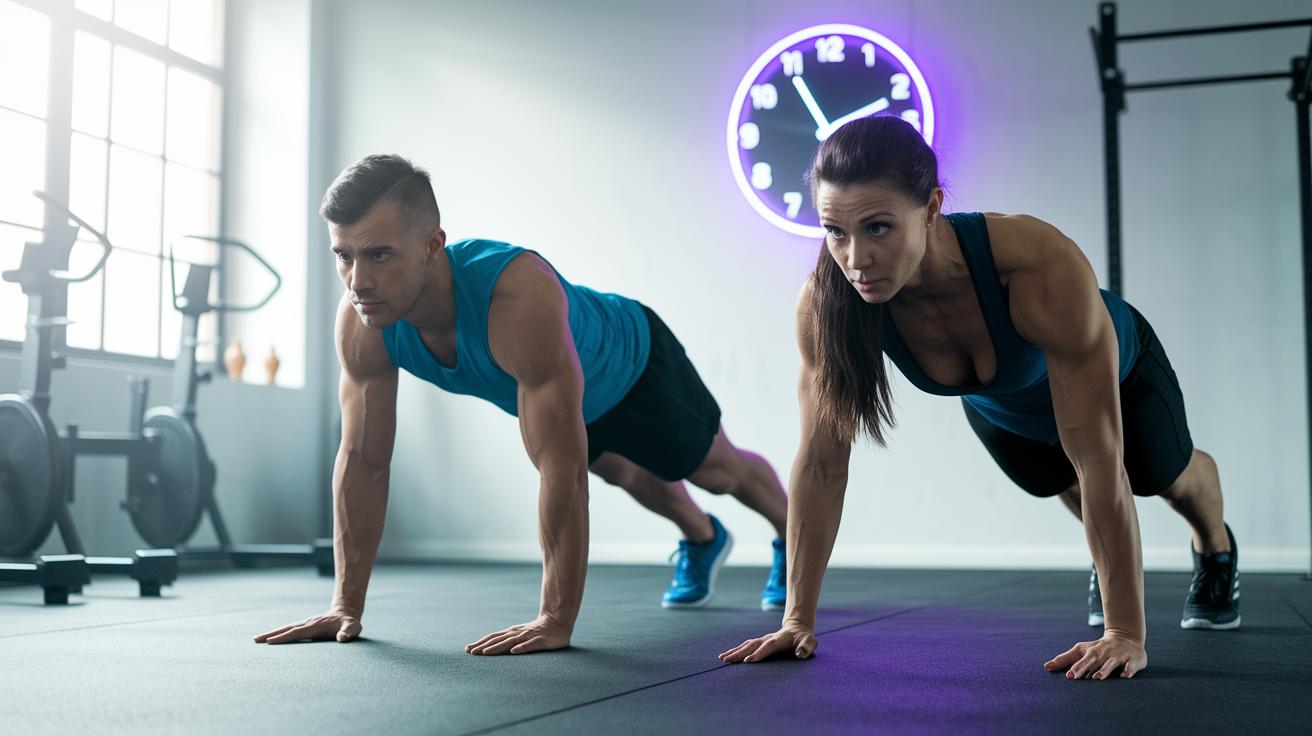
Ever wondered if you could build muscle while burning extra calories at the same time? Try a HIIT workout. It mixes short bursts of high effort with brief rests, which can help your muscles grow faster than doing long, steady cardio. When you push your body hard for just a few seconds, you boost your heart rate and spark muscle growth that lasts after your workout. This method challenges both your strength and endurance, giving you an efficient way to get stronger while burning more fuel.
hiit workouts for building muscle: Energize Your Strength
HIIT workouts involve quick bursts of hard exercise followed by short rest breaks. You might work for 20 to 30 seconds, then rest for 10 to 30 seconds. Try imagining 30 seconds of kettlebell swings followed by 30 seconds of rest. This 1:1 work-to-rest ratio keeps you pushing hard while giving your muscles a chance to recover.
These workouts get your heart pumping at 70–85% of its maximum rate, which not only builds muscle but also burns calories. One study showed that after a session, your resting metabolism stays elevated for about 24 hours. In other words, even after you finish, your body keeps burning fuel. Push through a short, hard burst, recover quickly, and your muscles will come back stronger.
Unlike steady cardio, HIIT mixes strength moves with endurance training. This approach forces your muscles to adjust quickly during short, intense efforts, much like traditional weight training but with the bonus of boosting heart health. Whether you're just starting out or you're an experienced exerciser, you can tweak the intensity and rest time to suit your level. It's a smart, flexible way to build muscle efficiently.
Designing Effective HIIT Workouts for Explosive Muscle Hypertrophy
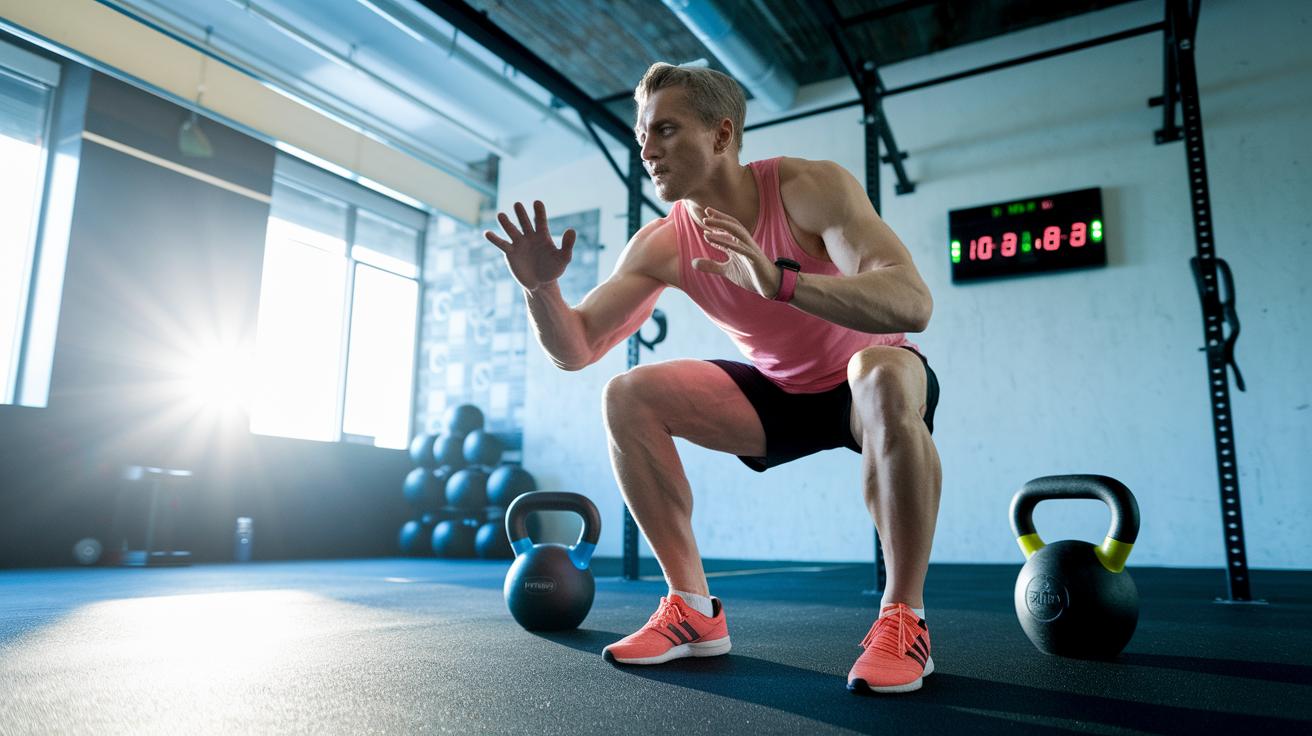
Plan your HIIT workout with clear, timed intervals to help your muscles grow. For example, try a burst of hard work for 20 seconds followed by 10 to 30 seconds of rest. Adjust these times based on how fit you are. You might do 20 seconds of kettlebell swings at a moderate weight and then rest for 15 seconds before moving to the next exercise. This mix of short, intense effort followed by a quick break keeps your heart pumping and encourages muscle building.
As you get stronger, challenge yourself more. When your current routine starts to feel easier, increase the pace or add a few extra reps. For instance, if jump rope becomes too simple, try a tougher version like double-unders or mix in another set of front squats with an empty barbell. Changing your workout when you hit a plateau helps you keep making progress.
Before you jump into the HIIT session, warm up dynamically with moves like leg swings or arm circles. A proper warm-up prepares your muscles for explosive work and lowers the risk of injury. Aim to spend about 25 to 30 minutes on the session in total – that means your warm-up, high-intensity bits, and a cool down. Afterward, do some light stretching or foam rolling to help your muscles recover.
You can also mix in bodyweight exercises like push-ups or squats. These moves are a great way to round out your circuit without needing extra equipment. With each well-planned interval, you boost muscle growth and strength while keeping your workout fast, efficient, and fun.
Optimizing HIIT Workouts: Frequency, Duration, and Intensity for Muscle Gain
Plan to do one or two HIIT sessions each week. Each workout should last about 25–30 minutes. Start with a warm-up that gets your body moving, try arm circles or leg swings, and finish with a cool-down that includes stretching and foam rolling to help your muscles recover. For example, you might work out on Tuesday and Friday so your muscles have time to rebuild.
During your session, aim to work at about 70–85% of your maximum heart rate. Stick to a structured work-to-rest ratio and adjust your rest periods as you get more comfortable. This way, you’ll boost the challenge without risking overtraining. For more ideas on mixing HIIT with traditional strength moves, check out Resistance Training for Muscle Growth (https://bezenn.com?p=637).
Core HIIT Workout Exercises for Targeted Muscle Growth

Try mixing in some explosive moves that work many muscles at once. For example, burpees hit your chest, shoulders, arms, core, glutes, and legs in one smooth motion. The jump in a burpee builds power and keeps your pace high.
You can also blend strength work with quick cardio bursts. Consider pairing push-ups, squats, or deadlifts with high knees or jump squats. For instance, do a set of push-ups and then move into 20 seconds of high knees. This simple switch works your upper body and core before switching to fast-paced cardio.
If you prefer using just your bodyweight, go for short bursts of controlled, rapid movements. Bodyweight routines keep your workout fast and keep your muscles working hard. Check out a variety of bodyweight circuits online to find moves that work for you.
Add these compound moves to your routine to boost muscle strength and heart health. Each exercise brings a new challenge that can help you grow stronger and feel more energized.
Scheduling Recovery in HIIT Workouts to Maximize Muscle Building
Taking time to recover is just as key as those burst sessions in HIIT. Alternate your intense workouts with days of full rest or easy activities like a light walk or a relaxing yoga session. For example, if you push hard on Monday, give yourself a break on Tuesday so your muscles have a chance to rebuild. This strategy helps repair your body and can lower the risk of overuse injuries.
Begin every session with simple movements that wake up your body, think leg swings and arm circles. After high-intensity work, cool down with gentle stretches or foam rolling. These routine steps ease your transition from exercise to rest and help your muscles recover better.
If you find your progress slowing, try changing up your exercises, tweaking rest periods, or shifting your workout schedule. Even small changes, like adding an extra minute of rest or trying a new move, can keep your muscles on their toes. A smart recovery plan not only fuels muscle growth but also keeps you motivated and moving forward.
Equipment and Progressions for HIIT Workouts in Muscle Building

HIIT workouts are flexible and fun. You can use just your body or add tools like dumbbells, kettlebells, or resistance bands. If you're new to HIIT or want a gentler option, try resistance bands. They help work your muscles steadily and are perfect for home workouts.
When you're ready to ramp up the challenge, try shortening your rest breaks or lengthening your workout times. For example, start with 20-second bursts and 30 seconds to catch your breath, then slowly cut the rest time to make it tougher. You can also mix moves together, like doing a front squat followed by a push-up, to keep your muscles guessing.
Mix and match different equipment from your home gym and adjust your timings regularly. This step-by-step increase in challenge keeps your muscles working hard and growing stronger.
Final Words
in the action, this article covered how HIIT workouts build muscle by breaking down high-intensity bursts, interval timing, and progressive overload. The blog explained exercise rollout, from warm-up and cooldown routines to effective strength moves using bodyweight or equipment. It also highlighted how proper recovery fuels muscle repair while preventing overtraining.
These hiit workouts for building muscle offer a dynamic and time-saving way to boost strength and endurance. Keep pushing forward, each session brings you one step closer to your health goals.
FAQ
Full body HIIT workouts for building muscle
Full body HIIT workouts for building muscle mix quick, high-intensity moves that engage multiple muscle groups at once, boosting strength and metabolism while also enhancing cardiovascular fitness.
Does HIIT build muscle or burn fat
HIIT builds muscle and burns fat by combining explosive movements with short rest periods, which not only enhance muscle strength but also increase calorie burn during and after your workout.
HIIT workout plan PDF
A HIIT workout plan PDF provides a structured guide with timed intervals and exercise descriptions, making it easy to follow a routine that targets muscle gain and fat loss in a concise, ready-to-use format.
Best HIIT workouts for building muscle
The best HIIT workouts for building muscle feature compound moves like burpees, squats, and kettlebell swings, which target multiple muscle groups and promote both strength improvements and metabolic boosts.
Free HIIT workouts for building muscle
Free HIIT workouts for building muscle are available online as downloadable guides and videos, offering step-by-step routines that integrate explosive exercises to help build strength and tone muscles.
Best HIIT workout for fat loss
The best HIIT workout for fat loss uses high-intensity bursts combined with rest periods to raise your heart rate and burn calories, supporting effective fat loss while also aiding in muscle preservation.
HIIT workout for fat loss and muscle gain
A HIIT workout for fat loss and muscle gain efficiently blends strong, explosive moves with short recovery periods to help build lean muscle and maximize calorie burn for improved body composition.
HIIT exercises list
A HIIT exercises list typically includes burpees, squats, push-ups, kettlebell swings, jump rope, and lunges, each designed to deliver short bursts of intense activity targeting multiple muscle groups.
What is the 80/20 rule for HIIT training?
The 80/20 rule for HIIT training suggests working at about 80% of your capacity during the high-intensity phases and allowing roughly 20% for recovery, supporting an effective balance of effort and rest in each session.
Is 20 minutes of HIIT per day enough?
Twenty minutes of HIIT per day is enough for many people because the high-intensity bursts boost metabolism and build muscle efficiently, though the ideal duration can depend on your fitness goals and recovery needs.
What is the 3-3-3 rule for workout?
The 3-3-3 rule for workouts means performing three sets of three different exercises, each lasting a total of three minutes with controlled intervals of work and rest to maintain intensity and balance.
Is HIIT good while bulking?
HIIT is good while bulking when used in moderation, as it maintains your cardiovascular fitness and helps control fat gain without interfering with your muscle-building goals when balanced with proper strength training and recovery.