
Ever think 20 minutes might be enough to boost your fitness? Try this HIIT Tabata routine to get your whole body moving. It uses quick bursts of full effort followed by short breaks to work your core, legs, and arms all at once. You’ll do moves like planks, jump squats, push-ups, and burpees to burn calories fast, even on a busy day. Stick with it, and you'll quickly feel stronger and more energetic.
Comprehensive 20-Minute HIIT Tabata Workout Plan
This workout packs a powerful punch in just 20 minutes. You’ll jump into 20 seconds of full effort followed by 10 seconds to catch your breath. This simple rhythm repeats 8 times for a 4-minute round that gets your heart pumping and muscles working hard. You'll mix in moves like planks, jump squats, push-ups, and burpees to use stored energy fast, helping you burn calories and build strength in a short burst.
The plan breaks your workout into four rounds with about 1 minute of rest between rounds. Each round focuses on a different exercise so your whole body stays active and challenged. This bodyweight routine works great for beginners and those who are more experienced. The steady 20-seconds work and 10-seconds rest pattern gradually builds your power and speed for a workout that fits easily into a busy day.
| Exercise | Rounds | Work Interval | Rest Interval | Round Recovery |
|---|---|---|---|---|
| Planks | 1 | 20 sec | 10 sec | 1 min |
| Jump Squats | 1 | 20 sec | 10 sec | 1 min |
| Push-ups | 1 | 20 sec | 10 sec | 1 min |
| Burpees | 1 | 20 sec | 10 sec | 1 min |
Start your workout with a 2-minute warm-up full of dynamic moves to get your muscles ready. End with a 2-minute cool down that includes light stretching to help your body recover and prevent injuries. Try doing this HIIT Tabata routine 2–3 times a week to steadily boost your energy and fitness. Enjoy the challenge and take pride in every burst of effort!
HIIT vs Tabata Workouts: Key Timing and Technique Differences
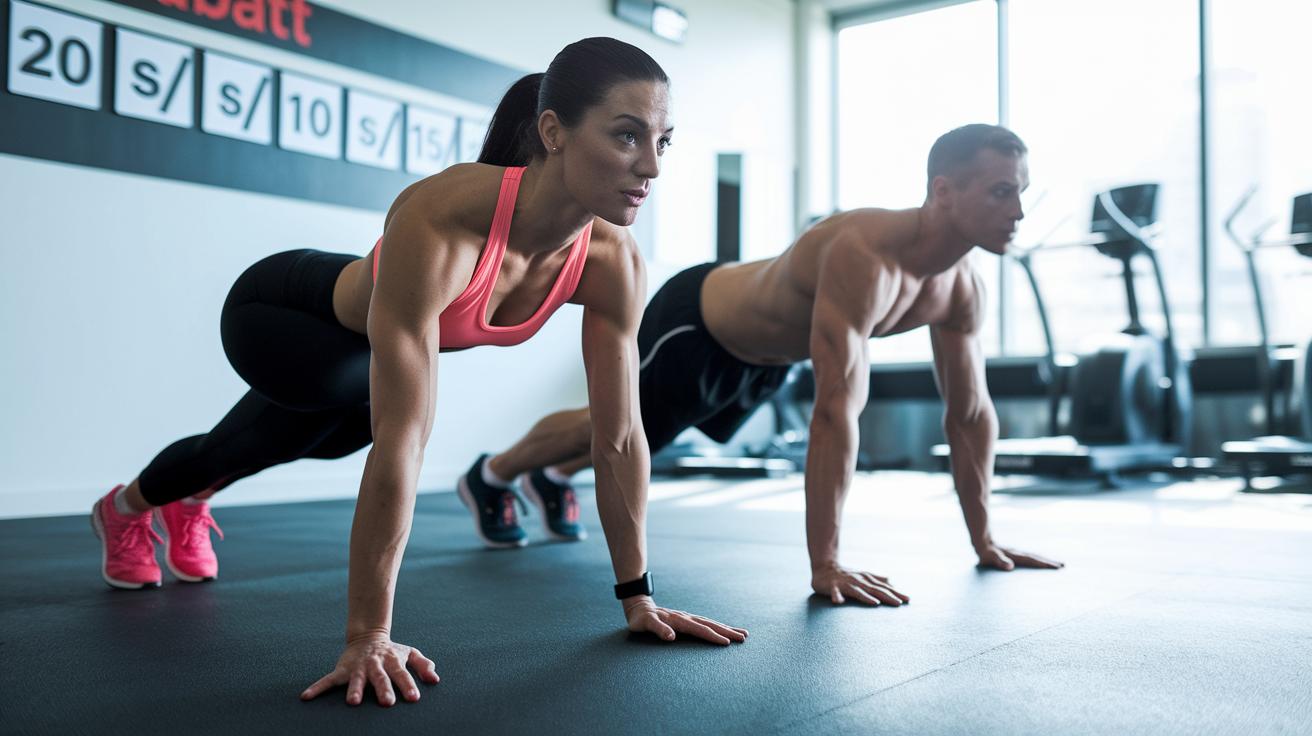
Tabata is a type of HIIT where you work hard for 20 seconds and rest for 10 seconds, repeating this cycle for 4 minutes. While every Tabata session is a HIIT workout, most HIIT routines allow you to adjust how long you work and rest based on what you want to achieve. One study from Japan found that just 120 minutes a week of Tabata led to strong results compared to 1800 minutes of moderate exercise.
The fixed intervals in Tabata keep your pace steady, making it easier to see your progress. This predictable pattern works well if you like clear, disciplined routines. In contrast, HIIT gives you the freedom to mix in things like strength moves or endurance bursts, so you can tailor your workout to your needs.
Remember, Tabata is best for those who already have a good base of fitness. If you're just starting out, build up your cardio endurance first before trying the strict 20/10 cycles. That way, you'll choose a routine that fits your current level and helps you meet your training goals.
Beginner-Friendly HIIT Tabata Circuits and Modifications
If you're just starting out with Tabata, try a few simple moves that hit different parts of your body. For example, do high knees to boost your heart rate, squats to work your legs, and crunches to target your core. This mix gives you a balanced 4-minute workout round. Do each move for 20 seconds, then take a 10-second break before moving on.
If 20 seconds of work and 10 seconds of rest feel too challenging, adjust the timing. Try working for 15 seconds and resting for 15 seconds until you build up your stamina. You can also start push-ups on your knees or replace jump moves with step-back lunges. These changes help you focus on form before you step up the intensity.
Begin with one or two sessions per week so your body has time to adapt. Always add a 2-minute dynamic warm-up (like a light jog or arm swings) before your workout and finish with a 2-minute cooldown. Between rounds, take a 60-second active rest, jog in place or walk, to keep your heart rate steady and help your recovery.
Advanced Metabolic HIIT Tabata Drills for Maximum Fat Burning

Push your limits with these fast, full-body efforts. Work hard for 20 seconds, rest for 10 seconds, and then spend 1 minute moving at a lighter pace. This pattern helps burn calories and boosts your heart and lung fitness.
Try these challenging drills:
-
Dynamic Squats
Do squats with a powerful upward burst. Keep your lift quick and strong, then land softly to protect your joints while building lower-body strength. -
Burpee with Push-Up
Jump into a plank and then perform a push-up with bent elbows. This smooth move fires up your core and upper body with every round. -
Spiderman Plank
Start in a stable plank. Then, bring one knee toward the matching elbow, switching sides each time. This drill strengthens your side muscles and shoulders to help with balance and endurance. -
Bulgarian Split Squats with Hop
Stand in a split stance and add a small hop to switch legs. This exercise tests your balance and powers up your leg muscles. You can also hold dumbbells during jump squats to work your glutes even harder.
Aim for 2–3 sessions each week, and remember to include lighter days to give your body time to recover.
Structuring HIIT Tabata Training: Scheduling and Recovery Insights
Plan your Tabata workouts 2-3 times a week. Mix in strength exercises or a gentle cardio session, like a brisk 30-minute walk, on alternate days. Remember to give each muscle group at least 48 hours to recover.
Rest for 1 minute between sets. Use this short break to catch your breath so you can keep your effort explosive throughout each round.
Begin with a 2-minute warm-up, such as jogging in place or doing arm swings, to wake up your muscles. When you're done, cool down for 2 minutes by stretching lightly or doing some gentle yoga.
On off days, try recovery methods like foam rolling, mobility drills, or easy yoga. Keep track of how many intervals you complete or how hard you work so you can adjust your training gradually for steady progress.
Final Words
In the action, this guide broke down a 20-minute HIIT Tabata workout plan that explains every interval, exercise selection, and recovery tip.
It outlined set work-rest ratios and modifications to help build strength and endurance safely.
Small steps today can lead to lasting improvements in physical and mental well-being, giving you a clear roadmap for hiit tabata workouts that are both research-backed and easy to follow.
FAQ
What is HIIT Tabata training?
The HIIT Tabata training is a form of high-intensity interval exercise featuring 20 seconds of effort followed by 10 seconds of rest, repeated in cycles to boost fitness and burn calories efficiently.
Are HIIT Tabata workouts suitable for beginners, including females?
The HIIT Tabata workouts for beginners are adapted for safe and gradual progression. They often include modifications like shorter intervals and easier variations, making them accessible for everyone, including females.
Can I do HIIT Tabata workouts at home without equipment?
The HIIT Tabata workouts at home are designed to be flexible. They work well with bodyweight exercises, letting you get an effective workout even without any equipment.
Are HIIT Tabata workouts effective when using weights?
The HIIT Tabata workouts with weights combine resistance moves with timed intervals. Incorporating weights can increase intensity, boost muscle engagement, and help accelerate calorie burn.
What exercises are typically used in Tabata routines?
The Tabata exercises list usually includes jump squats, burpees, planks, push-ups, and high knees. These moves offer a full-body workout and can be mixed for varied intensity.
Is 20 minutes of HIIT training per day enough?
The 20-minute HIIT session is typically sufficient for boosting metabolism and improving cardiovascular fitness when performed regularly, offering a time-efficient way to work out effectively.
Is Tabata HIIT good for weight loss?
The Tabata HIIT approach is good for weight loss as it elevates heart rate, increases calorie burn, and supports metabolic improvements especially when paired with a balanced diet.