Ever wonder if your own body holds the secret to building strength and boosting confidence? Bodyweight training uses simple moves like push-ups, chin-ups, and squats that you can do anywhere. Not only do these exercises strengthen your muscles, but each achievement builds your self-confidence. With small tweaks, like adding an extra rep or slowing down a movement, you can steadily progress and see real improvements. Try using your body as resistance to transform everyday moves into a powerful strength-building workout.
Achieving Muscle Growth with Bodyweight Exercise
Bodyweight training is a smart way to build muscle without using heavy equipment. When you work out with your own body, you challenge your muscles through everyday moves. This not only makes your muscles stronger but also boosts your confidence as you master a variety of exercises.
To really grow muscle, your workouts need to make your muscles work hard. For example, doing push-ups not only strengthens your chest but also works your shoulders, arms, and upper back. Chin-ups engage muscles in your back, arms, and core. Even simple squats can power up your quads, glutes, and hamstrings. To keep seeing progress, try adding more repetitions, pausing at the hardest part of each move, or switching to a trickier variation. Stick with it for about 4 to 6 weeks, and you'll notice your muscles adapting and growing.
- Convenience: You can work out at home without fancy gear.
- Scalability: Adjust each move to fit your strength level.
- Everyday strength: Build the muscles you use for daily tasks.
- Joint-friendly: Many bodyweight moves are lower impact.
- Cost effective: Get stronger without spending on gym memberships.
By using these simple techniques, you can make solid gains with your own body as resistance. Keep exploring new moves, challenge yourself gradually, and enjoy the journey to a stronger you!
Core Principles of Bodyweight Muscle Building
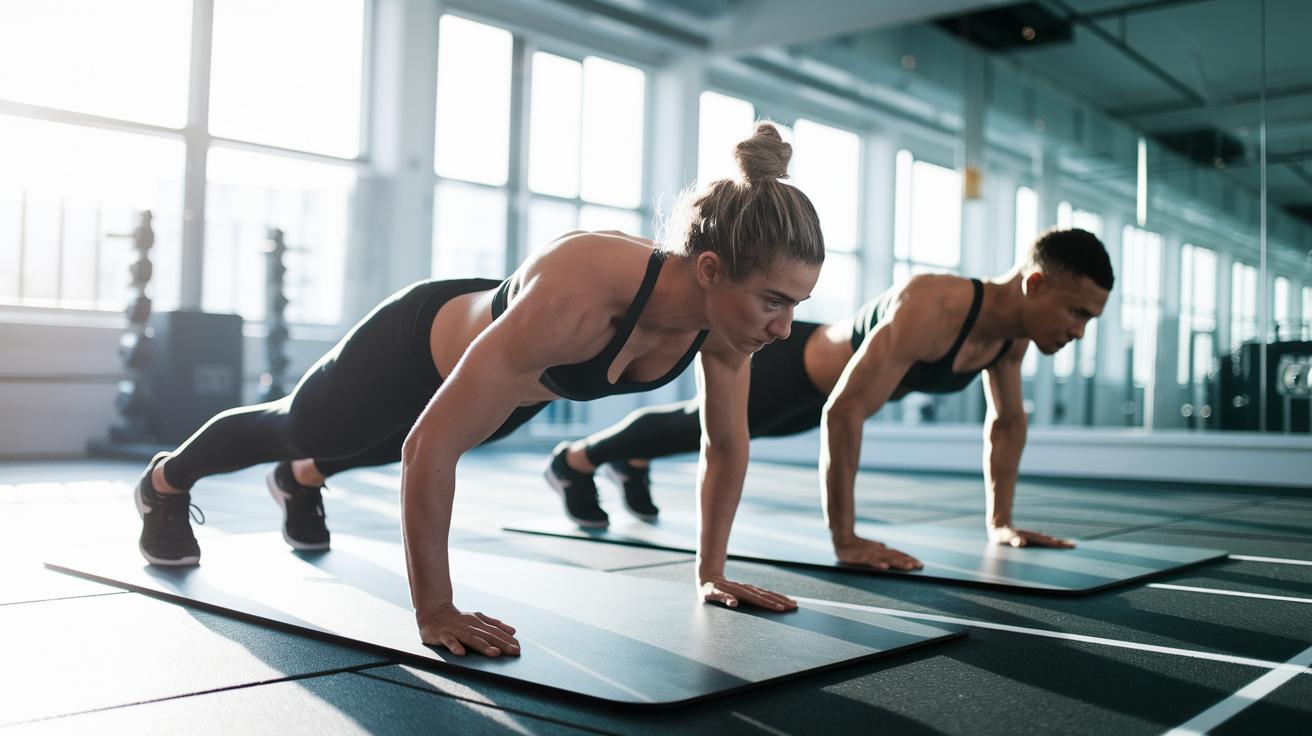
Bodyweight training for muscle gain works best when you use smart progressions. You can make your exercises tougher by adding more repetitions, shortening your rest from 90 seconds to 30 seconds, or by slowing down the lowering part of the move (called the eccentric phase) so your muscles work longer. Try using methods like mechanical drop sets, where you switch to an easier version of the exercise in the middle of your set to keep your muscles challenged. Also, proper form matters, a good tip for push-ups is to place your hands just a bit wider than your shoulders so that the right muscles do most of the work.
Start your workout with a quick dynamic warm-up to get your heart pumping and your muscles ready. After you finish, take a few minutes to stretch. This helps your muscles recover and keeps you flexible and strong. Following these simple steps lets you increase your training safely, even with a busy routine like a 6-day upper/lower split.
- Progressive overload
- Variation
- Tempo control
- Rest management
- Strict form
- Mobility work
Essential Bodyweight Exercises for Upper Body Gains
Bodyweight training is a smart way to work your chest, back, and arms without needing heavy equipment. With exercises like push-ups, pull-ups, and dips, you can build strength, see steady gains in muscle tone, and boost your confidence.
Standard & Deficit Push-Ups
Standard push-ups are great for building chest and arm strength. Place your hands slightly wider than your shoulders and complete 3-4 sets of 8-15 reps. If you want to step it up, try deficit push-ups. Simply elevate your hands on a firm surface for a deeper stretch (about 2 to 3 times more) that really wakes up your muscles. Remember: set your hands, lower slowly, and push up with power.
Vertical Push-Ups
Vertical push-ups shift the focus to your shoulders (delts) and upper traps. Stand close to a wall or lean against sturdy furniture and do 3 sets of 10-12 reps. This variation is less demanding than standard push-ups, making it a useful step as you build strength.
Pull-Ups & Chin-Ups
Pull-ups and chin-ups work your upper back and biceps. Use an overhand grip for pull-ups and an underhand grip for chin-ups. Start with band-assisted versions if needed and gradually move to full bodyweight. Aim for 3 sets of 6-10 reps to steadily challenge your grip and back muscles.
Parallel-Bar Dips
Parallel-bar dips are excellent for targeting your triceps and lower chest. Stand upright with your shoulders relaxed and complete 3-4 sets of 6-12 reps. For an extra challenge, pause briefly at the lowest point or adjust your leg positions to increase the intensity and boost muscle gains.
Archer & Diamond Push-Up Variations
For a more focused workout, try archer or diamond push-ups. These moves shift more weight to one side, which zeroes in on your triceps and inner chest. Aim for 3 sets of 6-8 reps per side to build balanced strength and add variety to your routine.
Lower Body Bodyweight Exercises for Strength and Size
Bodyweight Squats & Variations
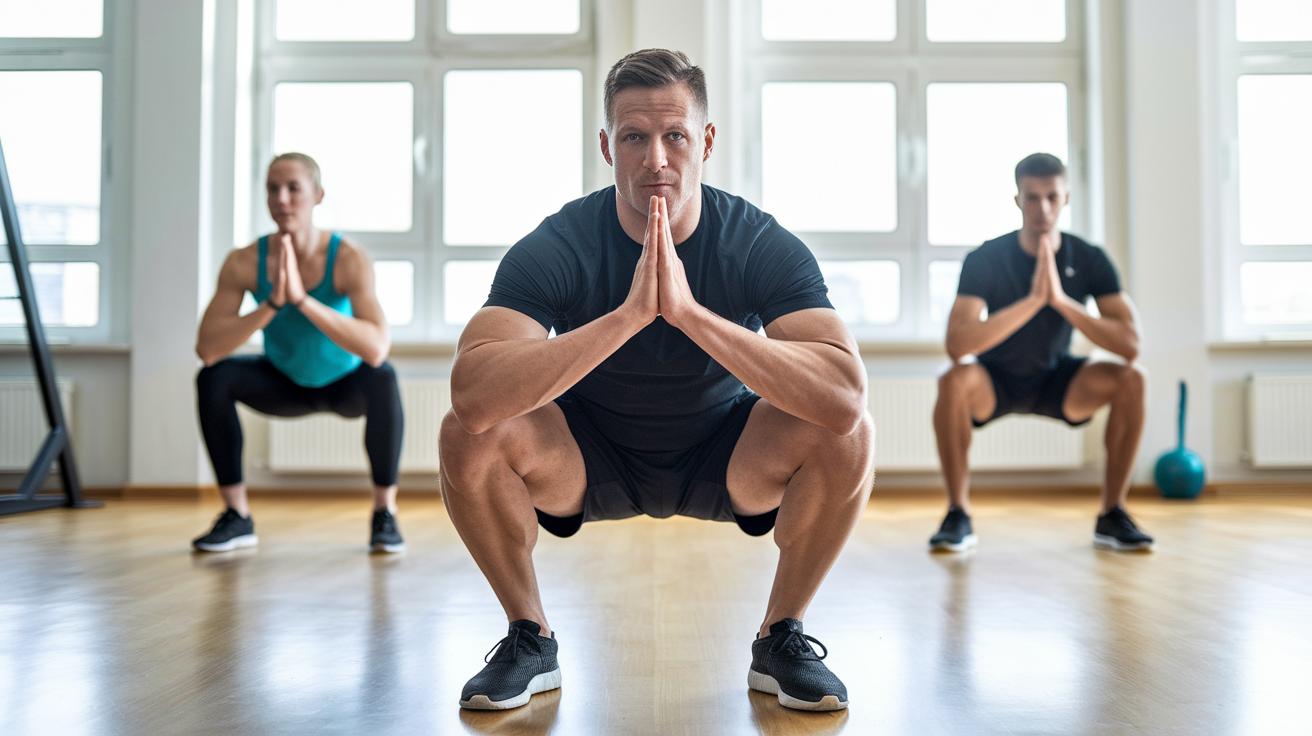
Bodyweight squats are a key move to build strong legs. Do 3 sets of 15–20 squats while keeping your form in check. Keep your chest up and lower your hips slowly to really work your muscles. Try taking a two-second descent to make your quads, glutes, and hamstrings engage more. If you want a change, switch to sumo squats to vary the load.
Reverse & Walking Lunges
Reverse and walking lunges not only build leg muscle but also work on your balance. Aim for 3 sets of 10–12 lunges on each leg. When stepping into a reverse lunge, make sure your front knee stays right above your ankle for safety. For walking lunges, take steady, controlled steps so that each leg shares the effort equally. These moves help you feel more stable and confident during your workouts.
Bulgarian Split Squats & Pistol Progressions
Bulgarian split squats and pistol squat progressions take your workouts to the next level. Try 3 sets of 6–8 reps for each leg with Bulgarian split squats by placing your back foot on an elevated surface. This exercise targets your glutes and quads intensely. When you’re ready for more, try pistol squat progressions and use a support if needed. Lower yourself slowly to build strength with care and focus.
Glute Bridges & Single-Leg Bridge
Glute bridges work your hip muscles with a simple, controlled movement. Do 3 sets of 12–15 reps and pause briefly at the top of each lift. To up the challenge, try single-leg bridges to work each side individually. Focus on fully squeezing your glutes and engaging your lower back. This helps build a solid foundation of strength for your lower body.
Core Stability and Midsection Work for Muscle Development
A strong core is the base for every lift you do. When your midsection stays steady, exercises like push-ups, squats, and chin-ups work more efficiently. A steady core keeps your body in line, stops wobbling, and helps you keep proper form. That means you can challenge your muscles safely, even with heavy lifts.
Try these simple bodyweight moves to boost your core strength:
- Hold a regular plank for 30–60 seconds.
- Do a side plank on each side for 30–60 seconds to work your side muscles (obliques).
- Perform 3 sets of 10–15 reverse crunches to firm your lower abs.
- Complete 3 sets of 10 bird-dog repetitions on each side to improve balance and strengthen your lower back.
Progression Strategies in Calisthenics for Hypertrophy
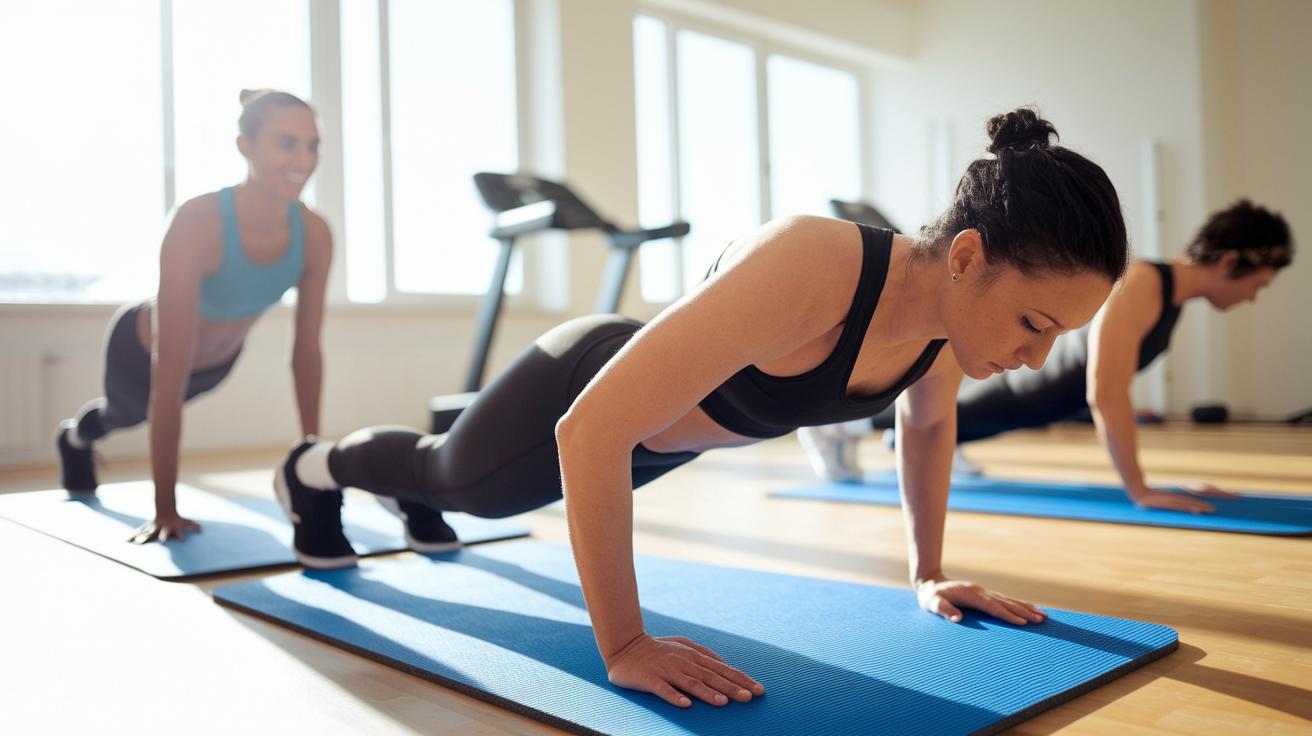
If you’re ready to build muscle with bodyweight exercises, try gradually increasing your repetitions. Start with a rep ramp, begin with 5 reps and slowly work up to 20 reps over a few weeks. This method pushes your muscles to work a little harder every session and helps boost both strength and size.
Another useful tip is to use a rest-pause set. When you reach near fatigue, pause for about 10-15 seconds and then squeeze out a few extra reps. This short break helps you keep your muscles engaged even when you feel tired.
You can also change the pace of your moves to make them more challenging. Slow down the lowering part of the exercise to around 3 seconds. This extra time under tension can turn an ordinary rep into one that really builds strength.
When you hit a plateau, try mechanical drop sets. After you feel fatigued, switch to an easier version of the exercise so you can continue your set. This trick helps keep your muscles active longer.
Lastly, mix up your workouts with daily undulating volume. This means varying the number of sets or reps each day, one day might focus on higher reps and the next on fewer, more intense sets. Changing things up keeps your muscles guessing and stops them from getting too comfortable.
By using these simple strategies, increasing reps, adding rest-pause sets, controlling your tempo, doing mechanical drop sets, and varying your workout volume, you can steadily build muscle even without extra equipment.
Structuring a Bodyweight Training Program for Mass: Sample Routines
If you're just starting, try a simple 3-day full-body split. This plan mixes movements into three groups: push, pull, and legs. For example, on Day 1, do standard push-ups (3 sets of 10–15 reps) to work your chest and triceps; chin-ups or door rows (3 sets of 6–10 reps) for your back and biceps; and bodyweight squats (3 sets of 15–20 reps) to target your legs. Rest for 60–90 seconds between sets to help your muscles recover while keeping your heart rate up. Over 4–12 weeks, add more repetitions or pause at the tightest part of the move to keep challenging your muscles. This simple routine is great for improving your form and building confidence with each exercise.
Once you’re comfortable with the basics, step up to a 6-day upper/lower split. This more advanced plan has you alternate between upper body days and lower body days. On upper body days, mix in exercises like standard push-ups, vertical push-ups, pull-ups, and dips (3–4 sets of 8–12 reps each) to work your muscles evenly. On lower body days, add moves such as Bulgarian split squats, reverse lunges, and explosive squat pulses (3–4 sets of 10–15 reps). Keep your rest times shorter at 30–60 seconds to maintain the workout intensity. To increase the challenge, try mechanical drop sets, switch to an easier variation once you feel tired. Over weeks 4 to 12, push yourself to reduce rest time or slow down the lowering phase of each move. This steady progression will help you build muscle and see consistent gains.
Nutrition and Recovery for Bodyweight Muscle Growth
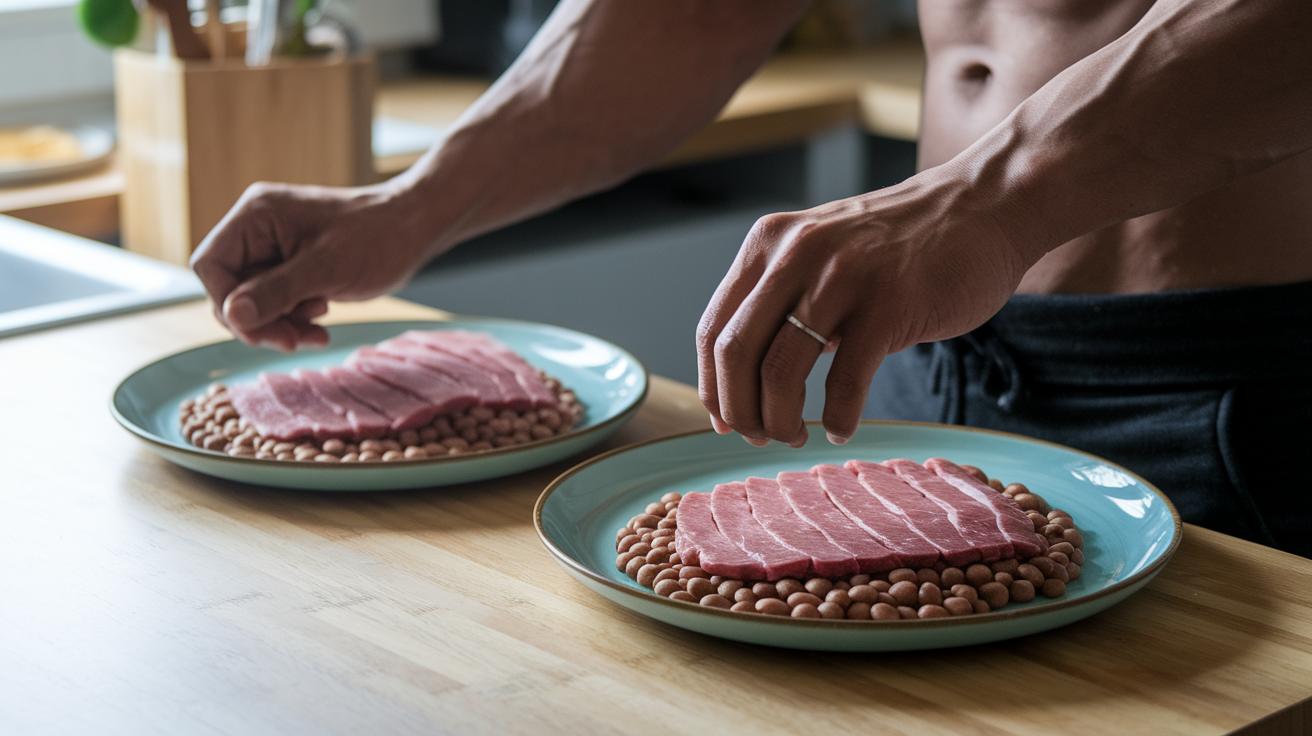
Building muscle starts with proper fuel. Try eating an extra 200 to 300 calories each day to give your muscles the energy they need. You also want to have about 1.6–2.2 grams of protein per kilogram of your body weight. Choose whole foods like lean meats and beans to repair and grow your muscles after a tough session. If you’re up for it, natural supplements like creatine monohydrate can also help boost your strength. Think of each meal as a mini construction project where you're adding the right blocks for muscle growth.
Recovery matters just as much as your workouts. Make sure you get 7 to 9 hours of sleep each night so your body can repair itself while you rest. After exercising, spend about 5 minutes doing foam rolling and light stretching to ease any soreness and keep you flexible for your next workout. These simple steps make a big difference in how you feel and perform every day.
Common Mistakes and Injury Prevention in Bodyweight Muscle Training
Focus on your form and full range of motion with every move. Rushing or cutting corners may strain your joints and could lead to injury. In exercises like dips and push-ups, keep your elbows close to avoid shoulder problems. Take a short pause between sets to check that your technique is correct.
Match the challenge to your current strength. If a full push-up or dip feels too hard, try using a band for help or doing an inclined version, like an elevated push-up. These simple changes cut down stress on your shoulders and back while still giving your muscles a good workout.
Mix up your routine to avoid overworking one muscle group. Rotate your exercises and allow specific muscles to rest between workouts. Keeping a balanced training plan helps you build strength safely and steadily reach your fitness goals.
Final Words
In the action of bodyweight training, every small step adds up. We covered the basics, from targeted upper and lower body moves to core stability, while exploring practical progression and recovery strategies. You learned how to adjust reps, modify moves, and pace workouts for safe, steady gains.
Keep focusing on techniques that help you build muscle with bodyweight training. Embrace these tips, stay consistent, and enjoy the rewarding improvements in strength and overall well-being.
FAQ
How can I access a bodyweight workout plan PDF?
The bodyweight workout plan PDF offers a ready-to-use guide with detailed exercises, rep schemes, and progressions designed to help you build strength and muscle at home.
What is a bodyweight workout program?
A bodyweight workout program uses your own weight for resistance through moves like push-ups, squats, and burpees, allowing you to build muscle and improve endurance without equipment.
How does a 12-week bodyweight workout plan PDF help with muscle building?
The 12-week plan PDF outlines a progressive schedule that increases challenge over time, ensuring you move from basic to advanced variations to stimulate muscle growth efficiently.
How can I gain muscle at home without equipment?
You can gain muscle at home without equipment by following structured bodyweight routines with progressive overload techniques, making controlled modifications that work for both men and women.
What are the best bodyweight exercises for muscle growth?
The best bodyweight exercises include push-ups, squats, lunges, burpees, and planks, each targeting major muscle groups for balanced muscle development and functional strength.
What is calisthenics in a bodyweight workout?
Calisthenics uses natural body movements like push-ups and squats to build muscle, improve coordination, and boost endurance, making it a practical and effective form of home training.
How do I perform effective lunges, burpees, and squats?
Effective lunges, burpees, and squats require proper form—maintain balance and full range of motion, control your movements, and gradually increase reps to maximize muscle engagement.
What role does high-intensity interval training play in bodyweight workouts?
HIIT with bodyweight moves alternates short bursts of vigorous exercise with brief rest, raising your heart rate and boosting both muscle endurance and overall metabolic fitness.