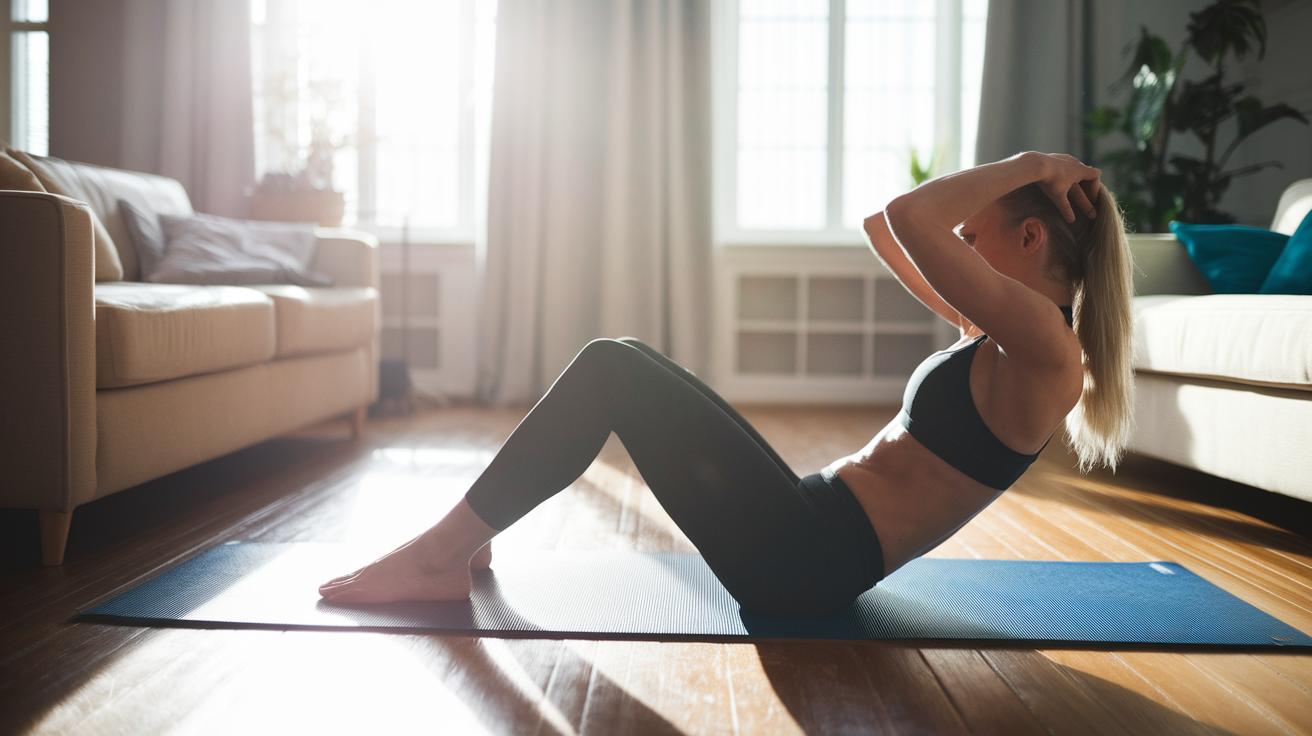
Have you grown tired of high gym fees and cramped workout spaces? Imagine building a stronger core right in your living room with a simple routine. This workout includes five easy bodyweight moves that work your front, side, and deep core muscles. Start with a quick warm-up, then try moves like bicycle crunches and scissor kicks, and finish with a low plank to hold your progress. Give it a go and transform your home into a personal strength zone today!
Essential Equipment-free Abs Workouts at Home
Begin with a quick 5-minute warm-up. Try light marching or gentle jumping jacks to get your blood pumping and prepare your body for exercise.
This workout focuses on your front abs, side abs, and deep core muscles. You’ll do five bodyweight moves: bicycle crunches, scissor kicks, hollow hold, toe reaches, and low plank hold. Perform each exercise for 30 seconds, then take a 20-second rest. Repeat the circuit three times for a complete session.
Bicycle crunches train both your front and side abs. As you perform them, keep your lower back flat on the floor and avoid straining your neck. Scissor kicks work your lower abs; use slow, controlled motions with a brief pause after each kick.
For the hollow hold, lie on your back and lift your shoulders and legs slightly off the floor. Aim for a gentle arch (like a bow shape) while you breathe steadily. Think of it as bracing your midsection for a light tap.
Toe reaches are all about control. Extend your arms slowly toward your toes while engaging your core, keeping the movement smooth and deliberate.
The low plank hold wraps up the circuit. Align your shoulders over your wrists and maintain a straight line from head to toe. Keeping your core tight is key. Slow, deliberate moves with good form can help prevent injuries and build strength.
Finish your workout with a 5-minute cool down. Do gentle core stretches to relax your muscles and bring your heart rate back to normal.
For a full-body workout plan, check out this home exercise schedule at https://bezenn.com?p=135
Beginner-Friendly Core Sessions for Home Abs Workouts
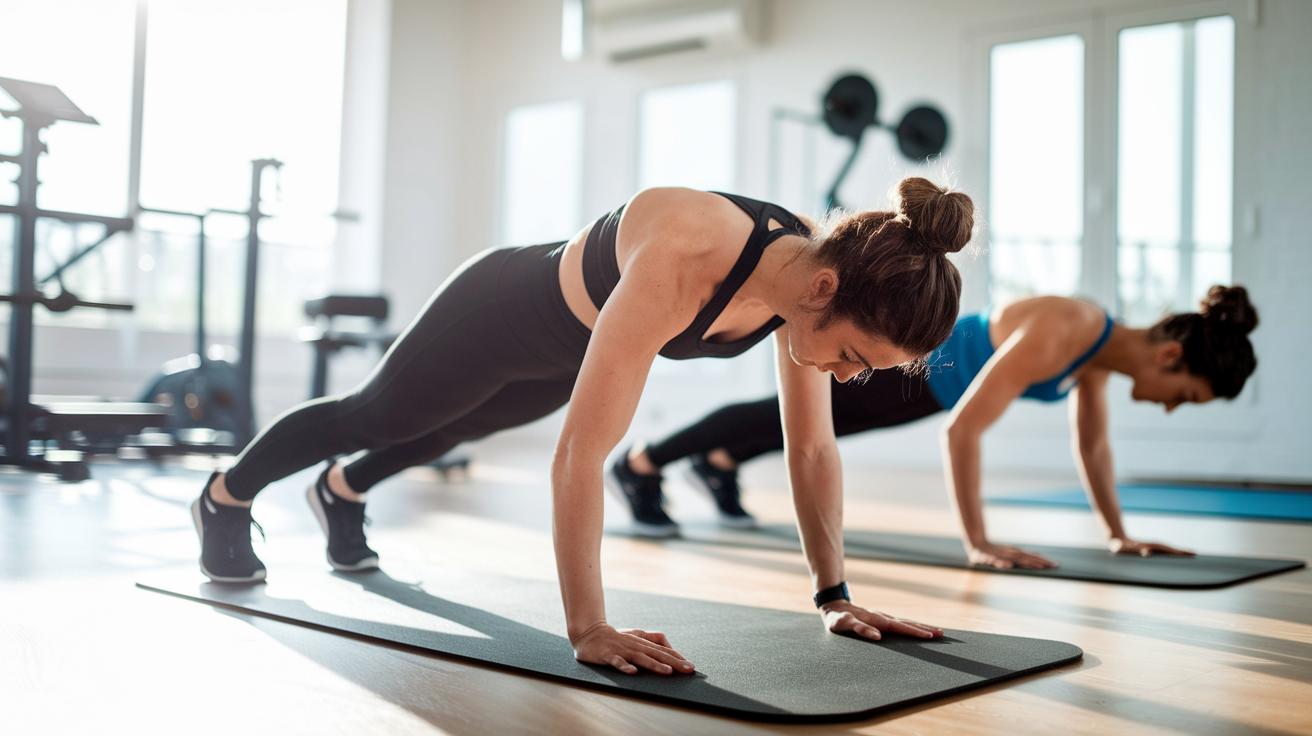
Start your abs workout with a simple circuit that builds strength step by step. Begin with the high plank. Place your hands under your shoulders and keep your body in a straight line from head to heels. This exercise wakes up your entire core, imagine holding a firm board. For starters, try holding the plank for 30 seconds while tightening your belly, then rest for 20 seconds.
Next, lie on your back for the dead bug. Slowly lift one arm and the opposite leg at the same time while keeping your lower back pressed firmly against the floor. Think of it as a gentle rocking motion where keeping still matters. Do this for 30 seconds and then take a 20-second break.
Now, try ankle pulses. Raise your heels roughly six inches (15 cm) off the floor and pulse up and down at a gentle pace. Picture it like a small heartbeat in your lower abs. Do this for 30 seconds, then rest briefly.
For a bit more twist in your session, move on to Russian twists. Sit back so your upper body is at about a 45-degree angle and slowly turn your torso from side to side. Move with care, imagine you are turning a steering wheel with precision.
Finish your circuit with flutter kicks. With your heels hovering about six inches (15 cm) in the air, make small, quick kicks alternating between legs. Focus on smooth, rapid movements to keep your core engaged.
Repeat the entire circuit three times. Each 30-second burst with a 20-second break not only builds strength but also teaches you how to properly engage your core for a solid foundation for future workouts.
Progressive Core Strength Conditioning in At-Home Abs Workouts
Ready to level up your abs? Try this intermediate core workout that uses only your body weight. First, start with V-sit static holds. Sit on the floor and lean forward from your hips while keeping your back straight, then lift your legs into a V shape. Hold this position for 40 seconds and tighten your stomach muscles throughout. A steady pace helps work your side muscles (obliques) and deep core (transverse abdominis) better than basic crunches.
Next, get into a high plank for plank hold leg raises. Make sure your shoulders are over your wrists, then alternate lifting one leg at a time over 40 seconds. Keep your hips level with slow, controlled movements. Think of each lift as a mini balancing challenge that boosts your core stability.
Then, try forward-to-reverse crawls. Start in a high plank, crawl forward to your comfort limit, and then crawl back to your starting point. Maintain a deliberate pace for 40 seconds as you coordinate your arms and legs to work your entire midsection.
After each exercise, take a 20-second rest. Complete the circuit three times, and feel free to adjust the rest or rounds based on your fitness level. This set of exercises builds strength, balance, and control, giving you a challenging yet practical core workout.
Advanced Abdominal Circuits for Home Core Workouts
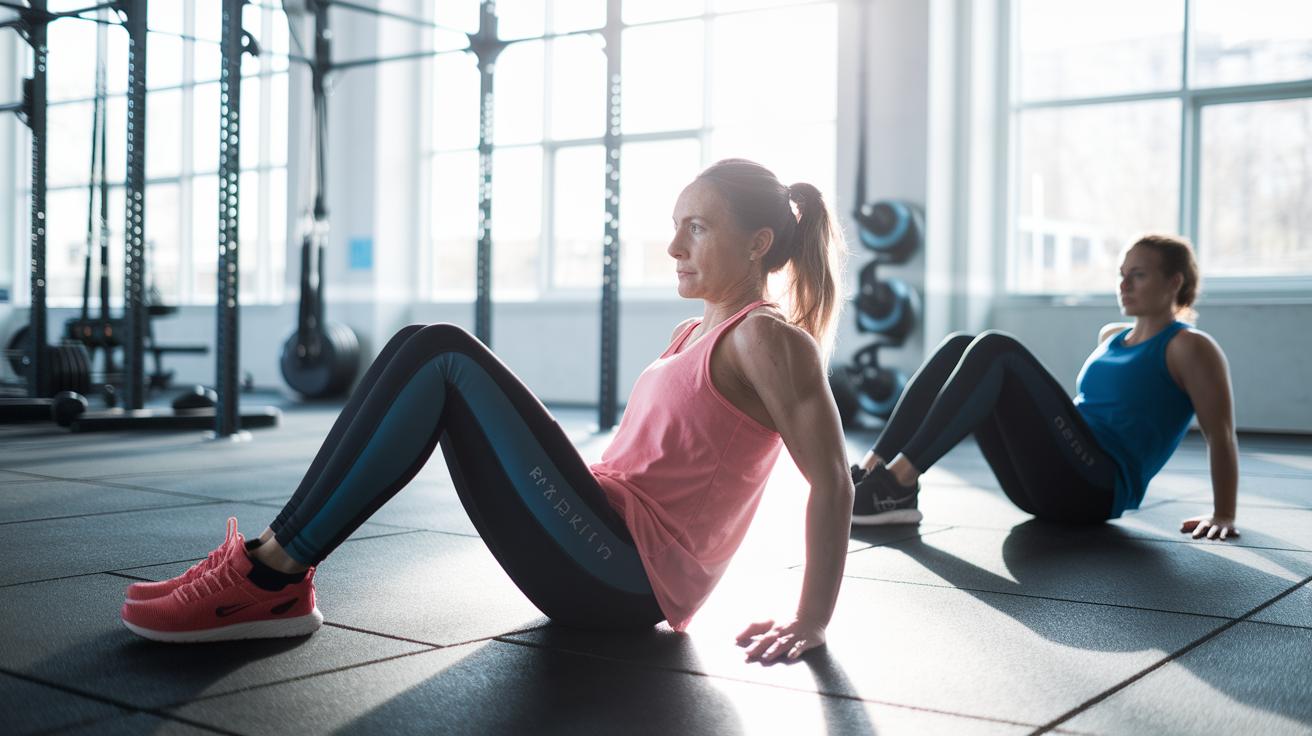
Try this high-intensity circuit to boost your endurance and fortify your core. The workout mixes moves like V-sits, hollow-outs, and plank jacks with shoulder taps to create a full-body challenge. Do each move for 45 seconds, rest for 15 seconds, and repeat. Aim for as many rounds as possible in 12 minutes.
Start with V-sits. Sit on the floor and lean back until your body makes a 45-degree angle. Keep your legs straight and your stomach tight, like a solid board.
Next, lie on your back for hollow-outs. Lift your shoulders and legs slightly off the floor so your body forms a gentle curve. This helps target your deep core muscles. Focus on smooth, controlled movements rather than speed.
Finish with plank jacks paired with shoulder taps. Hold a high plank position, jump your feet in and out, and tap each shoulder one at a time. This move raises your heart rate and further challenges your core stability. Keep your pace steady and your hips level.
Repeat the circuit continuously for 12 minutes. Push yourself to complete as many rounds as you can, always prioritizing proper form. This series boosts both endurance and core strength with every dynamic, explosive movement.
Safety Tips and Proper Form for Equipment-Free Abs Workouts at Home
Start by checking your workout area for hazards. Use a firm, non-slip mat for extra stability and cushioning. If your mat doesn't grip well, try placing a folded towel underneath to boost support and help prevent slips during active moves.
Keep your breathing steady to help engage your core. As you tighten your abs, exhale slowly, and inhale as you relax. For example, when doing a dead bug, match your breath to each move for better control and balance.
If you feel discomfort in your lower back or neck, even when using proper form, try these adjustments:
- Look in a mirror to check your alignment and prevent overextending your back.
- Place a small cushion under your lower back if discomfort persists.
- Limit how far you move or reduce the number of reps until you build more strength.
- Stop immediately if the pain worsens and reassess your form.
To further boost safety, consider recording your workout. Watching the playback can help you catch any misalignments you might have missed during your routine.
Integrating Abs Workouts into a Balanced Home Fitness Routine
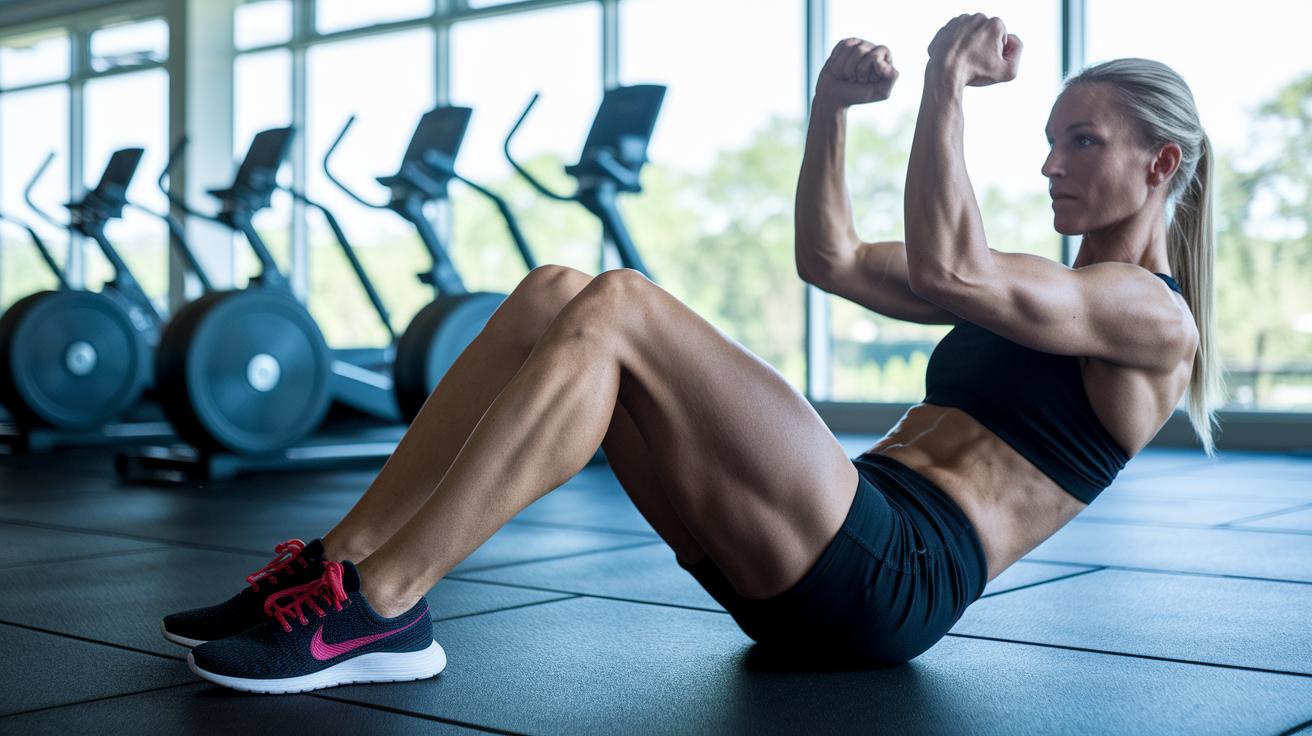
Quick take: blend dedicated abs exercises with overall fitness moves to boost strength and endurance. Start by adding three abs-focused sessions each week. On those days, do a circuit of core exercises to work every muscle in your midsection.
On other days, try 20–30 minutes of moderate cardio, like a brisk 15-minute walk (around 1 mile or 1.6 km), to help burn calories and support your core workouts. Mixing in full-body moves with your abs sessions can help you shed fat and build strength while keeping your workouts fresh and efficient.
Alternate days for core training with cardio and active recovery. This way, you tone your core and build stamina while also giving your muscles time to rest. Adjust the workout intensity based on what feels right for you and slowly increase duration or resistance as you get stronger.
Check out the weekly schedule below to plan your sessions. By tracking your progress in balance and muscle tone, you can see your improvements over time. Stick with it and listen to your body, making small changes as needed to keep challenging your core safely.
| Day | Workout |
|---|---|
| Monday | Beginner core circuit |
| Tuesday | 25-minute brisk cardio |
| Wednesday | Intermediate core booster |
| Thursday | Active rest stretches |
| Friday | Advanced circuit challenge |
| Saturday | HIIT cardio+abs combo |
| Sunday | Full rest |
Final Words
in the action. This guide broke down a full range of routines, from beginner circuits to advanced moves, designed to deliver results without any equipment. It offered clear form tips, safe modifications, and even a weekly schedule to help you fit abs workouts at home into a busy life. Every section built on simple steps that make starting and progressing easy. Keep moving forward with these core moves, and enjoy the steady boost to your strength and confidence. For a full-body schedule integration, check out the home workout plan.
FAQ
What is the best equipment-free abs workout for all levels?
The best equipment-free abs workout mixes moves like bicycle crunches, planks, and dead bug variations, making it suitable for beginners, ladies, and men while targeting the entire core with bodyweight exercises.
What are the 3 best ab exercises to do at home?
Three effective exercises include crunches, planks, and dead bugs. These moves target various core muscles while being simple to perform without any equipment.
Which ab exercises are essential in a home routine?
Essential exercises for a home routine include crunches, leg raises, planks, dead bugs, hollow holds, and sit-ups. Each move works different core muscles to build overall strength.
Can I get six pack abs in 7 or 30 days at home?
Achieving a six pack in 7 or 30 days is challenging. Consistent exercise, proper form, and a balanced diet are key factors in gradually revealing defined abs over time.
Is a 20-minute ab workout enough for core strength?
A 20-minute ab workout can build core strength if performed with proper intensity and focus. However, progress may vary based on starting fitness, exercise quality, and consistency.
For more tips on integrating core workouts into your overall routine, check out our home workout plan.