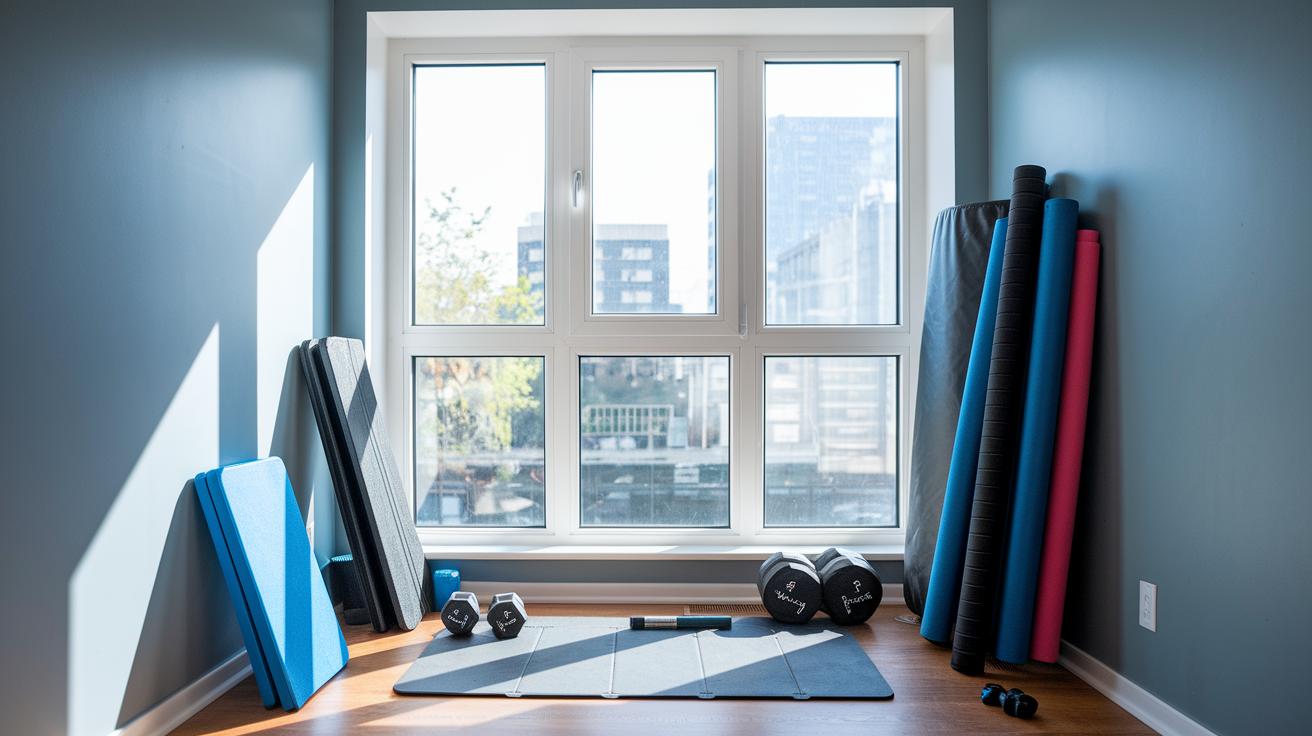
Ever thought about getting more out of your home workouts without needing a gym? You can boost your strength and confidence at home by using simple bodyweight training tools. Try using pull-up bars, dip bars, or gymnastic rings to mix up your routine and add a new kind of challenge. With the right equipment, you can safely push your limits while keeping your workout fun and fresh. Let’s explore how you can create a one-of-a-kind workout space that takes your training to the next level.
Essential bodyweight training equipment for a complete home gym
Curated gear can make your home workouts both effective and safe. Many users trust these tools to help build strength naturally. Here’s a list to get you started:
- Pull-up bar: Great for working your back, shoulders, and arms; installable on a wall, ceiling, or doorframe.
- Dip bar: Strengthens your triceps, chest, and shoulders with a sturdy and compact steel design.
- Gymnastic rings: Adjustable rings that let you challenge your upper body, perfect for exercises like ring dips.
- Parallettes: Small bars that support push-ups, L-sits, and even pseudo planche moves; the foam grips add extra comfort.
- Weighted vest & dip belt: Allow you to increase resistance gradually, making bodyweight exercises tougher over time.
- Resistance bands: Color-coded for different tension levels, these bands work well for both assist mode and added resistance.
- 24"x24" foam mat: Provides cushioning to protect your joints and absorbs impact during high-intensity workouts.
- Push-up bars: Improve your range of motion and ease wrist pressure while doing push-ups.
- Jump rope: A simple tool to warm up quickly, boosting your heart rate while improving coordination.
- Sling trainer: Uses adjustable straps for suspension training that targets your core stability.
- Grip enhancers (like pads or chalk): Help secure your grip, especially when using rings or heavy equipment.
- Kettlebell: Blends weight training with bodyweight exercises to boost overall strength and power.
When picking out your gear, look for items that are built to last and easy to set up at home. Choose tools that match your current fitness level yet let you progress to tougher challenges. This balanced mix of resistance, stability, and dynamic movement equipment is here to help you build strength safely and steadily.
Pull-up rigs and overhead bar stations: strength and installation insights
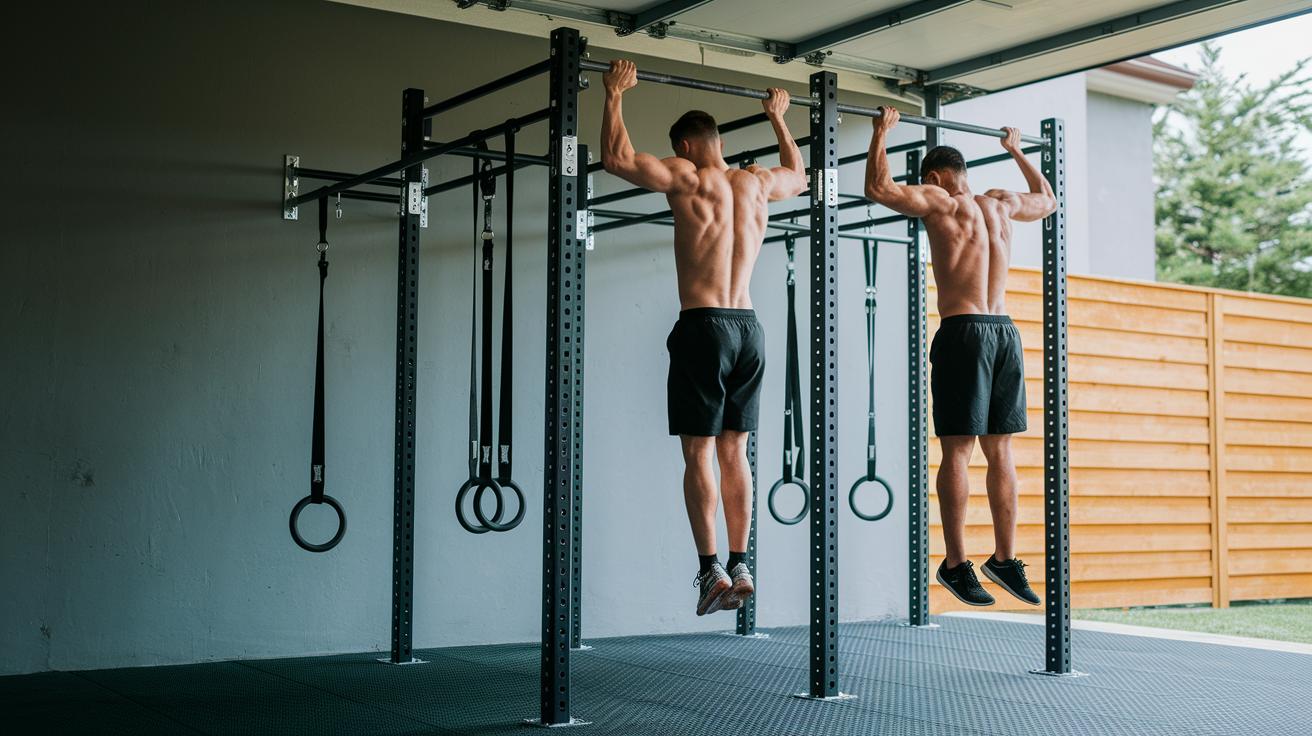
Pull-up rigs come in a variety of styles. You can find ones that mount on the wall, hang from your ceiling, fit into a door frame, or even attach to a tree if you prefer an outdoor workout. Most models feature aluminum bars with smooth-rolling bearings and can safely support up to 350 lbs. This design helps you work your back, shoulders, and arms effectively, and some models even have finishes that resist weather, so they’re great for use in a garage or backyard.
When it comes to setting up your station, most DIY kits include anchor bolts for a secure installation. Start by measuring your ceiling height and locating the studs for ceiling-mounted setups. If you choose a wall-mounted option, take a few moments to check the wall’s structure first. Proper anchoring is key to keeping things safe and avoiding injuries during your workouts.
Finally, consider your available space. A well-chosen overhead bar station enhances your exercise routine while taking up very little floor space. This makes it an ideal choice for smaller home gyms or compact living areas. Enjoy building a safe, effective workout setup that fits right into your lifestyle.
Dip stations, parallettes, and push-up platforms for upper-body development
Dip bars are a great way to work your triceps, chest, and shoulders. They come with steel frames that safely hold up to 300 lbs (136 kg), letting you perform dips and similar moves with confidence.
Parallettes also play an important role in your routine. They support moves like planche progressions, L-sits, and pseudo planche push-ups. With foam-grip handles to keep your grip secure, they help you stay stable as you challenge your muscles. Mixing dip bars and parallettes creates a balanced workout that grows with your strength.
Push-up platforms are designed to ease wrist strain and increase your range of motion. Their anodized aluminum build makes your chest and shoulder work harder with each push-up. Try pairing them with a weighted vest, start with 10 lbs (4.5 kg) and add 5-lb (2.3 kg) increments, to ramp up the challenge safely. This setup not only helps you progress step by step but also protects your joints. Whether you're new to upper-body workouts or looking to intensify your routine, these tools are a portable solution for building muscle as you improve.
Resistance bands, weighted vests, and belts: adjustable challenge tools
-
Resistance bands
- These bands are color-coded to show their tension, ranging from a light assist (about 10–25 lbs) to a heavy load (over 100 lbs).
- You can adjust the band's thickness or where you wrap it to make moves like push-ups, pull-ups, or squats easier or tougher.
- For example, try a band that tightens when you lower down during push-ups to boost your challenge.
-
Weighted vests
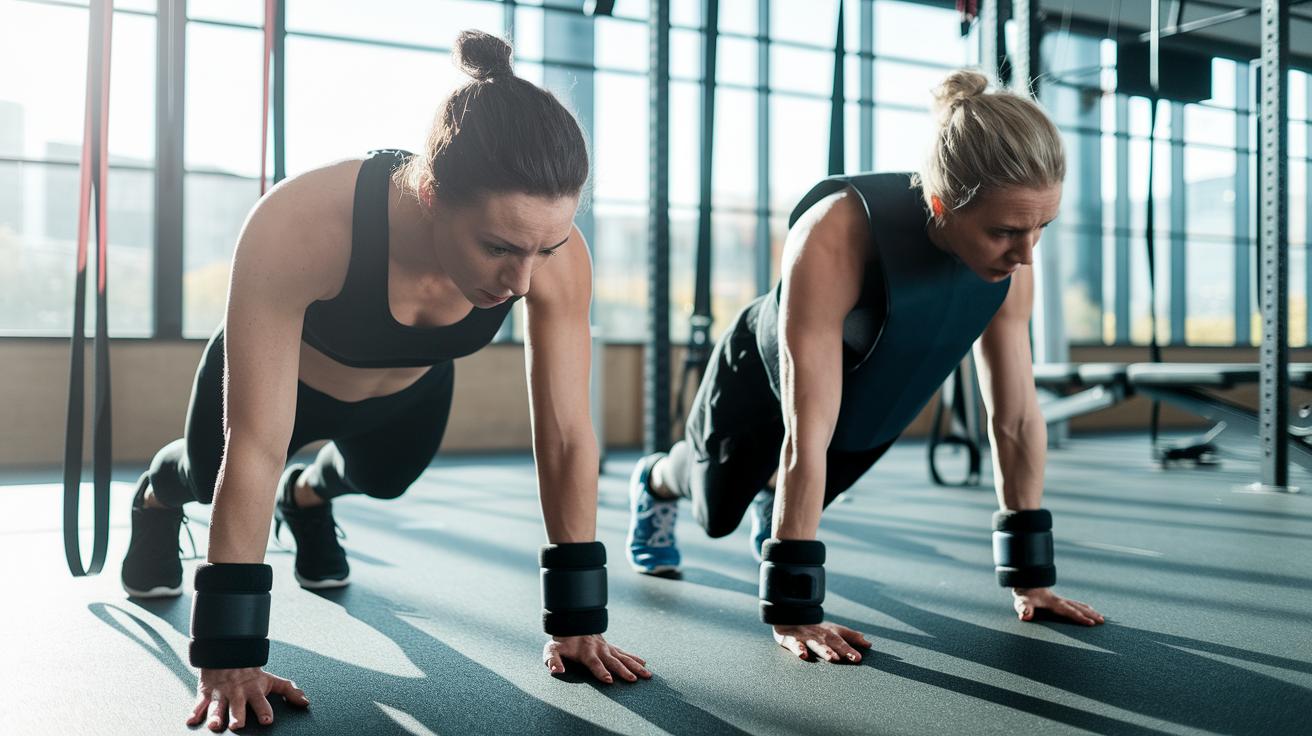
- Weighted vests start around 10 lbs and let you add more weight, up to 40+ lbs, with adjustable plates.
- Begin with a light setting and slowly add more weight to make exercises like lunges, planks, and push-ups feel harder.
- For instance, slip in an extra plate during planks to help build upper body strength gradually.
-
Dip belts
- Dip belts come with a sturdy chain and carabiner to safely attach extra plates for dips or weighted pull-ups.
- Their compact design means they're easy to store or take along, letting you increase your weight load step by step.
- For example, use a dip belt during pull-ups to gradually add more weight as your muscles get stronger.
Gymnastic rings, suspension trainers, and stability gear for dynamic movements
Using these tools in your routine can boost your strength, balance, and coordination in a natural way. They add a fun twist to your workout by making your muscles work through small, controlled wobbles and varied movements.
Gymnastic Rings
Gymnastic rings, made from strong wood or steel, hold more than 300 lbs. That makes them safe for moves like ring dips and muscle-ups. Mount them securely to a sturdy beam or ceiling bracket, then try some ring dips in a clear space to work your chest and core.
Suspension Trainers
Suspension trainers feature adjustable nylon straps with cam-lock buckles and can support up to 350 lbs. You can easily change the strap length and anchor point to fit your needs. Try exercises like suspended planks and rows to challenge your balance and build core strength quickly.
Stability Gear
Stability gear includes exercise balls and balance boards that help activate your core and improve how you sense your body in space. Exercise balls come in sizes around 55 to 75 cm and work great for seated drills. Balance boards add variety to your warm-up and can boost your coordination. Many options include foam mats to protect your floor during your workout.
Integrating bodyweight equipment into workout plans for progressive gains
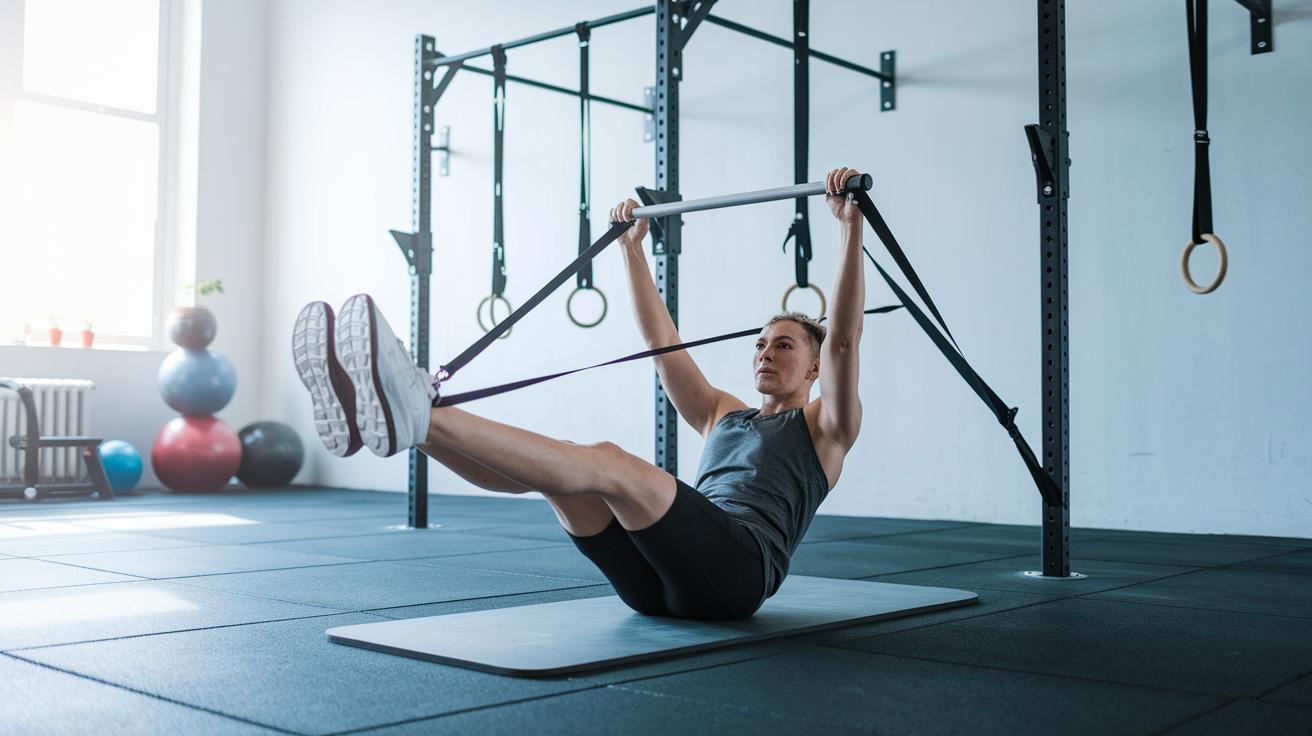
For beginners, start with a basic circuit that builds strength gradually. Try doing 3 sets of 8 band-assisted pull-ups, 3 sets of 10 push-ups on parallettes, and 3 sets of 12 bodyweight squats. End your session with 1 minute of jump rope. This routine helps you learn proper form and builds a solid foundation for tougher moves.
Once you feel steady, move up to an intermediate circuit that works different muscles together. Do 4 sets of 6 dips to work your triceps and chest, 4 sets of 5 L-sit holds on rings to strengthen your core, and 4 sets of 8 assisted pistol squats to push your leg muscles. Finish with 2 minutes of jump rope to keep your heart pumping. This sequence gradually ramps up the intensity while adding balance and stability challenges.
When you're ready to level up, add extra resistance for even more gains. Try 5 sets of 5 weighted vest pull-ups, 4 sets of 4 ring muscle-ups, and 4 sets of 6 suspended pistol squats. These advanced moves demand greater strength and control, so only tackle them once you have a solid base.
Finally, track your progress with a simple log. Write down how many sets and reps you complete, any changes in equipment, and how each workout feels. Many athletes stick with full-body workouts three times a week or split routines (upper body/lower body) four times a week to keep steady progress while cutting down on injury risk.
Final Words
In the action, we highlighted key tools, from pull-up bars to gymnastic rings, that can boost home workouts. The post broke down each item's benefits with clear, actionable steps. Whether you're setting up your space or fine-tuning your routine, using essential bodyweight training equipment makes exercise accessible and fun. Small changes add up, paving the way for gradual, sustainable gains in strength and balance. Keep this guide handy as you build a healthier daily routine. Stay positive and enjoy every win along the way.
FAQ
What is considered the best full bodyweight training equipment, including favorites from Reddit?
The best full bodyweight training equipment includes pull-up bars, dip stations, gymnastic rings, and parallettes. Reddit users also favor versatile tools like resistance bands and weighted vests for efficient strength building.
Where can I find bodyweight training equipment for sale?
The availability of bodyweight training equipment for sale is broad, with online retailers, specialized fitness stores, and community marketplaces offering quality gear for building a robust home workout setup.
How can I set up a home gym that uses your body weight?
Setting up a home gym that uses your body weight involves combining pull-up rigs, dip bars, resistance bands, and mobility tools to create an effective training space without bulky machines.
What are the advantages of personal training and resistance training equipment for home workouts?
Investing in personal training and resistance equipment for home workouts provides adjustable intensity, portability, and effective progression using items like resistance bands, weighted vests, and dip belts.
What mobility training equipment is recommended for bodyweight workouts?
Recommended mobility training equipment includes foam mats, balance boards, and grip enhancers, which help improve range of motion, reduce impact, and support overall body control during workouts.