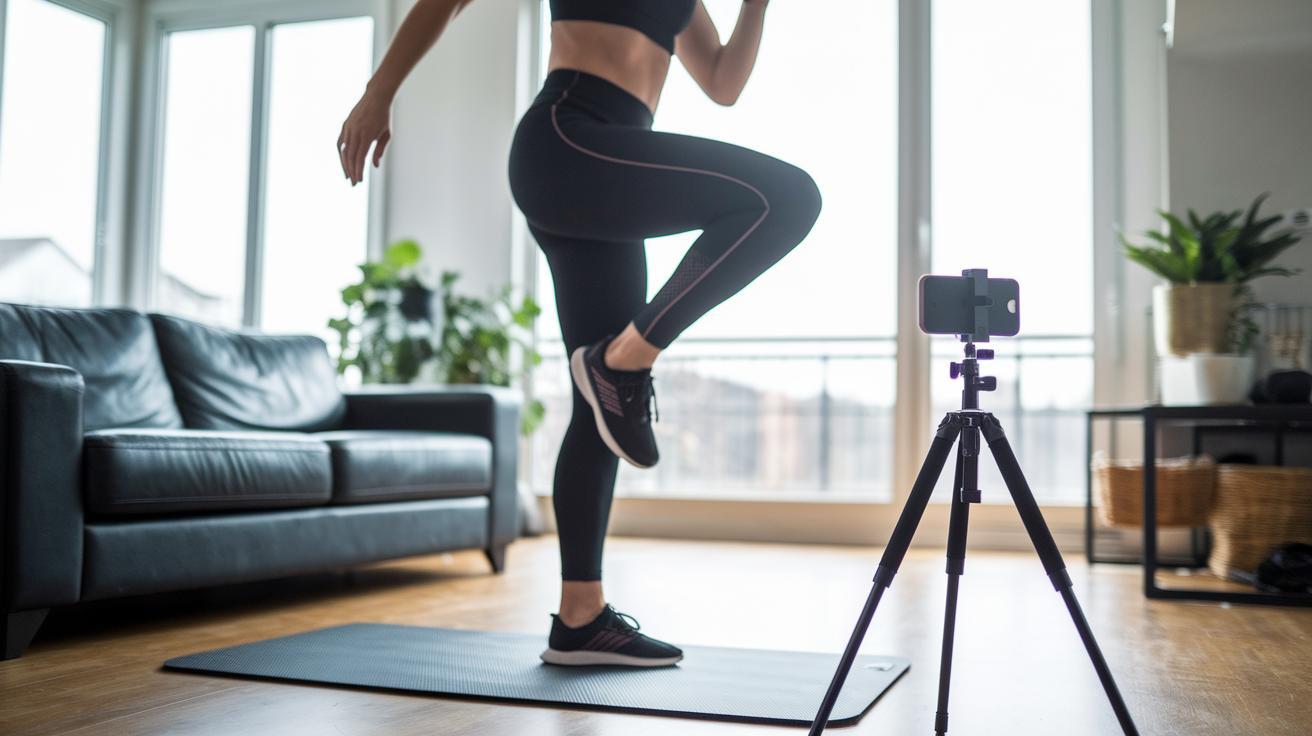
Think you need a gym for powerful calves? Think again. You can strengthen your calves at home using just your bodyweight. Start by doing slow, steady movements that work the muscles without fancy equipment. A few simple exercises done regularly can make a big difference. Ready to turn your everyday routine into a quick workout? Let's dive in.
At-Home Calf Muscle Workout Blueprint
Your calf muscles are made mostly of slow-twitch fibers that need regular work. To see growth, exercise them three to five times each week. Aim for 12 to 20 sets throughout the week, using slow, controlled movements that take your calf from a deep heel drop to a full lift. For example, try a standing calf raise: lower your heel slowly, hold the top for 1–2 seconds, then lower again.
Start with bodyweight exercises to build your foundation. They work well if you don’t have extra equipment. As you improve, add new variations to keep challenging your muscles. Here’s a simple plan:
- Train 3–5 times each week.
- Do 3–4 different exercises during each workout.
- Complete 12–20 reps per set, with 12–20 sets spread out over the week.
- Use slow, controlled movements to keep muscle tension high.
- Gradually add light resistance, such as dumbbells or a weighted backpack, as you get stronger.
Focus on perfecting your range of motion. For example, during seated calf raises, try placing your feet on a sturdy book. Lower your heels fully, then squeeze your calves at the top of the movement. Every two weeks, add a bit more resistance or an extra rep to keep making progress. This balanced approach helps build calf strength steadily while giving your muscles time to recover.
Essential Exercises for Calf Growth at Home
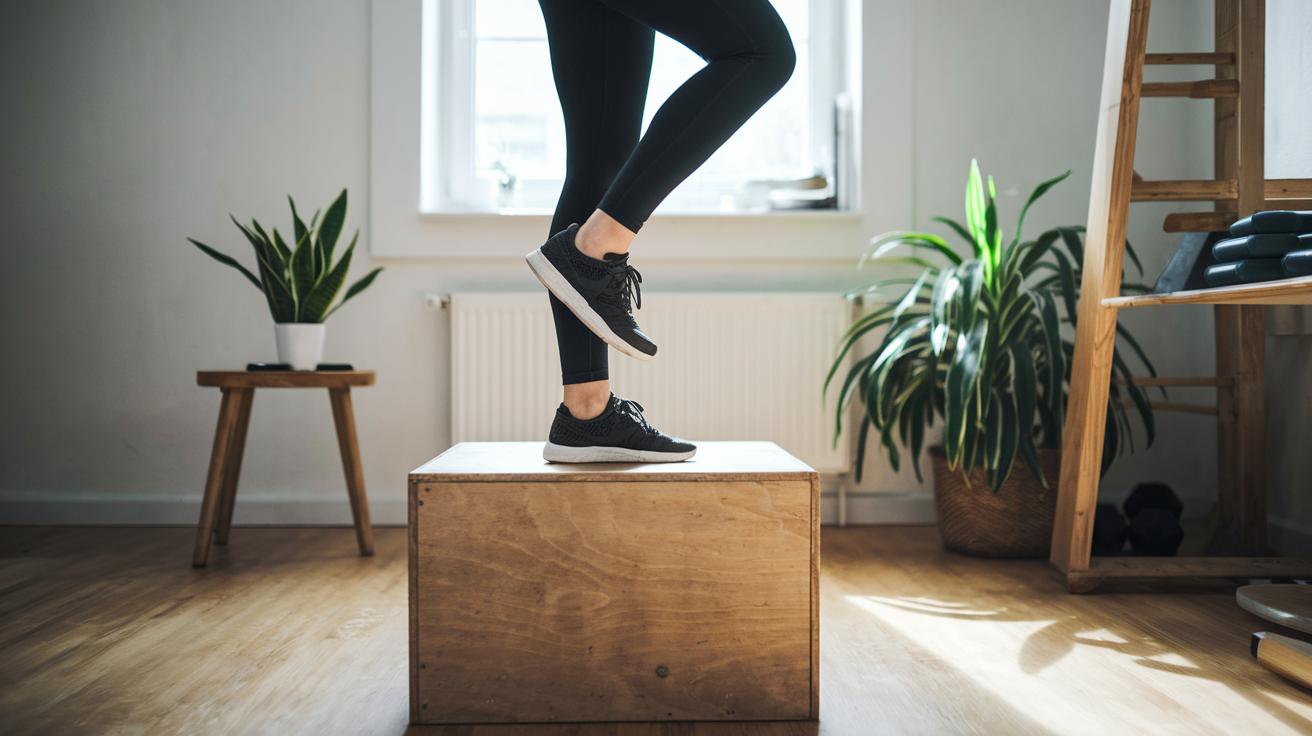
Try this set of exercises today to help build strong, defined calves, all done at home with little equipment.
Standing Elevated Calf Raises
Stand with your feet at shoulder width on a sturdy box, step, or similar platform so that your heels can hang over the edge. Slowly lower your heels until you feel a stretch. Then, drive up on your toes and pause for 1–2 seconds at the top. This pause helps work both the upper calf (gastrocnemius) and lower calf (soleus). Keep your core firm and legs straight, just like standing on the curb with steady balance.
Single-Leg Calf Raises
Find a wall or chair for extra support. Shift your body weight onto one leg and lift your heel as high as you can. Make sure your knee stays straight and move slowly both going up and down. To make it even tougher, try counting slowly during your descent. This focused move ensures each calf gets a fair workout.
Seated Calf Raises
Sit comfortably on a stable chair and place your feet flat on the ground. Slip a book or step under your feet to get a deeper stretch. Adjust your knee angle slightly to shift more focus onto the lower part of your calves. Then, raise your heels, squeeze your calf muscles, and lower them slowly through the full range of motion. This angle helps target the soleus muscle effectively.
| Exercise | Equipment Needed | Sets | Reps |
|---|---|---|---|
| Standing Elevated Calf Raises | Elevated platform or box | 4 | 12–20 |
| Single-Leg Calf Raises | None (use wall/chair for balance) | 3 per leg | 10–15 |
| Seated Calf Raises | Chair and book/step | 3–4 | 15–25 |
How to Build Calf Muscles at Home: Unstoppable
Calves bounce back fast, so you can work them regularly with different levels of effort. Begin each session with a quick warm-up. For example, spend 2 to 3 minutes doing ankle circles or jump rope to get your blood pumping. This simple activity readies your muscles and joints while lowering your risk of injury.
On training days, change up the challenge. On heavy days, try doing 4 sets of 15 reps with a full load to really push your muscles. Move slowly and smoothly through each rep, drop your heel all the way down and then rise onto your toes. On lighter days, increase the number of reps and slow your pace. This helps boost stability and endurance. You can also add a pause at the top for a few seconds (this is an isometric hold) to get even more muscle activation.
After your workout, take 5 minutes to cool down. Focus on stretching your calves and Achilles tendons with gentle, static stretches to ease tightness. Remember to give your calves at least 48 hours of rest after heavy workouts to allow them to repair and grow stronger.
Here’s a sample weekly plan to keep your training on track:
| Day | Activity |
|---|---|
| Monday | Heavy standing raises and isometric holds |
| Tuesday | Light single-leg raises and active recovery |
| Wednesday | Rest or mobility work |
| Thursday | Moderate seated raises with pulse reps |
| Friday | Plyometric calf jumps and stretching |
Nutrition and Recovery for Calf Muscle Development
Getting your nutrition right and giving your body time to recover is key to building strong calf muscles. Aim to eat about 1.6–2.2 grams of protein for every kilogram (0.73–1 gram per pound) of your body weight. For example, if you weigh 150 pounds (68 kg), that means you should have roughly 109–150 grams of protein each day from lean meats, dairy, or plant-based sources.
Add in some complex carbohydrates, think rice, oats, or quinoa, to fuel your workouts. These carbs provide steady energy so you can power through your calf exercises. A little healthy fat from nuts or olive oil can help keep your hormones balanced, which is important for muscle repair.
Stay well-hydrated by drinking about 2–3 liters (68–101 ounces) of water daily. Keeping hydrated supports digestion and recovery, which helps reduce muscle soreness and boost performance.
After your workouts, try to have a snack or shake that mixes protein and carbs within 30–60 minutes. This quick step kick-starts muscle repair and replenishes your energy. Finally, keep a daily log of your sets, reps, and weights. Tracking your progress helps you notice small wins and adjust your plan for ongoing success.
Advanced Calf Training Techniques and Progression at Home
If your calf raises are starting to feel too easy, it’s a great time to mix in some advanced moves. Try adding extra weight by wearing a backpack or holding a dumbbell (around 5–10 lbs or 2–4.5 kg) to make your routine more challenging. With this added resistance, lower your heels slowly for 4 seconds (this slow lowering is called the eccentric phase) and then lift up as quickly as you can.
You can also change the tempo. Hold the top of the move for 2 seconds so you feel the contraction, then lower your heels in a controlled 2-second descent. This mix of pausing and slow movement boosts tension in your muscles.
Looking for more intensity? Add explosive plyometric drills to your workout. For example, do 30 seconds of calf jumps or jump-rope sprints for three rounds. These fast, powerful moves not only build leg strength but also improve proprioception (your body’s awareness of movement).
Don’t forget to increase the weight or the number of reps every 2 weeks. This gradual step-up in difficulty (known as progressive overload) keeps your calves challenged and growing stronger.
Mix and match these variations, switch between controlled, slow movements and quick, explosive jumps to build endurance, strength, and power. Try out these tweaks until your calves start working in new ways, and keep challenging yourself every day!
Injury Prevention and Form Tips for Effective Calf Workouts
Keep your feet steady and your movements controlled during your calf exercises. Start by placing your feet in a natural position, avoid rolling them inward or outward. Leave bouncing out of the picture; instead, focus on a smooth, steady movement when lowering and lifting your heels.
Take your time with each step. Lower your heels slowly, letting your muscles stretch gently without any sudden drops. Then, lift steadily and pause for a moment at the top of each rep. This careful pace helps protect your muscles and minimizes injury risks.
Don’t forget to add some preventive stretches to your routine. Try doing a calf and soleus stretch, holding it for 30 seconds, and repeat it three times. This simple stretch eases tension on your Achilles tendon and keeps your lower leg muscles flexible.
Another great tip is to work on your balance and ankle strength. Stand on one leg for 30 seconds and do this three times. It not only boosts your balance but also strengthens your core, helping you keep proper form during calf workouts.
When you’re ready to add more challenge, start with just your body weight. Only consider extra resistance once you can move smoothly and maintain perfect form.
Final Words
In the action of setting up your routine, you now have a clear plan covering workout blueprints, essential exercises, training schedules, nutrition, and injury prevention. Each section provides practical steps for how to build calf muscles at home, with exercises, progressions, and recovery tips that fit easily into a busy day.
These straightforward, evidence-informed tips can help you gain strength safely. Keep taking small, steady steps forward and enjoy the progress along the way.
FAQ
How to build calf muscles at home without equipment for beginners?
Building calf muscles without equipment means using bodyweight exercises like standing and single-leg calf raises. Beginners should focus on proper range of motion and frequency, training frequently with controlled movements.
How to build calf muscles at home with weights or dumbbells?
Building calf muscles at home with weights involves adding dumbbells or a weighted backpack to your calf raises. This extra load creates progressive resistance that can further enhance calf strength and size.
How to build thigh and calf muscles at home?
Building thigh and calf muscles together means combining exercises like squats or lunges for your thighs with targeted calf raises. This balanced approach helps develop overall lower-leg strength and muscle tone.
How to get bigger calves for skinny legs?
Getting bigger calves for skinny legs requires dedicated calf exercises and progressive overload. Consistent training with proper form, increased resistance over time, and proper nutrition can help visibly grow your calves.
Where can I find calf muscle exercises with pictures?
Calf muscle exercises with pictures are available in many online visual guides. These resources show proper technique for moves like standing calf raises, helping ensure you perform each exercise safely.
What is the fastest way to build calf muscles?
The fastest way to build calf muscles uses heavy resistance training with frequent, focused sessions and progressive overload. Couple this with proper nutrition to support muscle repair and growth for quicker results.
How long does it take to build calf muscles?
Building calf muscles typically takes several weeks. With consistent training, strength improvements can appear in 4–8 weeks, although full muscle development varies with individual effort and nutrition.
How to build up a weak calf muscle?
Building up a weak calf muscle involves isolating the muscle through controlled exercises like seated and standing calf raises. Gradually increasing the resistance and ensuring proper recovery can help strengthen the muscle.
What is the number one calf exercise?
The number one calf exercise is often the standing calf raise, as it effectively targets both the gastrocnemius and soleus muscles when performed with a full range of motion and proper hold at the top.