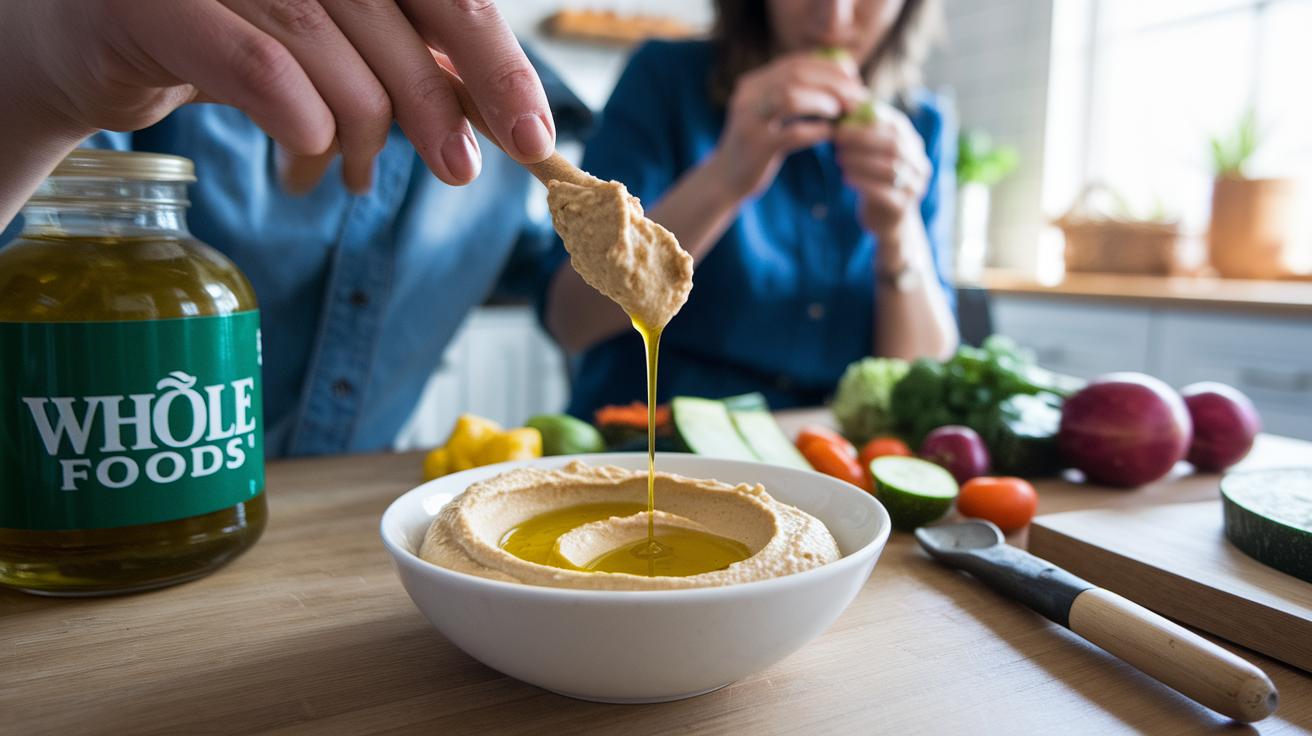
Ever wonder if your homemade hummus can beat those pricey store-bought versions? Fresh ingredients and a dash of creativity can help you make a healthier dip right at home. Start with tender chickpeas, smooth tahini (sesame paste), and a quick drizzle of extra virgin olive oil to create a treat that’s both delicious and good for you. We’ve laid out each step with simple tips about the nutrition behind every bite, so you can enjoy a wholesome snack that fits right into your day.
DIY Whole Foods-style Hummus Recipe Essentials
Begin by choosing your chickpeas. For a classic touch, soak 8 oz (227 g) of dried chickpeas overnight in water with ½ teaspoon of baking soda until they are very soft. If you’re short on time, use two 15-oz cans of no-salt-added chickpeas that have been drained and rinsed. This step ensures your hummus turns out smooth and creamy.
Next, mix the chickpeas with ¼ cup of high-quality tahini (pure sesame seed paste), 2–3 tablespoons of freshly squeezed lemon juice (feel free to adjust to your taste), 1–2 garlic cloves, and ½ teaspoon of fine salt. For a milder garlic flavor, let the garlic sit in the lemon juice for 10–15 minutes before blending.
Place the mixture in a food processor and blend it while slowly drizzling in 3–4 tablespoons of ice-cold water. This gradual addition helps achieve that light, pillowy texture that makes your hummus stand out.
For a finishing touch, fry a few garlic slices in ⅓ cup (75 g) of extra virgin olive oil until they turn lightly golden. Drizzle this over your hummus to add extra flavor and a bit of crunch.
You’ll need a food processor, a mixing bowl, a spatula, and accurate measuring cups and spoons to put this together. Follow these steps, and you’ll have about 2 cups of delicious, homemade chickpea dip, ready to enjoy at home!
Essential Ingredients & Nutrition Facts for Whole Foods Hummus

• 8 oz dried chickpeas or two 15-oz cans of no-salt-added chickpeas give you a solid, hearty base.
- If you use dried chickpeas, soak them overnight with ½ tsp of baking soda to make them soft and easy to blend.
- Think of it as letting the chickpeas relax overnight so they blend smoothly.
• ¼ cup high-quality tahini (pure sesame seed paste) gives the hummus a rich, nutty taste and smooth feel.
- Choose tahini that’s made only from toasted sesame seeds.
- It’s like picking the ripest fruit to add extra creaminess.
• 2 tbsp of freshly squeezed lemon juice adds a bright, tangy note.
- Feel free to adjust the lemon juice to your taste.
- A little splash makes the hummus as refreshing as a burst of sunshine.
• 1–2 garlic cloves bring a robust flavor into the mix.
- Use them raw for a sharper taste or let them sit in lemon juice for 10–15 minutes to soften their bite.
• ½ tsp of fine salt helps blend all the flavors together.
• 3–4 tbsp of ice water, added slowly while processing, gives the hummus a light and airy texture.
• Optional: Top with ⅓ cup of extra virgin olive oil to boost the flavor even more.
Nutritional Comparison (per ¼ cup serving):
| Metric (¼ cup) | Homemade | Store-bought |
|---|---|---|
| Calories | 70 kcal | 100 kcal |
| Fat | 4 g | 8 g |
| Carbs | 6 g | 10 g |
| Protein | 3 g | 2 g |
| Fiber | 2 g | 1 g |
Whole Foods Hummus (Homemade Recipe + Nutrition) Shines
Begin by blending your ingredients and slowly drizzling in 3 to 4 tablespoons of ice-cold water. This simple trick helps the hummus become silky and light, much like what you’d get at a restaurant.
For an even smoother dip, you might peel a few chickpea skins. Rub them off and toss them aside. It’s an extra step for a refined texture, but your hummus will still taste great if you skip it.
Garlic adds a wonderful flavor boost. Soak 1 or 2 cloves in freshly squeezed lemon juice for 10 to 15 minutes to soften their bite, or use them raw if you prefer a stronger flavor.
You can also mix in extra spices. Swap Tabasco for cayenne to add a gentle heat, or stir in ½ teaspoon of ground cumin or smoked paprika before blending. These spices bring a nice twist that enhances the overall flavor.
Once you’ve plated your hummus, finish by drizzling a bit of high-quality olive oil or adding an extra touch of tahini. This final touch gives the dip a rich, layered flavor and a smooth finish.
Serving Suggestions & Creative Variations of Whole Foods Hummus
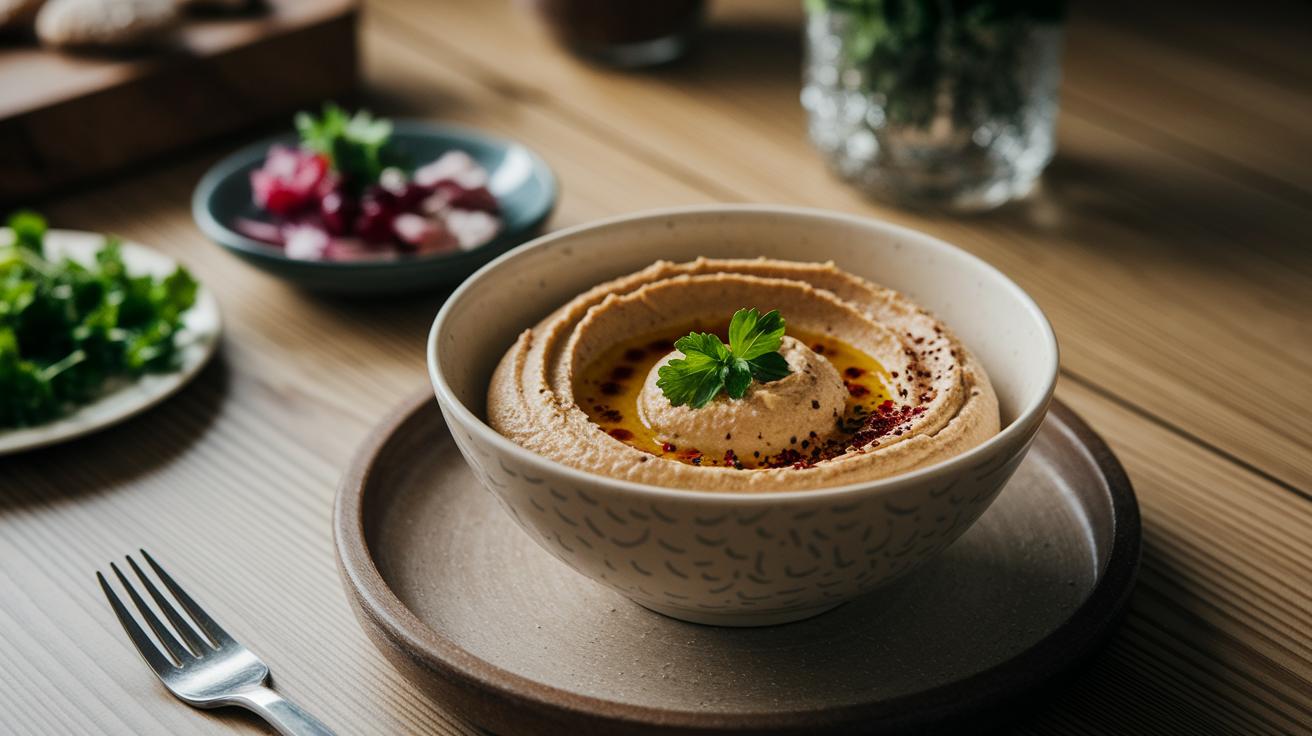
Try your hummus at room temperature for a mild taste or warm it gently to boost its creamy flavor. A cool hummus is refreshing on a sunny day, while a little heat makes its richness pop. Enjoy it on its own or pair it with easy dippable sides like cucumber sticks, carrot ribbons, whole-grain pita, rice crackers, or lettuce cups.
Here are some fun ideas to mix things up:
Topping ideas:
- Swirl in a bit of roasted red pepper purée for a touch of sweetness.
- Add a spoonful of sundried tomato tapenade for an earthy twist.
- Mix in a pumpkin hummus swirl to celebrate the season.
- Drizzle a little miso concentrate for an extra burst of umami flavor.
Garnish suggestions:
- Sprinkle fresh parsley or cilantro for a bright pop of green.
- Dust with a pinch of za’atar for a Middle Eastern flair.
- Top with toasted sesame seeds and pomegranate arils for a burst of color and crunch.
You can also use hummus as a tasty base for grain bowls, sandwiches, or buddha bowls. Simply spread a thick layer, then arrange your favorite ingredients on top for a meal that is as creative as it is satisfying.
Homemade vs Store-Bought Hummus: Nutrition & Cost Comparison
If you're looking for a smart snack choice, homemade hummus is a win. A ¼ cup serving of homemade hummus has about 70 calories, 4 grams of fat, 80 mg of sodium, 2 grams of fiber, and 3 grams of protein. Compare that to store-bought hummus, which typically has around 100 calories, 8 grams of fat, 250 mg of sodium, 1 gram of fiber, and 2 grams of protein. This means homemade hummus gives you fewer calories, less fat, more fiber, and a bit more protein.
Here are a few reasons why making your own hummus could be the way to go:
- Less sodium can help keep your heart healthy and lower the risk of high blood pressure.
- Extra fiber aids digestion and can help you feel fuller.
- You choose the ingredients, so there are no hidden preservatives. It's a clean, natural option that's gluten-free and dairy-free.
- Homemade hummus costs about $3 for 2 cups, which is a smart deal compared to around $4 for an 8 oz container at the store.
- Making it at home uses less packaging and reduces transport distances, which is good for the planet.
| Metric (per ¼ cup) | Homemade | Store-bought |
|---|---|---|
| Calories | 70 kcal | 100 kcal |
| Fat | 4 g | 8 g |
| Sodium | 80 mg | 250 mg |
| Fiber | 2 g | 1 g |
| Protein | 3 g | 2 g |
Final Words
In the action, we covered every step to make a delicious, homemade chickpea dip. You saw how easy it is to follow a precise recipe and create a silky, flavorful blend with clear ingredient tips.
We compared nutritional benefits and cost advantages, emphasizing whole foods hummus (homemade recipe + nutrition) as a healthier choice over store-bought options.
Small improvements in your daily cooking can brighten meals and boost wellbeing. Enjoy experimenting and savoring your tasty creation!
FAQ
Q: What is the nutritional value of homemade hummus?
A: The nutritional value of homemade hummus includes roughly 70 calories, 4 grams of fat, 6 grams of carbohydrates (with minimal sugar), 3 grams of protein, and 2 grams of fiber per 1/4 cup serving.
Q: How many calories are in Whole Foods hummus?
A: The Whole Foods version typically contains about 100 calories per 1/4 cup serving, reflecting higher fat and sodium levels compared to a homemade batch.
Q: Is it healthy to eat homemade hummus every day?
A: Eating homemade hummus daily can add much-needed protein, fiber, and healthy fats to your meal plan, especially when you control the salt and oil levels.
Q: Is hummus ok for weight loss?
A: Hummus works well for weight loss by providing fiber and protein that enhance satiety, though enjoying it in moderate portions is key.
Q: What is the basic hummus recipe for a homemade version?
A: The basic hummus recipe blends chickpeas, tahini, lemon juice, garlic, salt, and ice water into a smooth, creamy dip, with an optional olive oil drizzle for extra flavor.
Q: What are some popular hummus brands and variations available?
A: Popular hummus brands include Whole Foods, Little Sesame, and Ithaca, while Black Bean hummus offers a creative twist on the classic chickpea version.