Quick take: A few minutes of high-intensity work can really boost your upper body strength. Try a short HIIT routine that mixes push-ups, planks, and similar moves with quick breaks. This way, you fire up your metabolism while building lean muscle. We’ve put together a routine that fits even the busiest day and helps you work safely. Ready to strengthen your arms, chest, and back? Give it a shot today.
upper body hiit workouts: Build Strength Now
HIIT workouts mix short, intense bursts (about 80–100% of your max effort) with brief recovery breaks. This raises your heart rate fast and keeps your body burning extra calories even after you exercise. When you focus on proper form, these dynamic moves not only feel challenging but also help protect and grow lean muscle.
Key exercises to try:
- High Plank T Rotations – strengthen your triceps, shoulders, quads, lower back, and core.
- Wide Grip Push-Ups – work your chest, shoulders, and triceps.
- Bear Crawls – activate your shoulders, chest, back, glutes, quads, hamstrings, and core.
- Up & Down Plank – target your shoulders, triceps, glutes, and core.
- Plank Arm Raises – build strength in your shoulders, core, and back.
- Tricep Dips – focus on your triceps.
- Shoulder Press – challenge your shoulders, arms, chest, and upper back.
For a complete workout, try these 20-minute routines:
-
Bodyweight Routine
Start with a light warm-up like jumping jacks or dynamic stretches to prep your muscles. Then, alternate between the seven exercises, pushing close to your limit for 20–30 seconds, followed by a 15–30 second rest. End your session with a cool-down stretch. For extra ideas, check out at-home bodyweight workouts here: https://spiritushealingarts.com?p=282. -
Weighted Routine
Begin with the same warm-up, then add dumbbells during moves like the shoulder press or tricep dips to boost resistance. Stick to the same interval pattern while keeping your form strict. Adjust the weights based on your fitness level to make sure your muscles work hard without risking injury.
These routines are a smart way to hit your arms, chest, and back. Whether you choose a bodyweight session or add weights, both formats are designed to save time and build strength systematically.
Equipment for Weight Resistance and No-Equipment Upper Body HIIT

Consider adding dumbbells and resistance bands to your regular bodyweight exercises. This builds on what you already know about weighted HIIT without making an entirely new routine. For example, if your band feels loose during fast, explosive moves, try one with higher tension. I once used a mid-level band and found that my form stayed steady through the high-intensity intervals.
When doing power moves with weights, choose a load that challenges you at about 80–100% of your max while still letting you maintain proper form. A load that’s too light won’t push you enough, but one that’s too heavy can break your technique. Test a few options during your intervals until you find one that feels both safe and challenging.
Resistance bands also work great at home if you don’t have dumbbells around. Adjust the tension to suit your strength so you can keep good form with each interval. This extra gear not only boosts your workout but also helps keep your muscles engaged and increases post-exercise oxygen consumption.
Proper Form & Fitness Level Modifications for Upper Body HIIT
Beginner Adjustments
Start slow and steady. Focus on keeping each move controlled to build a solid base while cutting down on injury risk. When doing bodyweight exercises like push-ups and planks, slow your pace. Keep your elbows close and your core tight through every rep. For example, try lowering into a push-up over 3 seconds and then push up quickly. This slower approach helps build strength even when you're working hard. Need help? Check out this guide on strength training for beginners.
Intermediate Plyometric Options
Once you're comfortable, it's time to add a bit of speed. Mix in explosive moves like clap push-ups and quick shoulder taps. Keep these moves sharp and make sure you land softly and in control. The key is balancing speed with good form. Stick to a set work-and-rest schedule to keep your body burning energy even after your workout.
Advanced Intensity Variations
For those looking to step it up even more, add some extra resistance. Try doing push-ups with a weighted vest or use heavier dumbbells for your shoulder drills. The challenge is to keep your form perfect even as you speed up your reps and shorten your rest periods. This approach maximizes muscle work while giving you just enough recovery time to avoid fatigue or injury.
Structuring Intervals & Rest Periods for Upper Body HIIT Success
Recommended Work:Rest Ratios
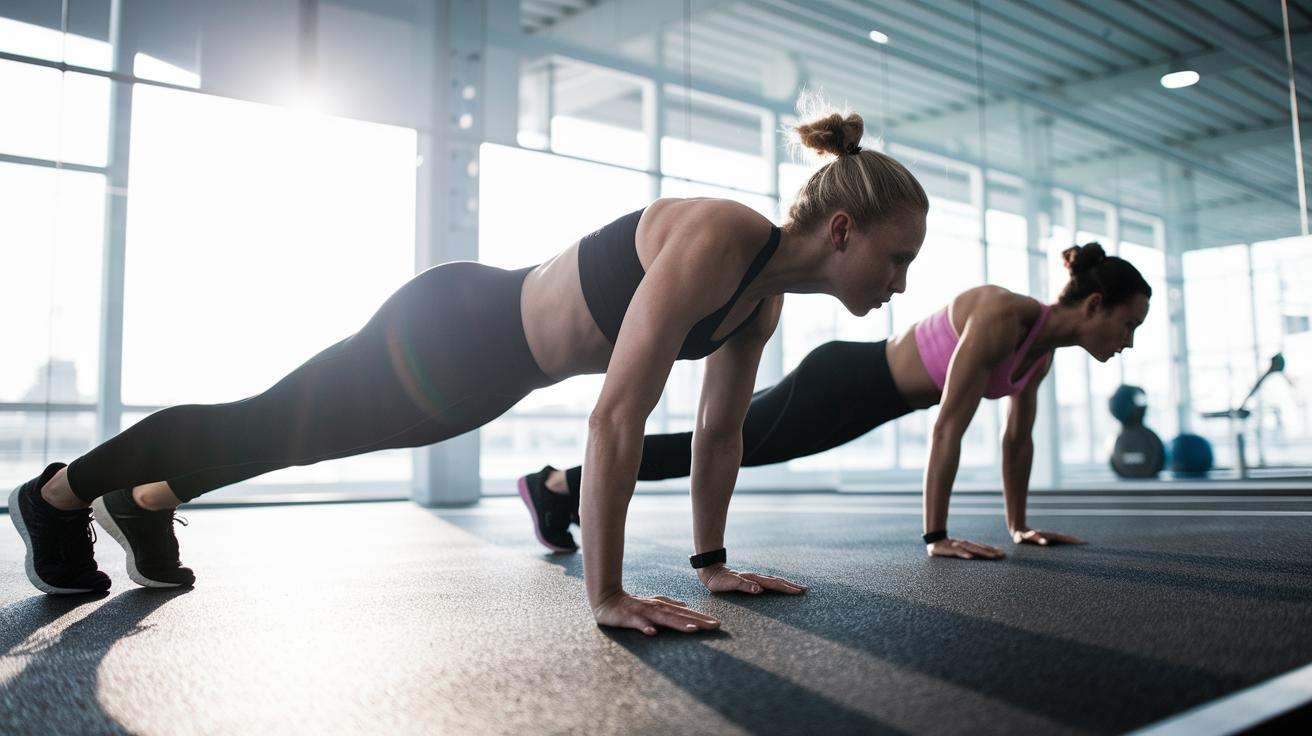
Try using intervals like Tabata with 20 seconds of work followed by 10 seconds of rest to get that extra boost after exercise. You can also work for 30 seconds and rest for 15 to 30 seconds. This method keeps your muscles active while protecting your form. For example, do explosive push-ups for 30 seconds, then take a 20-second break. This balance helps you stay intense without losing your shape.
Sample Session Flow
Begin with a 3-minute warm-up using moderate cardio like brisk marching or light jumping jacks to raise your heart rate and prep your muscles. Next, move into your main HIIT session, keeping it under 25 minutes in total. Alternate steadily between work and rest, focusing on strong and controlled movements. Finish with a 3–5 minute cool-down of light walking or simple stretches to bring your body back to a resting state. This structured approach boosts post-exercise oxygen use and keeps your muscles engaged throughout the workout.
Benefits & Recovery Strategies for Upper Body HIIT Workouts
Upper body HIIT workouts burn calories fast and keep your metabolism active long after you finish. Working at near your maximum effort means your body continues to use energy for hours. Adding resistance moves into the mix gives your muscles a stronger push than steady cardio alone. This method boosts how well your arms and shoulders work and helps you burn fat more efficiently. Research shows that mixing short, intense bursts with recovery breaks can help maintain muscle mass and build strength.
Don’t forget that recovery is key. Try to give your muscles about 48 hours to rest between sessions so they can repair and rebuild. After a workout, eat foods rich in protein, like lean meats, eggs, or plant-based options, to help fix muscle fibers. A few minutes of gentle stretching or foam rolling can also ease tightness and reduce soreness. These simple steps can improve your performance next time and help manage fatigue. Listen to your body and adjust the intensity if you ever feel too worn down. Combining these recovery tips with your HIIT sessions sets you up for steady strength gains and better endurance.
Final Words
In the action, you’ve taken a quick look at how these routines mix short, high-intensity bursts with targeted moves for arms, chest, and back. The breakdown of seven exercises, sample bodyweight and dumbbell routines, and tips for adjusting form can help you move safely and effectively.
This guide shows how small changes can spark big results. Keep experimenting, keep moving, and enjoy the boost these upper body hiit workouts bring to your day.
FAQ
What are upper body HIIT workouts with no equipment or at home?
The upper body HIIT workouts without equipment focus on bodyweight moves at home, like push-ups and planks, to target arms, chest, and shoulders while boosting metabolism and strength.
What are upper body HIIT workouts with weights or dumbbells?
The upper body HIIT workouts using weights incorporate dumbbells to add resistance to moves such as shoulder presses and tricep dips, enhancing muscle engagement and power during the session.
What are upper body HIIT workouts for beginners?
The upper body HIIT routines for beginners use slower-paced bodyweight exercises, like modified push-ups and controlled planks, to ensure proper form while gradually increasing intensity and strength.
How do upper body HIIT workouts benefit overall strength and muscles?
The upper body HIIT workouts target arms, chest, and back with dynamic movements, building muscle endurance and power, while also supporting fat burn through short, high-intensity intervals.
What is the 3-3-3 rule for workouts?
The 3-3-3 rule for workouts describes a structure where you perform three key exercises or sets, typically aligned with three minutes warm-up, three minutes of intervals, and three minutes cool-down, though definitions may vary.
Is a 20-minute HIIT workout enough for the day?
The 20-minute HIIT workout can be effective when performed with near-maximal effort, boosting calorie burn and muscle activation, making it a practical option for busy schedules.
What does HIIT upper body mean?
The term HIIT upper body refers to high-intensity interval training routines that focus on the muscles of the arms, chest, and shoulders, alternating intense bursts with recovery periods.
What are the five best upper body exercises in HIIT?
The five best upper body exercises include wide grip push-ups, high plank T rotations, bear crawls, plank arm raises, and tricep dips, collectively working multiple muscle groups for strength and endurance.
What is a dumbbell HIIT workout?
The dumbbell HIIT workout incorporates dumbbells in high-intensity circuits, mixing challenging resistance moves with recovery intervals to boost muscle strength and metabolic rate.
What is high-intensity interval training (HIIT)?
The high-intensity interval training (HIIT) method alternates short, near-maximal effort bursts with recovery periods, elevating calorie burn and enhancing muscle power efficiently.
How does HIIT work with weight training?
The combination of HIIT with weight training merges intense cardio bursts with resistance exercises, promoting greater muscle activation and fat burning while preserving lean muscle mass.
What is the Tabata protocol?
The Tabata protocol is a form of HIIT that uses 20 seconds of maximal effort followed by 10 seconds of rest, repeated for several cycles to improve aerobic and anaerobic capacity.
What defines a HIIT workout?
A HIIT workout is defined by its alternating periods of intense activity and brief recovery, making it an efficient training style for boosting metabolism, endurance, and overall fitness.
What is Fartlek training?
Fartlek training is a method that mixes varying speeds in one session, blending fast bursts of effort with slower recovery phases, most often applied in running to improve speed and stamina.