
Have you ever thought that building upper body strength was just for gym buffs? Strong muscles can make everyday tasks, like carrying groceries or lifting your child, a lot easier. Did you know that after age 30, you can lose about 8% of your muscle each decade? In this post, we’ll show you how simple compound exercises, smart rest, and steady progress can help you build a practical upper body routine while boosting your confidence. Ready to take small, powerful steps toward lasting strength?
Core Principles to Build Upper Body Strength
Building a strong upper body makes everyday tasks easier, whether you're carrying groceries, lifting a child, or just moving through your day. It boosts your confidence and helps keep your posture and balance in check. Studies show that after age 30, you can lose 3–8% of muscle with each decade, so regular strength training is key to keeping those muscles ready for daily challenges.
A solid routine starts with compound moves, exercises that work several muscles at once. Think push-ups, pull-ups, dumbbell bench presses, overhead presses, and bent-over rows. These moves target your chest, shoulders, back, and arms, helping you build balanced strength and reduce the risk of injury by keeping movements steady and controlled. If you're just starting out, consider checking a beginner’s guide to strength training for tips on proper form.
To keep making progress, try gradually increasing your weights or repetitions. This approach, called progressive overload, gives your muscles a consistent challenge to grow. Also, be sure to rest for 48 to 72 hours between hard sessions so your muscles get time to rebuild. By practicing regularly and allowing proper recovery, you'll build strong, functional upper-body muscles while keeping injuries at bay.
Upper Body Warm-Up and Mobility Routines
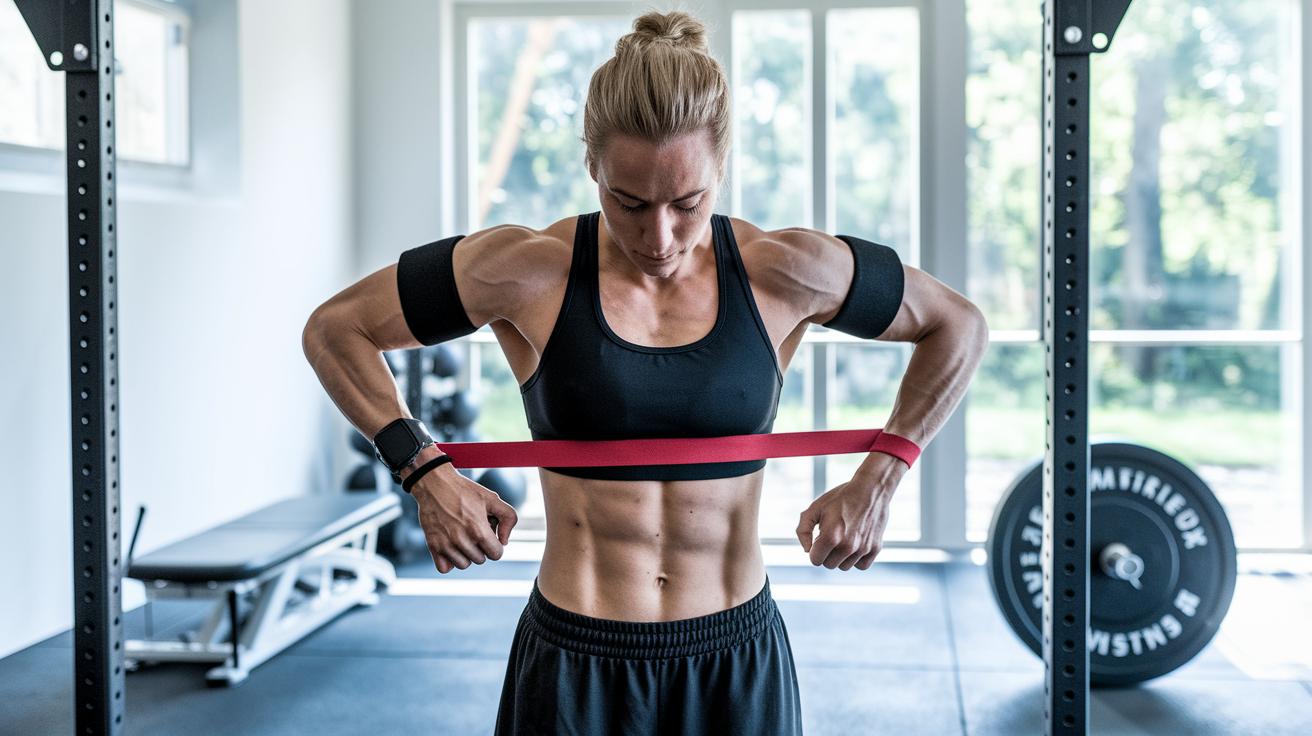
Start your workout with a smooth, moving warm-up that gets your blood flowing and joints ready. Spend about 8–12 minutes on these exercises to help lower your risk of injury and boost your upper body workout.
- Arm Circles – Make small circles and gradually move to larger ones for about 30–45 seconds. Switch directions halfway through.
- Shoulder Dislocations with a Band – Hold a resistance band snugly (but not too tight) and do 10 controlled repetitions.
- Scapular Push-Ups – Do 10 slow push-ups while focusing on squeezing your shoulder blades together.
- Jumping Jacks – Get a light burst of cardio for 1 minute to gently raise your heart rate.
- Thoracic Spine Rotations and Band Pull-Aparts – Rotate your upper back for 10 turns on each side, then do 10 band pull-aparts to boost shoulder mobility.
Equipment-Free Strength Drills for Upper Body Development
These workouts use just your own body weight to build strength. They’re simple, effective, and can be done at home or anywhere you have a little space. Plus, they help improve muscle tone, coordination, and balance. For more ideas on bodyweight exercises, check out this resource: https://bezenn.com?p=714.
- Push-ups – Work your chest, shoulders, and triceps. Do 3 sets of 10–15 reps. Keep your body straight from head to heels and lower slowly to really control your movement.
- Pull-ups or Inverted Rows – Target your lats, biceps, and mid-back. Try 3 sets of 8–12 reps. Focus on pulling your chest toward the bar or moving in a horizontal line with control.
- Dips – Strengthen your triceps and chest. Aim for 3 sets of 8–12 reps. Keep your elbows close to your body and stop before you lower too far to protect your shoulders.
- Plank-to-Push-Up Drills – Strengthen your core and shoulders. Do 3 sets of 10–12 reps, switching the arm that leads each time. Make sure your hips stick in line as you move.
- Bodyweight Rows – Build your mid-back and biceps. Use a bar or rings for 3 sets of 8–12 reps. Keep your back flat by engaging your core.
- Pike Push-ups – These act like an overhead press for your shoulders. Do 3 sets of 8–12 reps and adjust your feet to get the right angle to hit your deltoids.
As you grow stronger, you can add more reps or sets, or slow down your movements for an extra challenge.
Dumbbell and Resistance Training Techniques for Chest, Shoulders, and Arms
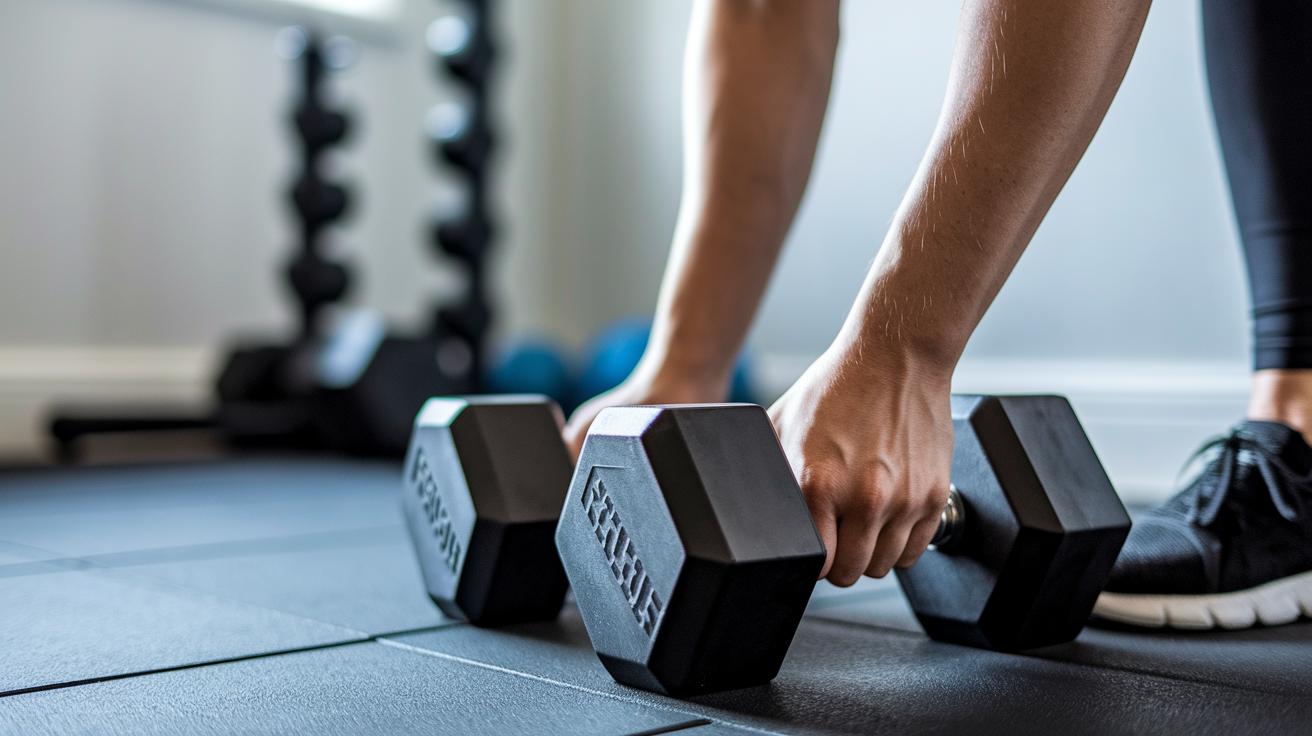
Pick weights that push you without breaking your form. Adjust your dumbbells or resistance bands to fit your strength so you work the muscles just right and build them steadily. Lowering the weight slowly (a move called controlled eccentric motion) works your muscles harder and helps avoid injuries. Breathe calmly, take a deep breath when lowering and exhale as you push or press. This keeps your focus on the right muscles and makes your workout both safe and effective.
| Exercise | Primary Muscles | Recommended Sets × Reps | Progression Tips |
|---|---|---|---|
| Dumbbell Bench Press | Chest, Triceps | 3×8–12 | Gradually increase the weight while keeping your moves slow and controlled. |
| Single-Arm Dumbbell Row | Back, Biceps | 3×10–12 | Work through a full range of motion; add weight as you get stronger. |
| Overhead Dumbbell Press | Deltoids, Triceps | 3×8–10 | Use heavier dumbbells or add an extra set as you progress. |
| Dumbbell Hammer Curl | Forearms | 3×10–15 | Slow down the lowering phase to increase muscle tension. |
| Tricep Kickbacks | Triceps | 3×12–15 | Build challenge by gradually upping the resistance or rep count. |
Progressive Overload and Weekly Workout Planning
When you gradually challenge your body, you get stronger over time. Progressive overload means slowly increasing your workout load each week to help build muscle and test your strength. Try a four-week plan with three sessions each week that mix push, pull, and arm/core exercises. Start with 3 sets of 8 reps and work up to 4 sets of 10 reps by Week 4. Testing yourself with exercises like max push-ups, pull-ups, or timed planks can show you how much you've improved and give you extra motivation.
| Week | Focus (Push/Pull/Core) | Sets × Reps | Benchmark Test |
|---|---|---|---|
| Week 1 | Push/Pull/Core | 3×8 | Max push-ups, pull-ups, and plank hold |
| Week 2 | Push/Pull/Core | 3×9 | Slight increase in push/pull reps |
| Week 3 | Push/Pull/Core | 3×10 | Improved endurance in each movement |
| Week 4 | Push/Pull/Core | 4×10 | Overall performance test |
Make sure to rest completely between sessions. Giving your muscles time to recover helps you work better each time and lowers the risk of injury.
Nutrition and Recovery Strategies to Support Upper Body Strength

Fuel your muscles with a balanced meal plan to build strength. Aim to eat about 1.2–1.6 grams of protein per kilogram of your body weight each day to help repair and grow muscle. Add complex carbohydrates (like whole grains) and healthy fats (from nuts or avocados) to give you energy during workouts and recovery. Try to plan a meal or snack within a couple of hours before and after exercise for the best results. Also, drink plenty of water and include micronutrients, such as vitamin D and B12, for overall muscle support.
Taking care of your body after working out is just as important. Rest for 48–72 hours between intense upper body sessions so your muscles can rebuild. Use simple active recovery moves like foam rolling, light stretching, or yoga to ease soreness and boost flexibility. Aim for 7–9 hours of quality sleep each night, which helps regulate hormones and restore muscle strength. This steady approach sets a strong base for ongoing strength gains and overall progress.
Common Upper Body Strength Training Pitfalls and How to Avoid Them
Knowing what can go wrong is key to building strength safely. When your upper body workout skips the basics like a proper warm-up, uses weights that force bad form, or rushes the movements, you risk injury and slow progress. Watching for these issues can really pay off in the long run.
- Skipping Warm-Ups – Start with 8–12 minutes of active, dynamic stretches. Think of it as revving up your engine so your muscles are ready to work.
- Overloading with Bad Form – It’s better to use lighter weights and keep your back straight. Lower each weight slowly (about 2 seconds) to make sure you’re protected.
- Uneven Muscle Engagement – Focus on balanced, even movements. Check that every muscle in your upper body is working equally to avoid strength gaps.
- Rushing Through Reps – Slow down to perform each repetition carefully. This gives you a full range of motion and reduces the chance of injury.
- Insufficient Rest – Let your muscles recover by not training the same group more than twice a week. Rest days are part of building strength.
Final Words
In the action, you learned the key ideas for boosting upper body power. We covered compound exercises, proper warm-ups, and mobility drills that prepare your muscles for work. You also got tips on equipment-free drills, dumbbell moves, and planning a progressive workout routine. Nutrition and recovery strategies round out the plan, while a guide to common pitfalls helps you avoid mistakes. All these steps show how to build upper body strength rooted in evidence and practicality. Keep practicing these small, sustainable steps and celebrate every win!
FAQ
How can I build upper body strength at home, whether using equipment or not?
Building upper body strength at home involves compound exercises like push-ups, dips, and rows. Begin with bodyweight moves and add weights later, focusing on proper form and gradual progression.
How do beginners, including women, build upper body strength effectively?
Building strength for beginners and women means starting with simpler modifications like knee push-ups and inverted rows. Gradually increase difficulty while maintaining proper form and consistent practice.
How does building upper body strength help me do push-ups?
Building strength for push-ups means practicing push-up progressions along with supporting exercises like planks and dips. This gradual approach increases chest, arm, and shoulder strength, making push-ups easier.
What upper body exercises can I do at home?
Home exercises include push-ups, inverted rows, dips, and planks. These moves target the chest, shoulders, back, and arms effectively and can be modified as your strength improves.
What is the fastest way to gain upper body strength?
Gaining strength quickly requires a balanced routine of compound exercises, progressive overload, and proper recovery. Consistent practice using controlled, challenging movements will yield faster improvements.
Why might my upper body feel weak or why can’t I gain upper body strength?
Upper body weakness is often linked to inconsistent training, poor technique, or insufficient recovery. Focusing on proper form, gradual progression, and appropriate rest periods can help overcome this issue.
How long does it take to get a strong upper body?
Developing a strong upper body generally takes several weeks to a few months of regular training. Your progress depends on current fitness, workout consistency, and recovery quality.