
Have you ever wondered if your sleep tracker truly shows your deep sleep? It might seem simple, but mixing heart rate, movement, and tiny shifts in your heart's rhythm makes it a lot trickier than it looks. Research tells us deep sleep apps align with clinical tests only about 50% of the time. Today, we'll share some easy steps to help you get more accurate readings. Stick with us as we explain how these apps use different signals to give you a clearer picture of your sleep.
Achieving Accurate Deep Sleep Tracking with Apps
Sleep tracking has come a long way. In the past, devices only tracked your movement. Now, deep sleep apps also check your heart rate and heart rate variability (a measure of how much your heart beats change over time). This extra data helps the app tell the difference between being still while awake and actually sleeping.
These apps work by mixing your heart rate, HRV, and movement data. When your heart slows down from light to deep sleep and your HRV goes up, the app can see the changes. For example, one app spots a short wake-up when it notices a quick jump in your heart rate even if you aren’t moving much. This gives you a clearer look at your sleep cycle.
Studies show that while these apps do a good job tracking overall sleep trends, they match clinical tools like polysomnography (a medical sleep test) only about 65% for light sleep and 51% for deep sleep. This means the app is a useful guide for tracking your sleep over time, but it isn’t as precise as medical equipment. Using a deep sleep app regularly can help you become more aware of your sleep habits and make small improvements over time.
Comparing Sensor Technologies in Deep Sleep Tracker Apps
Deep sleep tracker apps use several sensors to give you a better picture of your sleep. Relying on only one sensor may miss important changes during your sleep cycle. When sensors work together, they provide a more accurate view of your deep sleep stages.
- Accelerometers measure your movement. They help flag when you might be asleep or awake, but they can sometimes mistake quiet wakefulness for sleep.
- PPG sensors use green LEDs to check blood flow. They help track your heart rate and the time between beats, though they might not work as well on darker skin or near tattoos.
- HRV sensors record the little changes in your heart rate (this variation is key because heart rate usually drops as you go deeper into sleep while HRV goes up). Just keep in mind that outside factors can affect these readings.
- Respiration monitors watch your breathing patterns through the night. If your breathing is irregular, the results might not be as precise.
- Skin temperature sensors note changes in your skin temperature. They show how your body cools during sleep, but changes in the room's temperature can sometimes mix up the readings.
Bringing these sensors together makes a big difference. By combining signals from movement, heart rate, breathing, and temperature, sleep apps can more accurately figure out your deep sleep stages than any single sensor could do alone.
Evaluating Wearable vs Smartphone-based Deep Sleep Tracking
Sleep tracking devices vary a lot in accuracy, so it's important to choose one that fits your needs. For example, a finger ring tracker like the Oura Ring 4 gets around 90% accuracy compared to a clinical sleep study. Wristbands such as the WHOOP 4.0 score about 85% accuracy, although they sometimes have issues because the sensor may not sit just right on your wrist. Headbands like the Muse S Athena use sensors similar to EEG tests, offering roughly 80% accuracy for detecting different sleep stages. In contrast, smartphone apps placed on your mattress usually hit only 55–65% accuracy since they rely on movement data.
| Platform | Accuracy vs PSG | Primary Sensor |
|---|---|---|
| Oura Ring | ~90% | PPG (finger) |
| WHOOP Band | ~85% | PPG (wrist) |
| Muse S Headband | ~80% | EEG-like |
| Smartphone App | 55–65% | Accelerometer |
When picking a sleep tracker, don't focus solely on numbers. Comfort is key, rings and headbands tend to fit securely and feel less bulky than wristbands. Battery life matters too, as ring trackers often last several days, whereas wristbands might need a charge every day or two. And of course, look for devices that easily sync with your smartphone and health apps to help you track your sleep trends over time.
deep sleep tracker app (accuracy and best practices)
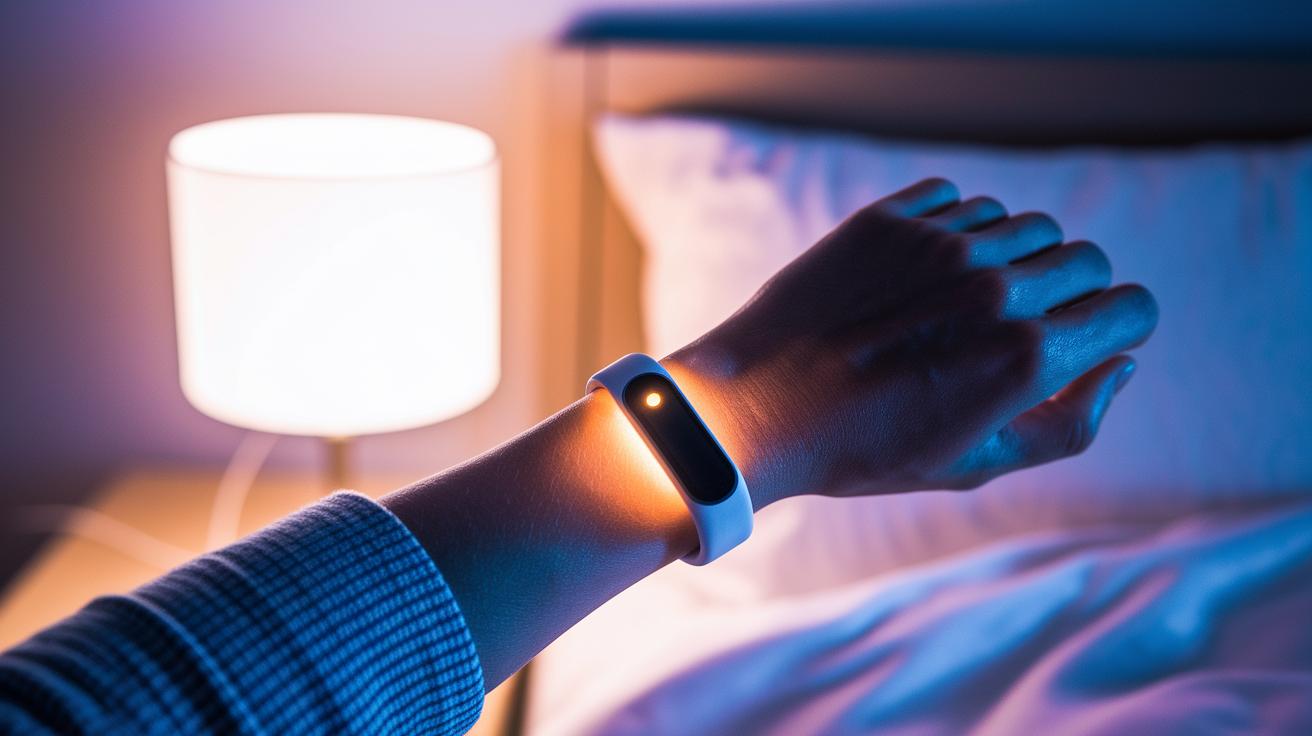
Start with the basics: wear your device properly. Make sure it fits snugly on your finger or wrist so it can capture your heart rate and movements without any glitches. A good fit means the sensor gets a clear reading, catching even small shifts from light sleep to deep sleep.
Next, keep your sleep tracker on every night. Consistent use builds a reliable record of how you sleep and helps you notice patterns over time. Try to stick to a steady bedtime routine. Also, don't forget to charge your device. For example, ring trackers can go 5–7 days on one charge, while wristbands might need a charge every 1–2 days.
Your sleep environment matters, too. External factors, like a noisy partner or an uncomfortable room temperature, can affect the sensor's accuracy. Simple changes like controlling the room temperature and reducing noise can go a long way in stabilizing your sleep data.
Finally, when choosing a sleep tracker app, look for features that fit your life. Check battery life, how easy the app is to use, its cost, and how it handles your data privacy. Finding an app that complements your wearable and suits your lifestyle can help you rely on your sleep data to better understand and improve your sleep habits.
Interpreting Deep Sleep Data and Actionable Insights
Sleep apps work best when you look at trends over weeks instead of one single night. Rather than worrying about one off night, these tools help you spot patterns over time. For example, if you notice less deep sleep after a busy day, it might mean that your lifestyle affects your sleep quality. Focusing on long-term trends can guide you to make changes when needed, rather than reacting to one unusual night.
Many sleep apps also offer tips based on the trends they see. They might suggest small changes like adjusting your bedtime or trying a natural supplement to help your sleep. Some apps even include smart alarms and reminders to help keep you on track. One app might suggest a simple 10-minute wind-down routine after it notices a drop in your deep sleep over several nights. These steps can help you slowly improve your sleep habits without needing a detailed medical evaluation.
You can also experiment with changes using your deep sleep data. Try shifting your bedtime or introducing a supplement, and then watch your sleep data over a few weeks. Any steady improvements can give you a good clue about what works for you. Just remember, while these apps offer useful insights, they are best used as guides. For any serious concerns or detailed assessments, it's important to seek professional advice.
Future Innovations in Deep Sleep Tracker App Accuracy

Sleep tracking apps may soon include new types of sensors like EEG-style monitors, radar, and tools for checking room noise and temperature. They will also use ballistocardiography (a method that picks up tiny body movements) and other advanced biometrics to notice subtle signals throughout the night.
These upgrades aim to give a fuller picture of your sleep. Instead of just tracking movement or heart rate, the new sensors collect multiple signals. This extra information can help identify sleep stages more accurately, even when conditions are not ideal, much like in clinical sleep studies.
On top of better hardware, smarter AI and predictive models will change how sleep stages are analyzed. These systems will learn from your personal sleep habits, making it easier to spot small shifts between sleep phases. They will also be continuously checked against clinical standards to improve over time. Soon, sleep apps might work almost as well as clinical tools, offering you clear, personalized tips for better sleep.
Final Words
In the action, this post walked through the evolution of sleep tracking, from multi-sensor devices and advanced algorithms to comparing wearable versus smartphone solutions, and shared best practices for using a deep sleep tracker app (accuracy and best practices). It explained how apps blend heart rate and movement data, provided insight into validation studies, and helped translate sleep estimates into actionable insights. This overview makes it easier to choose the right tool and routine to support your sleep quality. Keep refining your routine and enjoy steady progress towards better rest.
FAQ
What is the best sleep tracker app?
The best sleep tracker app uses multiple sensors to record heart rate, HRV, and movement data, offering clear sleep stage estimates that help you understand and improve your deep sleep patterns.
Which sleep tracker works well without a subscription?
The best sleep tracker without subscription provides essential sleep tracking features using internal sensors, allowing you to monitor your sleep stages and trends without recurring fees.
Which sleep tracker is the most accurate?
The most accurate sleep tracker fuses data from accelerometers, PPG, and HRV sensors to closely approximate clinical measurements, giving you reliable estimates of deep sleep stages.
What defines a professional sleep monitor?
A professional sleep monitor uses advanced sensors and validated algorithms to produce detailed sleep trend data, helping users gain insights into sleep quality and identify factors that affect deep sleep.
What are considered the best sleep trackers?
The best sleep trackers combine multiple sensors with user-friendly interfaces, smart alarms, and clear trend analysis, offering practical insights that help you adjust your sleep habits effectively.
Which sleep tracker is best on a budget?
The best budget sleep tracker delivers fundamental features like movement and heart rate tracking at an affordable price, providing essential insights into sleep patterns without high costs.
How does the WHOOP sleep tracker perform?
The WHOOP sleep tracker uses advanced recovery algorithms and wrist-based PPG sensors to yield solid sleep stage estimates, making it a reliable tool for monitoring your sleep despite occasional pulse-reading challenges.
What advantages does a sleep tracker ring offer?
A sleep tracker ring, like the Oura Ring, provides high-quality finger-based pulse data and sensor fusion methods that deliver precise sleep stage estimates and useful long-term sleep trend insights.

