Ever wonder if a weak lower back is making your daily routine tougher? Many people experience discomfort from sitting too long or moving in ways that don’t support their spine. The good news is you can boost your strength with a few simple bodyweight moves. Try exercises like the bridge and bird dog to target your back muscles, glutes (butt muscles), and core (stomach muscles). Give these a try today, and you might notice a real difference in how you feel every day.
Core Bodyweight Movements for Lower Back Strength
Bridge Exercise
Lie on your back with your knees bent and feet flat on the floor. Push through your feet and gently lift your hips up. Squeeze your tummy and glutes as you hold the lift for three deep breaths, then slowly lower your hips back down. Do between 5 and 30 reps, depending on what feels right for you. This exercise works your lower back, glutes, and core while keeping your spine in a natural position. Remember to breathe evenly throughout each move.
Bird Dog
Start on your hands and knees with your back straight. Extend your right arm forward and your left leg back at the same time. Hold this position for 2 to 3 seconds, then switch to the opposite arm and leg. Try 10 reps on each side. This move builds strength in your lower back and side muscles and helps improve your balance. Keep your movements slow and controlled.
Superman
Lie flat on your stomach. Slowly lift your arms, chest, and legs off the floor at the same time. As you lift, squeeze your shoulder blades together. Hold this position for 2 to 3 seconds before lowering down again. Aim for 10 to 15 reps. This exercise targets your back muscles and boosts core strength. Focus on keeping your lifts smooth and steady.
Forearm Plank
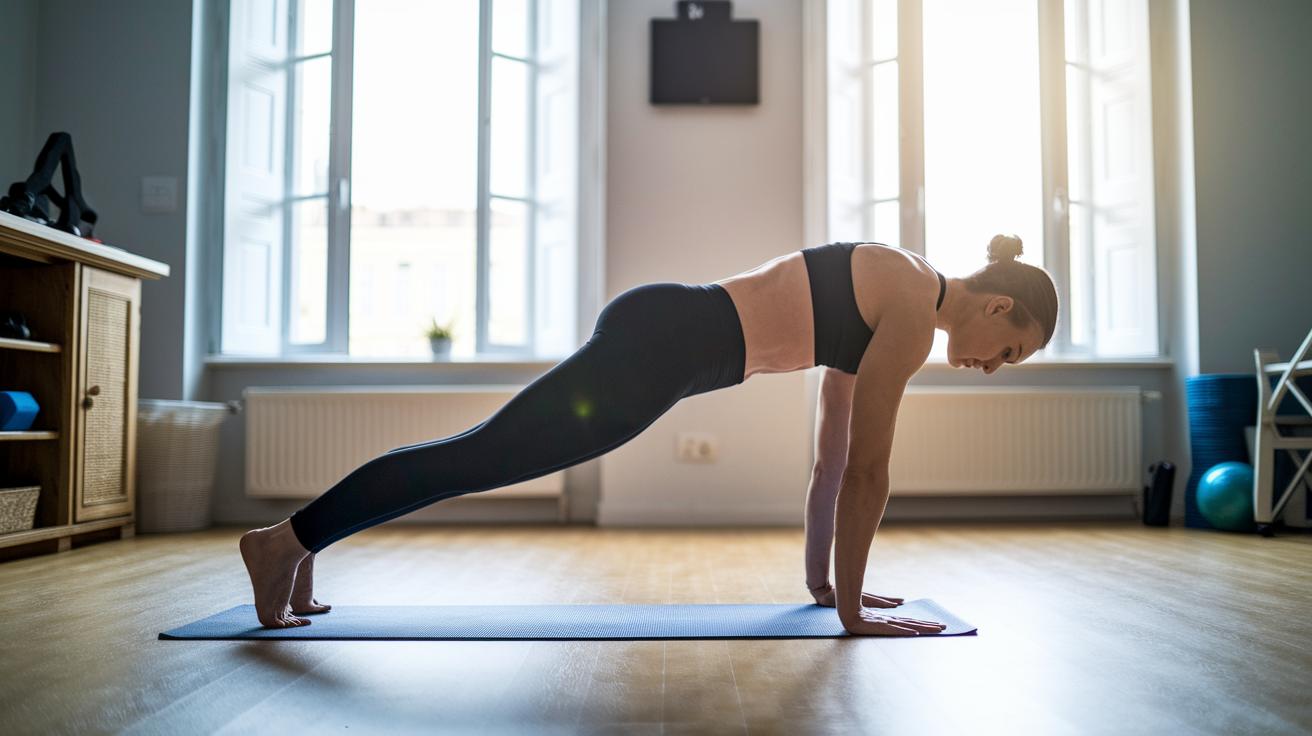
Get into a plank position with your forearms on the floor and your body in a straight line from head to heels. Tighten your core to avoid letting your hips sag or lift too high. Try to hold this position for 20 to 60 seconds, keeping your breathing even and steady. Good form is key, so watch that your hips stay in line with your body.
Knee-to-Chest Mobilizer
Lie on your back and slowly pull one knee toward your chest while keeping the other leg relaxed on the floor. Hold the stretch for 20 to 30 seconds, then switch legs. This simple move helps relax tension in your lower back and stretches your hip flexors. Move slowly and mindfully to maintain balance and ease.
Home-Based Spine Strengthening and Posture Improvement
Add short bursts of movement to your day. Every hour, stand up and take a brisk 3 to 5-minute walk around your home. Even these quick walks keep your muscles busy and help your spine recover, as many experts suggest.
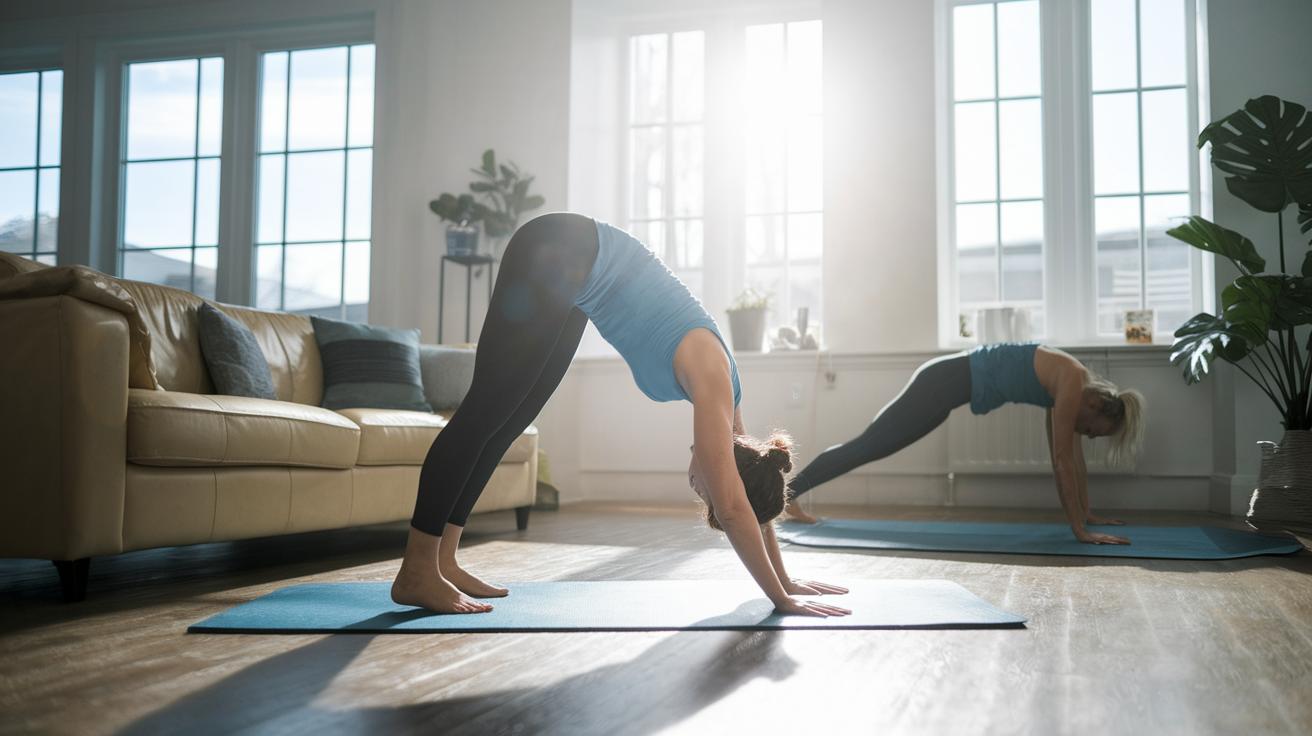
Try some simple yoga moves to help your back feel strong and flexible. Start with Downward Dog. Begin on your hands and knees, lift your hips until your body forms an upside-down V, and hold for 30 to 60 seconds. This stretch eases tension and gently lengthens your spine. Next, move into a High Plank by placing your hands straight under your shoulders. Keep your body in a straight line from head to heels, engage your core, and hold for 30 to 60 seconds. For an extra spine stretch, try Temple Pose: stand with your feet shoulder-width apart, slowly raise your arms overhead, and feel your spine extend; hold it for 30 to 60 seconds.
Remember these key tips: relax your shoulders away from your ears, keep your chest open, and breathe deeply and evenly during each stretch. This no-equipment routine is perfect for anyone starting a beginner back routine to boost posture and overall stability.
Resistance Band, Dumbbell and Stability Ball Back Training
Build a strong back and core with these easy-to-follow exercises. Start by setting up your resistance band for a Good Morning. Stand on the band, loop it around the back of your neck, and gently bend at your hips while keeping your back straight. Do 3 sets of 12 reps. You should feel your back muscles and glutes work as you rise.
Next, try the Band Deadlift. Stand with your feet on the band and hold its handles. Push your hips forward as you stand upright. Aim for 3 sets of 10 to 12 reps. This move focuses on your hamstrings and lower back and helps you learn a proper hip hinge technique.
Then, lie face down on a stability ball for the Swiss Ball Back Extension. Anchor your feet and slowly lift your upper body by using your back muscles. Perform 3 sets of 12 reps with smooth, steady motions that safely engage your back.
Finish with the Dumbbell Romanian Deadlift (RDL). Hold light dumbbells in each hand and keep a slight bend in your knees. Lean forward from your hips until the weights are near your shins, then return upright. Complete 3 sets of 10 reps. This exercise builds strength in your hamstrings and lower back muscles.
| Exercise | Equipment | Sets×Reps | Primary Muscles |
|---|---|---|---|
| Good Morning | Resistance Band | 3×12 | Back & Glutes |
| Band Deadlift | Resistance Band | 3×10–12 | Hamstrings & Lower Back |
| Swiss Ball Extension | Stability Ball | 3×12 | Back Muscles |
| RDL | Dumbbells | 3×10 | Hamstrings & Lower Back |
Remember to keep your spine neutral in every movement. Use a slow and steady pace to avoid any jerky motions. Breathe out as you lift or push, and take a moment to warm up with some light stretching before you start. When you finish, cool down with gentle stretches to help ease any muscle tension.
Modifications and Safety Precautions for Lower Back Workouts
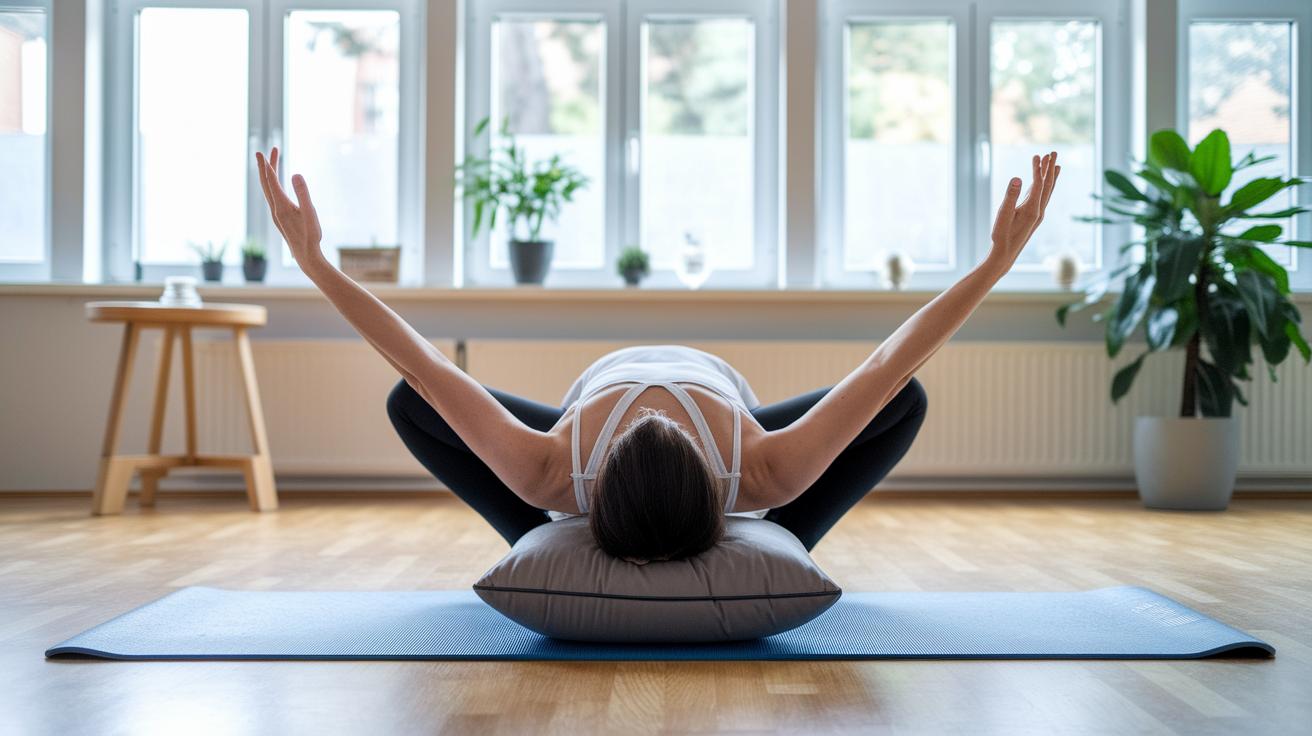
Skip moves that strain your lower back. For example, avoid sit-ups with your hands behind your neck and heavy overhead lifts that force your spine to arch. Pick exercises that keep your back straight and neutral. A small pillow under your hips can add extra support if needed.
Listen to your body. If you feel any sharp or spreading pain, stop immediately and check your form. This pain is a warning that the exercise might be too tough or your posture is off. If you have limited mobility, try reducing your range of motion or doing isometric holds to build strength without extra strain.
Remember to breathe steadily. Take a deep breath before you begin each move and exhale as you work your muscles. If you’re older or in rehabilitation, adjust your routine as necessary. For more tailored advice, check out this guide on strength training for seniors. Always warm up, cool down, and rest between sets to safeguard your back.
Advanced Lower Back Strengthening Series for Enhanced Stability
Dead Bug: Lie on your back with your arms and legs straight out. Slowly lift your right arm and left leg, then switch, all while keeping your pelvis pressed gently to the floor. Aim for 2 sets of 12 reps on each side. Breathe steadily and focus on moving slowly to tone your deep core muscles.
Toe Taps: Start by lying on your back like you did for the Dead Bug. Lower one leg until your toe lightly touches the floor while keeping your core tight. Do this carefully with 2 sets of 12 reps per side. Keep your spine neutral with each slow, controlled tap.
World’s Greatest Stretch: Stand in a lunge, twist your torso toward the leg in front, and reach your arm upward. Hold this position for 30 seconds on each side. This stretch helps open up your hips, back, and chest. Move slowly and steadily to avoid any jerky motions that could strain your back.
Hamstring Straight-Leg Raise: Lying on your back, lift one leg to form a 90° angle with your body and hold it for 20 to 30 seconds. Repeat this move 3 times per leg. This steady lift boosts strength in both your hamstrings and lower back.
Side Plank Lateral Challenge: Get into a side plank position, then lower your hip slowly before lifting it back up. Do 10 reps on each side for 2 sets. Keep your body in a straight line and your core engaged to work the muscles along your side effectively.
Founder Exercise: Start on your hands and knees, then slowly sit back onto your heels while keeping your back straight. Hold this position for 30 seconds and do 3 reps. Focus on smooth, steady transitions to build stability without straining your back.
Final Words
In the action, you grabbed key bodyweight movements like the Bridge and Bird Dog, explored home routines combining stretching and low-impact activities, and learned equipment-based exercises for added resistance. You also spotted tips on safely modifying moves to keep a neutral spine while progressing to advanced drills. Small shifts in these exercises to strengthen lower back can make a big difference. Stay positive, take gradual steps, and keep moving toward a healthier back every day.
FAQ
What physiotherapy exercises strengthen the lower back, core, and hips?
The physiotherapy exercises strengthen the lower back, core, and hips by using moves like the Bridge, Bird Dog, Superman, and Plank that build stability and improve overall muscle support.
What exercises can I do at home or in the gym for a strong lower back?
Exercises for a strong lower back include bodyweight moves such as bridges, planks, and controlled deadlift variations, which can be safely performed at home or in the gym.
What exercises can help relieve lower back pain?
Exercises that help relieve lower back pain often combine moves like the Bridge, Bird Dog, and Superman to build strength and ease discomfort through enhanced core and back muscle work.
How do you strengthen a weak lower back?
Strengthening a weak lower back involves engaging the back extensors and core with moves like the Bridge, Bird Dog, and Plank, while maintaining proper alignment to build safe, stable strength.
What are the big 3 exercises for lower back safety?
The big 3 exercises for lower back safety typically include the Bridge, Bird Dog, and Plank, as they effectively engage key stabilizing muscles while reducing strain on the spine.
What are signs of a weak lower back?
Signs of a weak lower back include frequent discomfort, poor posture, and difficulty with daily movements, suggesting that your core and back muscles may require additional strength training.
Which exercise is considered the best for lower back pain?
Many experts consider the Bridge exercise the best for lower back pain because it effectively targets your lower back, glutes, and core in a safe, controlled manner.
Are there specific exercises recommended for seniors with lower back issues?
Seniors with lower back issues can benefit from low-impact moves like gentle bridges, modified bird dogs, and planks that build strength while reducing joint stress and ensuring safety.