
Have you noticed your strength isn't quite what it used to be? It can feel like muscle loss is just part of getting older. But you can fight back with simple strength training. Even a short, safe workout, say, a brisk 10-minute session, can help improve your balance and make everyday tasks easier. Each session can spark new energy, giving you more control over your life and boosting your confidence. Try adding a little strength training to your routine and feel the difference for yourself.
Safe and Effective Strength Training for Seniors
Getting older often means losing a bit of muscle, which can make daily tasks feel tougher. Many seniors notice less mobility and strength, and that can affect balance and everyday activities. Strength training can help add muscle, keep bones strong, and boost your balance.
Regular resistance exercises are proven to work and can be made safe for you. They help you stay independent by making movements easier and reducing the risk of falls. Plus, these exercises support healthy joints and keep daily tasks from feeling as tiring.
- Aim for 2 to 3 sessions each week.
- Use moderate resistance with 8 to 12 repetitions per exercise.
- Mix up your routine to work different muscle groups.
- Keep your workout between 20 and 45 minutes.
- Slowly increase the resistance or number of repetitions as you get stronger.
By following these steps, you get a balanced workout designed for your needs. Using safe practices and a steady routine helps you build strength, boost mobility, and make daily activities easier.
Designing a Senior-Friendly Resistance Training Program

Setting realistic goals makes strength training feel doable. Think of it as following a simple recipe – the right mix of steps leads to great results. Start by choosing what you want to improve. It might be better balance, stronger muscles, or easier everyday movements. For a quick jumpstart, visit this page on strength training for beginners to build your foundation.
Frequency & Duration: 2–3 sessions/week, 20–45 minutes each
Aim for 2 to 3 sessions each week, with each workout lasting 20 to 45 minutes. This steady pace gives your muscles time to rest while allowing your body to adapt gradually. It’s similar to watering a plant a little each day instead of drowning it with one big gulp.
Exercise Selection: full-body vs. split routines
Pick the exercises that match your goals. For beginners, full-body workouts work several muscle groups at once and help you get started. Over time, you might mix in split routines that focus on one area at a time. This variety keeps your routine interesting and helps improve overall coordination.
Intensity & Progression: starting weight, when to increase load
Start with lighter weights to learn proper form and get comfortable with the movements. When you can easily complete 12 to 15 repetitions, try adding a little more weight, about 5 to 10 percent, to safely increase your strength.
| Day | Focus |
|---|---|
| Monday | Full-body workout |
| Wednesday | Upper-body focus |
| Friday | Lower-body focus |
Key Strength Training Exercises for Seniors
When working out your upper body, try exercises like seated rows and bicep curls. These moves help strengthen your arms and back, making everyday tasks easier. For instance, use a resistance band for seated rows to support your posture.
For your lower body, simple exercises such as squats and seated leg extensions work well. They help build strong leg muscles to make climbing stairs or standing up from a chair feel easier, and they may lower your risk of falls.
Strengthening your core is just as important. Try doing seated marches or pelvic tilts. A strong core improves your balance and stability, which comes in handy for daily tasks. Start with slow and controlled movements.
Balance drills can boost your confidence too. Practicing a single-leg stance or a heel-to-toe walk can help you stay steady and avoid slips. Begin these exercises near a sturdy countertop or chair until you feel more secure.
If you need extra support, chair-based workouts offer a safe alternative. A seated chest press, for example, lets you build strength at your own pace without worrying about balance.
| Exercise Name | Target Muscles | Reps/Sets |
|---|---|---|
| Seated Rows | Upper back, biceps | 10-12 reps / 2-3 sets |
| Squats | Quadriceps, glutes | 10-12 reps / 2-3 sets |
| Seated Marches | Core, hip flexors | 10-15 reps per side / 2-3 sets |
| Single-leg Stance | Balance, stabilizers | Hold 20-30 sec / 2-3 sets per leg |
| Seated Chest Press | Chest, triceps | 10-12 reps / 2-3 sets |
Strength training for seniors: Feel Empowered
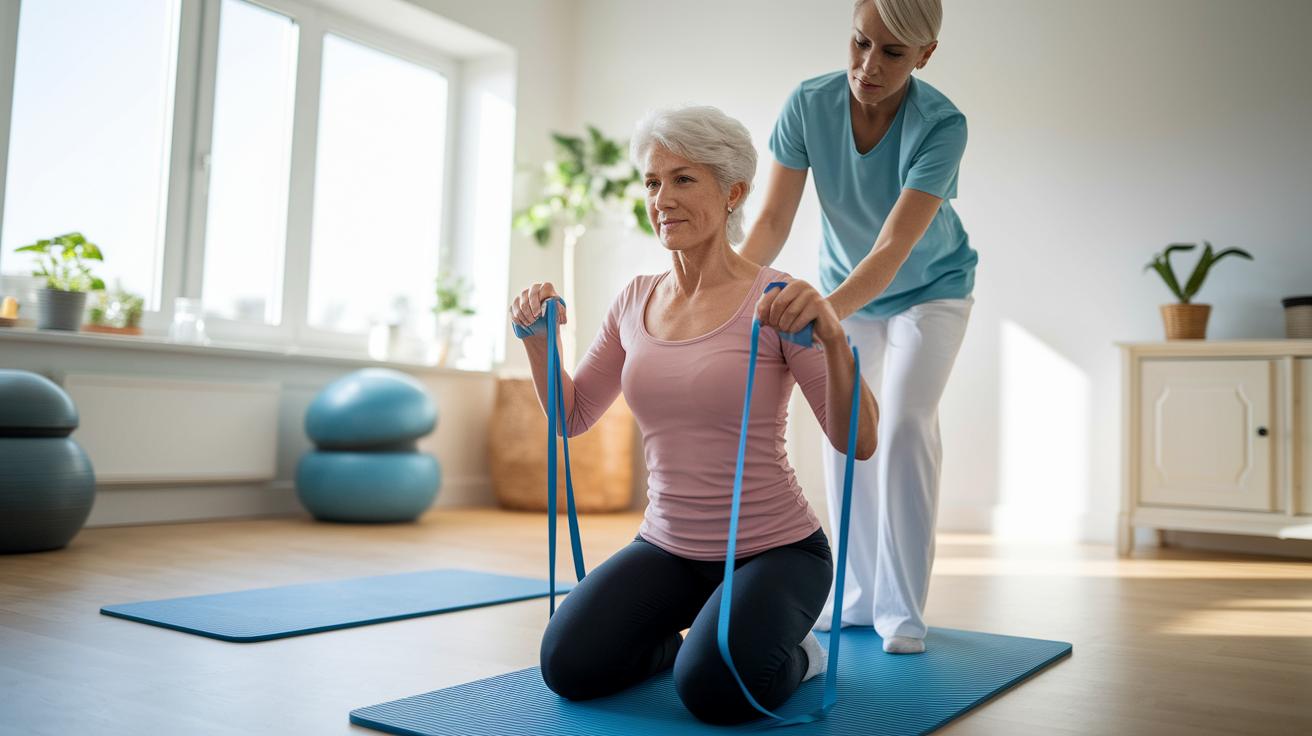
Staying active is key, but as you age, your joints might feel extra stress and your balance may not be as steady. Everyday activities and resistance exercises could put more pressure on your knees, hips, and shoulders. When you start or change your workout, keep these things in mind to help avoid injuries.
- Warm up before your workout and cool down afterward to get your muscles ready and reduce stiffness.
- Watch your posture during exercises to prevent extra strain on your back and joints.
- Breathe slowly and steadily to help keep your movements controlled.
- Protect your joints by using aids like knee sleeves or supportive shoes.
- Try alternatives like switching free weights for resistance bands to lower the impact.
- Listen to your body, if you feel pain, adjust your workout accordingly.
If you start to feel discomfort or notice your balance isn’t as sharp, slow down your routine and give yourself extra time to rest. This way, you build strength safely while keeping your body feeling strong and ready for new challenges.
Progression and Monitoring in Strength Training for Seniors
Keep an eye on your workout details like how many times you lift a weight, how heavy that weight is, and how everyday tasks feel easier. For example, if you notice you can lift a slightly heavier weight during chair stands, that's a clear sign your muscles are growing stronger. When doing 12 to 15 lifts starts to feel easy, try upping the weight by about 5–10% and add a few extra minutes to your session to build stamina. Mixing up your exercises now and then can also give your muscles a new challenge.
Use a simple workout log to record your progress. Write down each exercise, the weight you used, and any changes in repetitions or workout time. You might even try a digital tool that shows your progress week by week. Seeing your steady improvement can boost your confidence and help you adjust your routine as needed.
Strength training for seniors: Feel Empowered
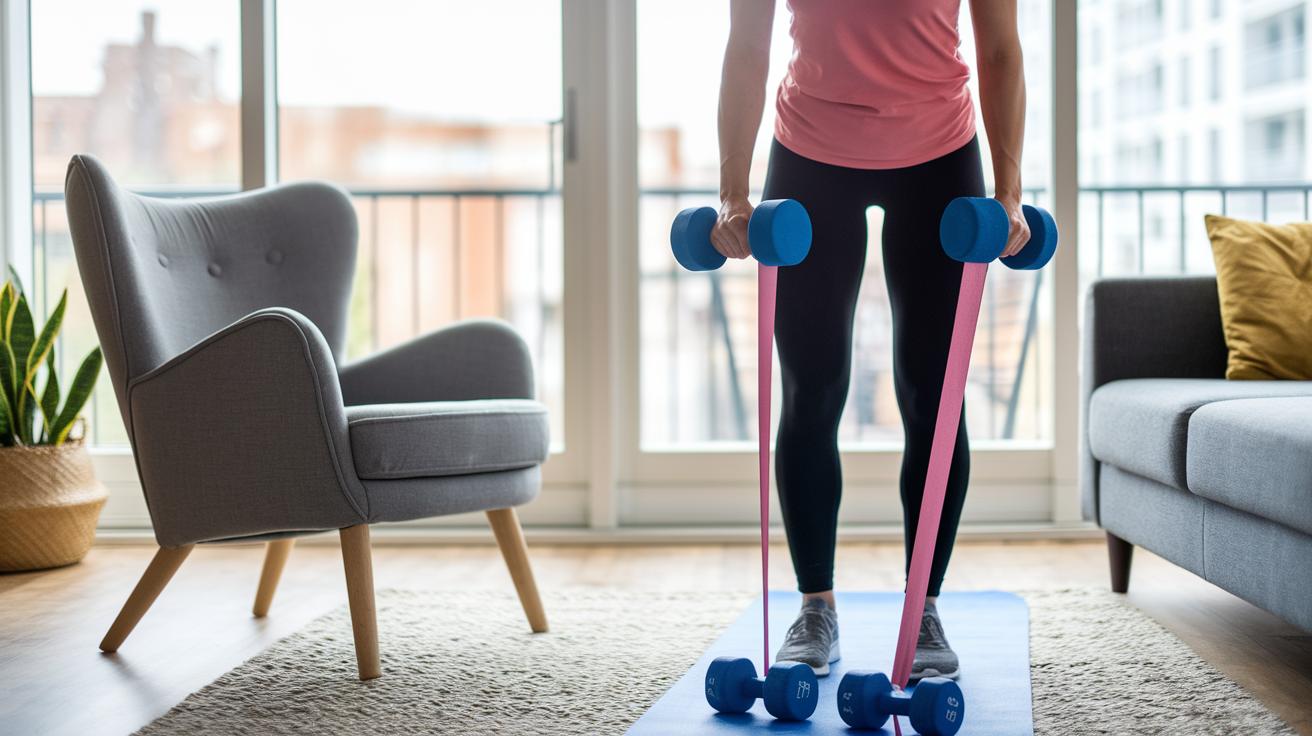
Exercising at home can be easy and work well with just a few tools. Grab a resistance band, a pair of light dumbbells, and a sturdy chair. These items help you build strength and balance.
Try a quick 10-minute circuit to get started:
- Banded squats – Stand on your resistance band and do squats for 30 seconds. Then rest for 15 seconds. Think of it like slowly sitting into an invisible chair.
- Chair dips – Sit on a sturdy chair, then lean forward to gently lower your body. This move works your arm muscles.
- Seated overhead press – Sit tall with back support, hold your light dumbbells at shoulder height, and slowly push them upward.
- Standing leg raises – Stand up and lift one leg at a time. Do 30 seconds per leg to strengthen your hips.
- Seated marches – While sitting, lift your knees alternately. This simple move warms up your heart and firms your core.
Add this circuit to your regular routine to mix things up and boost your strength.
When to Seek Professional Guidance in Senior Strength Training
If you start to notice new or worsening joint pain, balance problems, or odd discomfort during or after your workout, it’s a sign to check in with a health professional. These signals might mean your current exercise routine needs a change or extra care. If you live with long-term conditions or have recently had surgery, getting a professional’s advice can help lower your risks and keep you safe.
Look for experts with trusted credentials, like a trainer certified by the American College of Sports Medicine (ACSM) or a licensed physical therapist. At your first appointment, you can expect questions about your workout history, overall health, and daily activities. This information helps them create a safe and effective strength training plan that fits your needs.
Final Words
In the action, this article broke down safe, research-aligned strength training for seniors into easy steps. It covered ways to boost muscle and balance while outlining weekly routines and modifications that work for aging bodies. Each section offered clear guidance from exercise selection to tracking progress, ensuring you can start right away with confidence.
Remember, a steady focus on strength training for seniors can boost daily function and improve overall wellbeing. Keep moving forward, small steps bring big wins!
FAQ
Q: What are some local and online strength training resources for seniors?
A: Local classes, community centers, YouTube channels, and books offer strength training programs designed for seniors. They provide guided routines tailored to support mobility and balance.
Q: Where can I find free PDF resources for senior strength training?
A: Free PDF resources online let you access detailed guides and exercise routines designed for seniors. These documents help you learn safe workouts and track your progress.
Q: How can seniors do effective strength training at home, including 10-minute workouts?
A: Home-based strength training programs for seniors include short, 10-minute circuits using resistance bands or light weights. They fit easily into your day and help maintain muscle strength.
Q: Should a 70-year-old do strength training?
A: Strength training is beneficial for a 70-year-old, helping improve balance, bone density, and mobility. A moderate, well-planned routine can support daily activities safely.
Q: What are the best and foundational strength exercises for older adults?
A: Effective exercises for older adults include upper body moves (like bicep curls), lower body exercises (like squats), core stability drills, and balance movements, all promoting overall strength.
Q: What is the 3 3 3 rule in strength training?
A: The 3 3 3 rule in strength training means doing three sets of three different exercises with three repetitions each. This simple format provides structure to gradually build strength.