
Ever notice how your mind keeps buzzing even when it's time for bed? Meditation may help you slow those racing thoughts and ease into a good night's sleep. Imagine taking slow, deep breaths while gently scanning your body to let go of stress. In this post, you'll find simple, practical steps to quiet your mind and relax your body for a peaceful night’s rest. Ready to make bedtime a calm retreat?
How meditation for deep sleep enhances restful slumber
Meditation for deep sleep helps you wind down before bed. By settling your mind and body into a calm state, it makes the shift from being awake to resting easier. Using simple mindfulness steps, you can quiet a busy mind and get into deep, refreshing sleep sooner.
Start by taking slow, deep breaths to let go of tension. Then listen to soft sounds that soothe your nerves while doing a gentle body scan to relax tight muscles. Picture a quiet night sky and imagine a kind voice saying, "You are about to take a journey into deep relaxation." These little steps work together to ease stress and prepare you for a peaceful night.
Many people find that after about 35 minutes of this guided meditation, sleep comes naturally. This technique, much like yoga nidra, not only relaxes your body by easing tension in your face and shoulders but also calms your mind. It’s a trusted method for deep rest, backed by thousands of positive reviews.
Try it tonight for a more tranquil sleep and see how a few mindful moments can make a big difference.
meditation for deep sleep: Restful Nights Ahead
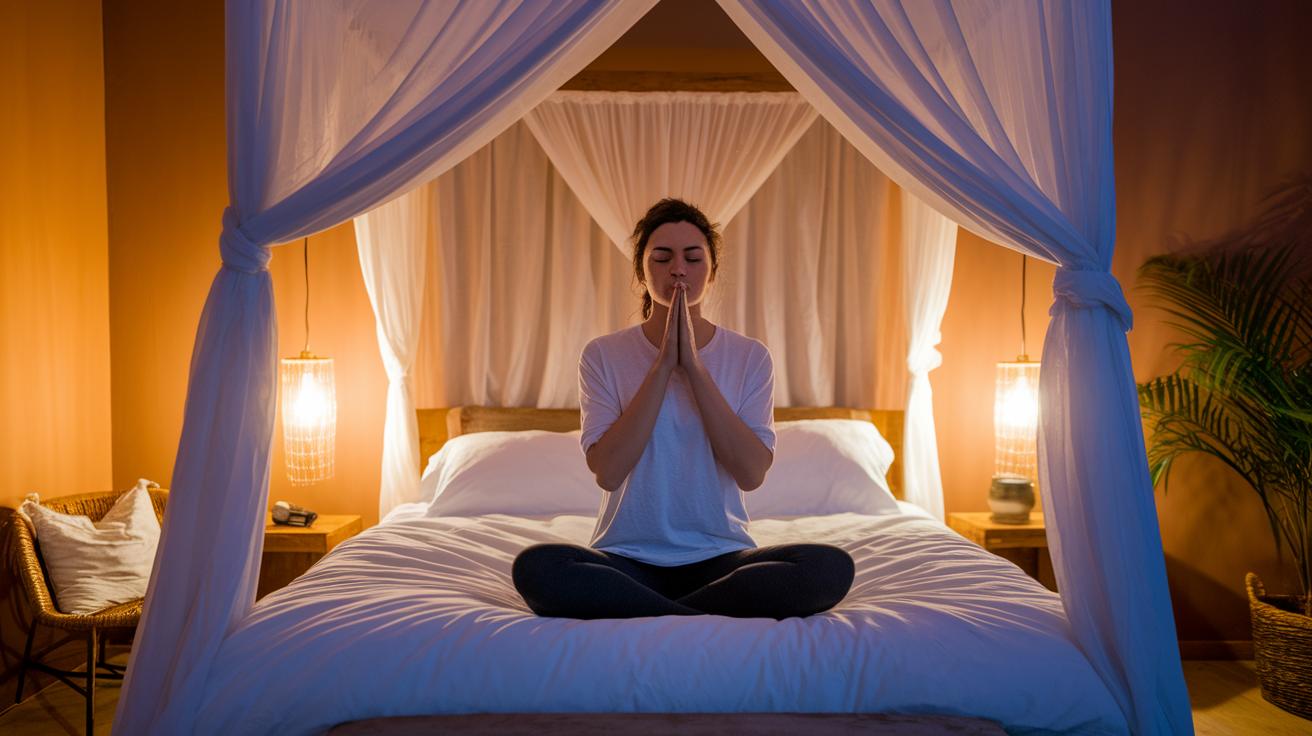
Start by setting up a calm, cozy space as your evening cue for sleep. Dim the lights, cool the room to around 65°F (18.3°C), and prepare your mind to wind down. This nightly routine mixes simple breathing exercises, muscle relaxations, and a gentle mantra to help quiet a busy mind and ease you into deep sleep.
- Begin by lowering the lights and cooling your room. A cool, dim setting tells your body that it’s time to relax.
- Next, try 4-7-8 breathwork for about two minutes. Breathe in for 4 seconds, hold for 7, then exhale for 8. This slow pattern can help calm your racing thoughts.
- Then, take five minutes to relax your muscles. Focus on one body part at a time from head to toe, letting go of any tightness.
- Say a short, calming phrase like “I surrender to restful sleep.” Repeat it softly to help your mind unwind.
- Spend around 10 minutes imagining a starry night. Picture each star drifting you into a deeper state of relaxation.
- Finally, finish with a guided full-body scan set to soft, ambient music to smooth away any lingering stress.
Following these simple steps each night builds a dependable wind-down routine. With a blend of calm breathing, muscle relaxation, visualization, and a gentle mantra, you can enjoy a smooth transition into deep, restorative sleep.
Visualization and soundscapes in deep sleep meditation
Deep sleep meditation can be boosted by blending calming sounds with clear mental images. For example, try listening to light rain, gentle ocean waves, or a quiet forest at night. These natural sounds help guide your brain into deep sleep (a time when your body naturally restores itself), making distractions fade away.
At the same time, guided mental pictures play a big role in easing your mind. Imagine floating among stars or drifting down a peaceful river, letting each image wash away the stress of the day. This approach quiets your inner chatter and prepares you for a restful night. Consistently using these natural rhythms in your bedtime routine may help your sleep grow deeper over time, so you wake refreshed in the morning.
Creating a calming bedtime routine with meditation for deep sleep

Start by keeping your bedroom quiet, tidy, and cool (around 65°F or 18°C). About 30 minutes before bed, lower the lights and turn off your screens to signal your body it’s time to relax. Enjoy a warm cup of herbal tea and do a few gentle stretches to help ease your muscles, boosting your transition into meditation. These extra steps add a special touch to your usual pre-sleep habits.
Then, try a guided meditation as you wind down. Let a calm voice and soft background sounds ease your tension and quiet your mind. This simple practice makes it easier to shift from your busy day into a deep, restorative sleep.
Overcoming common meditation challenges for deep sleep
On busy, stressful nights, it can feel nearly impossible to turn off racing thoughts and drift into sleep. Deadlines or other pressures can make your mind so full that even a quick meditation feels out of reach. But even a brief session can ease your insomnia and calm your anxiety.
When your mind wanders, try focusing on a simple breathing cue or do a quick head-to-toe scan. Start by taking slow, deep breaths and relaxing each muscle one at a time. Spending just 10 minutes on focused breathing can help shift your attention away from stress. And if your thoughts still overwhelm you, check out these helpful options for managing anxiety: stress management techniques for anxiety.
The key is to build a regular practice that feels comfortable for you. Begin with small sessions and gradually increase your time as you grow more at ease. Even a few minutes of mindful breathing can prepare you for deep sleep and soothe a busy mind. Over time, these consistent efforts can turn restless nights into peaceful ones.
Final Words
In the action, we see simple breathing, guided relaxation, and clear visualizations working together to ease stress and promote calm.
Your routine blends structured steps, breathwork, muscle release, and ambient soundscapes, to quiet the mind and set a peaceful tone for sleep.
Meditation for deep sleep shows that small, mindful moments can shift your mental energy and lead to refreshing, lasting rest. Embrace these steps tonight for a calmer, more restorative sleep.
FAQ
What is deep sleep meditation to fall asleep quickly?
Deep sleep meditation is a focused practice that uses guided breathing, soothing sounds, and visualization to help you relax and drift off to sleep faster.
How does meditation aid in deep sleep healing and anxiety reduction?
Meditation for deep sleep and healing employs gentle breathwork, body scans, and calming audio cues to ease tension, reduce anxiety, and promote a night of restorative sleep.
Can guided meditation sessions, including those lasting 30 minutes, help improve sleep and alleviate anxiety?
A 30-minute guided meditation for sleep uses structured relaxation techniques and ambient sounds to quiet the mind, lower stress, and support deeper, less anxious sleep.
Can meditation increase deep sleep?
Meditation can increase deep sleep by calming the mind and reducing stress, which helps regulate brain activity so you experience a more restorative sleep cycle.
What is the mantra for deep sleep?
The mantra for deep sleep is often “I surrender to restful sleep,” a simple phrase that helps refocus your mind from stress to relaxation for better sleep quality.
How can I enter deep sleep immediately?
To enter deep sleep immediately, you can use focused breathing and a short body scan to lower tension and quiet racing thoughts, creating a quick path to deep, refreshing sleep.
What is the 15 minute deep sleep release?
The 15-minute deep sleep release is a brief meditation routine that uses targeted relaxation techniques to ease muscle tension and clear your mind, guiding you toward a state of deep rest.